What if I told you there’s a baseball card out there that could turn a modest investment into a treasure trove of vintage nostalgia? A card so iconic that even casual collectors pause to admire its design, its history, and its undeniable charm? That card exists—and it belongs to one of the most electrifying rookies in baseball history. Welcome to the world of Rod Carew rookie cards, where value isn’t just measured in dollars, but in the sheer joy of owning a piece of the game’s golden era.
For vintage card investors, Rod Carew’s rookie cards are more than just cardboard with ink on them. They’re relics of a time when baseball was raw, unfiltered, and brimming with talent. Carew’s journey from Panama to the Minnesota Twins—and eventually to the Hall of Fame—is the kind of story that makes collectors weak in the knees. But here’s the kicker: not all Carew rookie cards are created equal. Some are affordable gateways into collecting, while others are blue-chip investments that demand serious consideration. So, how do you separate the wheat from the chaff? Let’s dive into the fascinating world of Rod Carew rookie card value and uncover why these cards are so beloved—and why they might just be the next big thing in your collection.
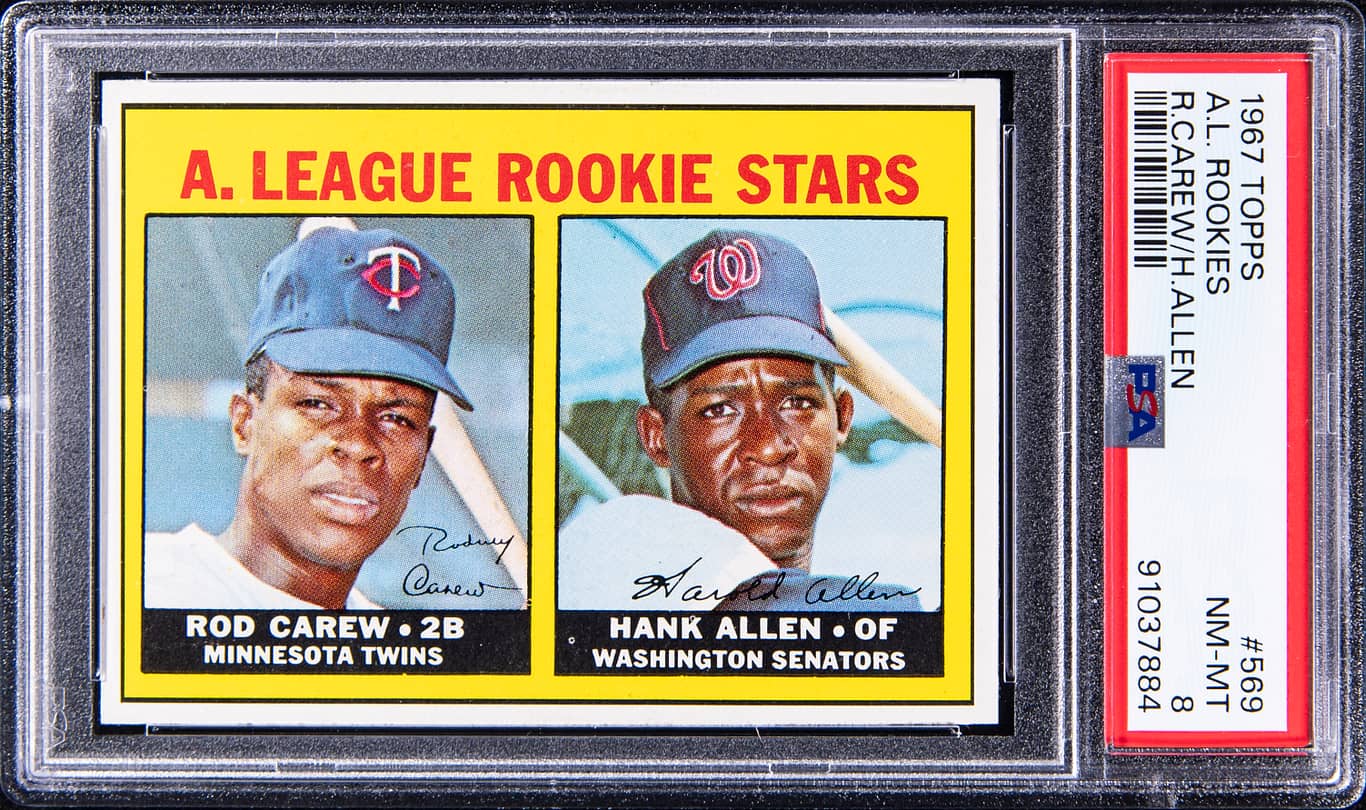
The Crown Jewel: 1967 Topps #569 Rookie Stars
If there’s one card that defines Rod Carew’s rookie legacy, it’s the 1967 Topps #569 Rookie Stars. This card isn’t just a piece of cardboard; it’s a time capsule of Carew’s meteoric rise. Picture this: a young, lanky infielder with a bat perched on his shoulder, eyes locked in on the pitcher, exuding an air of quiet confidence. That’s the magic of this card. Printed during Carew’s rookie season, it captures the essence of a player who would go on to rewrite the record books for batting.
The 1967 Topps #569 isn’t just a rookie card—it’s a cornerstone of any serious vintage collection. In high-grade condition, this card can fetch thousands, sometimes even pushing into the five-figure range. But why the hefty price tag? Scarcity plays a huge role. Topps didn’t print these cards in the same quantities as modern issues, and many were lost to the ravages of time, chewed up by bike spokes, tucked into shoeboxes, or left to yellow in attics. Then there’s the nostalgia factor. Collectors who grew up watching Carew dominate the American League in the late ’60s and early ’70s can’t resist the pull of this card. It’s a tangible connection to an era when baseball was pure, when every hit felt like a small victory against the odds.
The Underrated Gem: 1968 Topps #80 All-Star Rookie
Now, let’s talk about the dark horse of Rod Carew rookie cards—the 1968 Topps #80 All-Star Rookie. If the 1967 Topps card is the crown jewel, this one is the sleeper that could slip under your radar. Why? Because it’s not technically a rookie card in the strictest sense. Carew had already appeared in the 1967 Topps set, so this card is more accurately described as an All-Star Rookie issue. But here’s the twist: scarcity and demand have elevated its status far beyond its technical classification.
Printed in smaller quantities than the 1967 Topps issue, the 1968 Topps #80 is a card that’s harder to find in high grades. The design is classic Topps—bold colors, a clean layout, and that unmistakable vintage aesthetic. But what really sets it apart is the story. This card captures Carew at the cusp of superstardom, fresh off his Rookie of the Year season and ready to take on the world. For collectors who appreciate the nuances of baseball card history, this card is a must-have. It’s the kind of issue that rewards patience and a keen eye for quality. In top condition, it can command prices that rival some of the more famous rookie cards, proving that sometimes, the underdog wins the race.

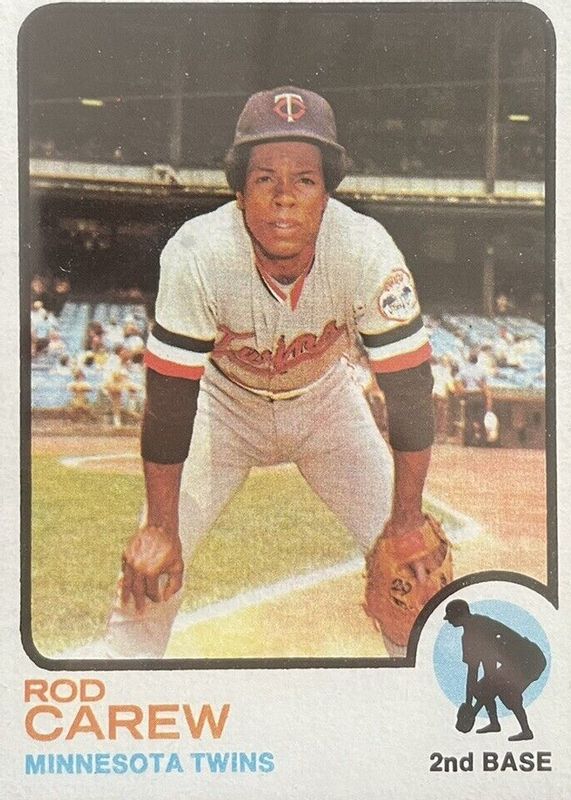
The Modern Classic: 1973 Topps #330 Base
Fast forward to 1973, and we find ourselves looking at another Rod Carew card that’s captured the hearts of collectors—Topps #330 Base. By this point, Carew was already a household name, a seven-time batting champion with a resume that sparkled with accolades. The 1973 Topps #330 isn’t a rookie card, but it’s a card that represents the peak of Carew’s early career. And for vintage investors, that’s where the magic lies.
Why would a non-rookie card hold such appeal? Because it’s a snapshot of Carew at his absolute best. The design is quintessential Topps—clean, bright, and full of that retro charm. But the real draw is the player’s reputation. By 1973, Carew was already a legend in the making, and this card reflects that. It’s a card that appeals to both the seasoned collector and the newcomer, offering a glimpse into an era when baseball cards were as much about art as they were about athleticism. In high-grade condition, the 1973 Topps #330 can hold its own against many rookie cards, making it a shrewd addition to any vintage portfolio.
The Investment Angle: Why Rod Carew Rookie Cards Are a Smart Bet
So, why should vintage card investors be paying attention to Rod Carew’s rookie cards? The answer lies in a combination of scarcity, demand, and legacy. Carew’s career spanned two decades, but his rookie years were the foundation of his legend. Cards from this era are becoming increasingly difficult to find in top condition, and as the collecting community continues to age, the supply of high-grade vintage cards is dwindling. That’s a recipe for rising values.
But here’s the challenge: not all Rod Carew rookie cards are created equal. The market is flooded with reprints, fakes, and lower-grade copies that can mislead unwary buyers. How do you navigate this landscape without getting burned? First, educate yourself on the subtle differences between the 1967 Topps #569 and the 1968 Topps #80. Learn to spot the nuances in design, print quality, and card stock. Second, prioritize condition. A well-centered card with sharp corners and vibrant colors will always outperform a damaged or poorly preserved example. And third, consider the long-term potential. Rod Carew’s legacy is secure—he’s a Hall of Famer, a batting champion, and a fan favorite. As long as baseball remains America’s pastime, his cards will hold value.
Of course, investing in vintage cards isn’t without its risks. The market can be volatile, and trends can shift overnight. But for those willing to do their homework and take a calculated approach, Rod Carew rookie cards offer a compelling opportunity. They’re not just pieces of cardboard; they’re investments in history, in nostalgia, and in the enduring appeal of baseball’s golden era.
So, here’s the question every vintage collector should ask themselves: Are you ready to take the plunge into the world of Rod Carew rookie cards? If the answer is yes, then buckle up. The journey ahead is filled with discovery, excitement, and the thrill of owning a piece of baseball’s rich history. And who knows? Your next great investment might just be waiting in a shoebox or a dealer’s binder, ready to make its mark on your collection.
The world of vintage baseball cards is a treasure trove of stories, and Rod Carew’s rookie cards are some of the most compelling chapters in that narrative. Whether you’re a seasoned investor or a newcomer to the hobby, these cards offer a unique blend of history, art, and potential profit. So, what are you waiting for? The next great vintage card could be just a click away.