Baseball memorabilia has always held a special place in the hearts of sports enthusiasts, but few items carry the cultural weight and nostalgic resonance of a signed baseball. Among the pantheon of legends, Sammy Sosa’s autographed baseballs stand out—not just for their rarity, but for the indelible mark he left on the game. Whether you’re a seasoned collector or a newcomer to the hobby, understanding the value of Sammy Sosa signed baseballs requires more than just a cursory glance at price tags. It demands an appreciation for authentication, condition, provenance, and the ever-shifting tides of the memorabilia market. Let’s dive into what collectors are paying now and why certain pieces command premiums while others linger in obscurity.
The allure of a Sammy Sosa signed baseball isn’t merely about the signature itself—it’s about the story it tells. Sosa, a three-time home run king and one of the most electrifying power hitters of the 1990s and early 2000s, carved his legacy not just with statistics, but with moments that transcended the diamond. His 66-home run season in 1998, his chase with Mark McGwire for Roger Maris’ single-season record, and his iconic corked bat incident all contribute to the mystique surrounding his memorabilia. Collectors aren’t just buying an autograph; they’re investing in a piece of baseball’s dramatic narrative.
The Authentication Imperative: Why It’s Non-Negotiable
In a market rife with forgeries, authentication is the bedrock upon which value is built. A Sammy Sosa signed baseball without proper verification is little more than a paperweight. The most sought-after pieces bear the hallmarks of reputable grading services like PSA (Professional Sports Authenticator), JSA (James Spence Authentication), or Beckett Authentication Services. These third-party graders scrutinize the signature, the ink consistency, and even the ball’s stitching to ensure legitimacy. A PSA/DNA or JSA-certified ball can fetch anywhere from $200 to over $1,000, depending on the ball’s type and condition. Uncertified items, on the other hand, often languish in the bargain bin, their value diminished by doubt.
But authentication isn’t just about the signature. The ball itself plays a crucial role. Was it signed during a game? In a controlled signing session? On a game-used ball? These details can inflate—or deflate—its worth. For instance, a baseball signed in-game by Sosa during his prime years (1998–2003) carries a premium over one signed years later in a mass-produced session. The context of the autograph adds layers of authenticity that mere ink on leather can’t replicate.
Condition: The Devil in the Details
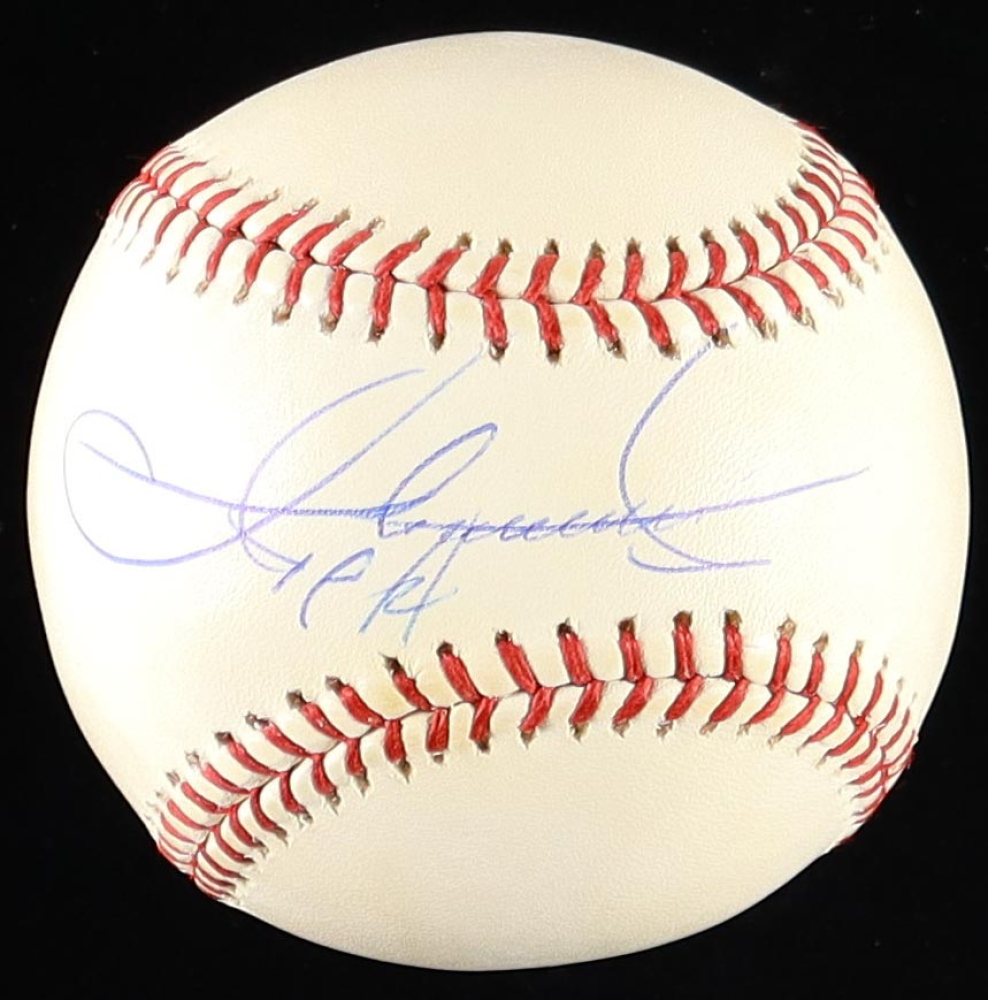
Even the most pristine autograph is worthless if the ball shows signs of wear, fading, or damage. Collectors obsess over condition, and for good reason. A Sammy Sosa signed baseball in Near Mint (NM) or Mint (M) condition can command prices 30–50% higher than one graded Good (G) or Fair (F). The key factors include:
- Ink Clarity: Is the signature bold and unbroken, or does it show signs of fading or feathering?
- Ball Surface: Are there scuffs, creases, or discolorations that detract from its visual appeal?
- Stitching Integrity: Loose or frayed stitches can signal mishandling, reducing desirability.
For high-end collectors, a ball with a sharp, vibrant signature and immaculate surface might sell for $800–$1,500, while a worn example could struggle to break $200. The difference between a “game ball” and a “display ball” often comes down to these minute details.
The Provenance Paradox: History as Currency
Provenance—the documented history of an item—can transform a Sammy Sosa signed baseball from a collectible into a treasure. A ball with a clear chain of custody, linking it to a specific game, event, or even a private signing, can see its value skyrocket. For example, a ball signed during Sosa’s historic 1998 season, when he and McGwire captivated the nation, might fetch a premium simply because of its temporal association. Similarly, a ball signed in the presence of a notable figure—like a teammate or a league official—adds layers of credibility.
But provenance isn’t just about the past; it’s about the future. Collectors are increasingly drawn to items with “story potential”—balls that can be tied to legendary moments. A ball signed during the Cubs’ playoff run in 2003, for instance, carries more weight than one signed in a generic setting. The more vivid the narrative, the higher the perceived value.
Market Trends: What Collectors Are Paying in 2024
The memorabilia market is a living, breathing entity, influenced by nostalgia, player reputation, and economic factors. As of 2024, Sammy Sosa signed baseballs are experiencing a resurgence in demand, driven by several key trends:
- Nostalgia Wave: The 1990s and early 2000s are back in vogue, with younger collectors seeking relics from baseball’s steroid era—a time when Sosa was a titan.
- Rarity Factor: Unlike modern players who churn out autographs at every event, Sosa’s signing sessions are fewer and farther between. This scarcity drives up prices.
- Grading Premiums: As grading services tighten their standards, certified balls are becoming more desirable. A PSA 10 (Gem Mint) can sell for $1,200–$2,000, while a PSA 8 (Excellent) might go for $400–$600.
- Investment Mindset: Collectors are treating memorabilia like fine art, holding onto high-grade pieces in anticipation of future appreciation.
That said, not all Sammy Sosa signed baseballs are created equal. A standard “Official Major League” (OML) baseball signed by Sosa in a public session might sell for $300–$600, while a game-used ball from his prime could command $1,500–$3,000. The disparity highlights the importance of specificity in collecting.
Where to Buy: Navigating the Marketplace
For collectors, the hunt for a Sammy Sosa signed baseball is as much about strategy as it is about passion. Auction houses like Heritage Auctions and Goldin Auctions frequently feature high-end pieces, with hammer prices often exceeding estimates. Private sales via platforms like eBay or Facebook groups can yield bargains, but they also carry higher risks of forgery. Specialized dealers, such as those who consign through Pristine Auction or Memory Lane, offer a middle ground, providing authenticated pieces with some provenance.
When evaluating a purchase, always ask:
- Is the signature consistent with Sosa’s known autograph style?
- Does the ball’s condition match the grading report?
- Are there any red flags in the provenance?
Avoid deals that seem too good to be true—they usually are. And remember, the best bargains often come from unexpected places, like estate sales or local sports memorabilia shops, where hidden gems might lurk.
The Future of Sammy Sosa Memorabilia
As Sammy Sosa’s legacy continues to evolve—amidst debates about his Hall of Fame eligibility and his role in baseball’s steroid era—his memorabilia market will likely remain dynamic. Some collectors may shy away from his items due to controversy, while others will double down on their investments, viewing his signature as a historical artifact. One thing is certain: the demand for authenticated, high-condition pieces will persist, driven by nostalgia and the timeless appeal of baseball’s golden era.
For those looking to enter the market, patience is key. The perfect Sammy Sosa signed baseball won’t appear overnight, but when it does, it’s worth the wait. Whether you’re in it for the thrill of the hunt, the joy of ownership, or the potential for financial gain, the world of Sammy Sosa memorabilia offers something for every collector.
Baseball, after all, is more than a game—it’s a tapestry of moments, and each signed ball is a thread woven into that fabric. For those who understand its value, a Sammy Sosa autograph isn’t just an item; it’s a piece of history.