The Steve Young rookie card isn’t just a relic of the past—it’s a ticking time bomb of nostalgia, speculation, and market whims. In 2026, as the NFL’s golden era of the 1980s and early ’90s continues to captivate collectors, this card—once a modest $50 trinket—now looms as a potential six-figure asset. But is its value poised to soar, or is it a relic doomed to gather dust in the attic of overhyped sports memorabilia? The answer isn’t as simple as checking eBay’s latest sold listings. It’s a story of supply and demand, generational shifts in collecting habits, and the unpredictable alchemy of sports legacy. Buckle up. We’re about to dissect why the Steve Young rookie card might just be the most fascinating—and risky—investment in football card collecting today.
The Card That Defied Gravity: A Brief History of the 1986 Topps Steve Young Rookie
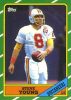
Released in an era when football cards were still finding their footing as collectibles, the 1986 Topps Steve Young rookie card (#374) arrived with little fanfare. Topps, then the undisputed king of sports cards, printed millions of copies, assuming Young’s stardom would grow steadily—not explode into legend. Yet, as the 1990s dawned, Young’s ascent to NFL supremacy, culminating in three Super Bowl victories and a Hall of Fame induction, transformed this once-ordinary card into a coveted artifact. Today, high-grade copies fetch upwards of $10,000, a staggering leap from its original 35-cent price tag. But here’s the twist: the market hasn’t yet peaked. Why? Because the Steve Young rookie card isn’t just a football card—it’s a cultural artifact, a bridge between the leather-helmet era and the modern passing explosion. And in 2026, that bridge might just become a superhighway.
Consider the parallels to Michael Jordan’s 1986 Fleer rookie. For years, it was a solid but unspectacular card—until Jordan’s global dominance turned it into a blue-chip investment. The Steve Young rookie is following a similar, if slower, trajectory. The difference? Young’s legacy is more nuanced. He wasn’t just a champion; he was a revolution. His cannon arm and scrambling genius redefined the quarterback position, making him a cult hero among football purists. That duality—elite performance and cultural impact—is what makes his rookie card a wildcard in the collecting world.
The 2026 Wildcard: Why This Card Could Be the Next Big Thing
If you’re betting on the Steve Young rookie card’s future, you’re not just gambling on nostalgia—you’re betting on demographics. The NFL’s fanbase is aging, but its collector base is getting younger, and younger collectors aren’t just chasing championships; they’re chasing stories. Young’s career is a narrative goldmine: the underdog who overcame injuries, the lefty who defied convention, the leader who carried the 49ers to glory in an era when the West Coast offense was still a novelty. In 2026, as Gen Z and millennial collectors increasingly prioritize “legacy value” over raw stats, Young’s rookie card could become a must-have for those who see football as more than just a game—it’s a saga.
Another factor? The scarcity paradox. Despite its massive initial print run, the 1986 Topps Steve Young rookie card is far rarer in gem mint condition than most realize. Topps’ printing standards in the ’80s were inconsistent, and the card’s thin paper stock makes high-grade copies (PSA 9 or 10) exceptionally elusive. In 2026, as grading companies like PSA and BGS continue to refine their standards—making it harder to secure pristine slabs—the supply of top-tier Young rookies will shrink further. When demand outstrips supply, prices don’t just rise—they stratify. A PSA 10 that sold for $8,000 in 2023 could easily cross the $20,000 threshold by 2026, especially if a major auction house like Heritage or Goldin lends it the spotlight.
But here’s where it gets interesting: the card’s value isn’t just about condition—it’s about context. The 1986 Topps set is already a collector’s darling, with key rookies like Jerry Rice and Bruce Smith commanding premiums. Young’s card, however, sits in a sweet spot: not as common as the commons, but not as mythologized as the elite Hall of Famers. That middle-ground status makes it a prime candidate for a “discovery” moment. Imagine a viral TikTok video of a collector unearthing a mint-condition Young rookie in their grandfather’s attic, or a high-profile athlete like Patrick Mahomes or Josh Allen publicly praising the card’s legacy. In 2026, such moments could trigger a feeding frenzy.
The Risks: Why This Card Might Not Be the Golden Ticket
Of course, no investment is without its pitfalls. The Steve Young rookie card’s future isn’t guaranteed—it’s a high-stakes gamble on several fronts. First, the football card market is notoriously volatile. While baseball cards have seen meteoric rises (see: the 1952 Topps Mickey Mantle), football cards have historically lagged behind, with only a handful of players achieving Mantle-level status. Young is close, but not quite there. If the NFL’s next generation of stars—think CeeDee Lamb or Justin Herbert—fails to capture the same cultural imagination, Young’s legacy could plateau, leaving his rookie card as a niche collectible rather than a blue-chip asset.
Then there’s the grading bottleneck. PSA’s recent slowdowns and controversies over grading inconsistencies have left collectors wary. A card that might have graded PSA 10 in 2020 could now face scrutiny, with re-submissions or even downgrades possible. In 2026, if grading becomes even more unpredictable, the market could see a correction—where high-grade Young rookies lose value simply because their slabs are no longer trusted. The card’s value isn’t just tied to Young’s legacy; it’s tied to the integrity of the grading ecosystem.
Finally, there’s the elephant in the room: the NFL’s shifting priorities. The league is doubling down on international expansion, digital engagement, and younger audiences. Football cards, once a staple of sports collecting, are now competing with NFTs, video game skins, and social media collectibles. If the next generation of fans sees physical cards as relics rather than investments, the Steve Young rookie could become a victim of its own era—loved, but not lucrative.
The X-Factor: What Could Send the Steve Young Rookie into the Stratosphere?
So, what would it take for the Steve Young rookie card to shatter expectations and become a six-figure icon by 2026? The answer lies in a perfect storm of factors, each amplifying the others. First, a major cultural moment—perhaps a documentary on Young’s career, a Netflix series, or a viral moment where a high-profile collector (think Ryan Reynolds or Drake) publicly acquires a pristine copy. Second, a supply shock: if a major hoard of Young rookies is discovered and destroyed (as happened with the 1986 Fleer Michael Jordan short print run), scarcity would skyrocket. Third, a generational shift in collecting habits, where younger fans prioritize “story cards” over pure star power. Young’s rookie fits all three criteria.
Another potential catalyst? The rise of private grading companies. If PSA’s dominance wanes and competitors like CGC or WATA gain traction, the market could see a rush to re-grade Young rookies, creating artificial scarcity and driving prices upward. Imagine a scenario where a previously overlooked PSA 9 is re-submitted to CGC and graded a 10—suddenly, that card’s value could double overnight.
And let’s not forget the auction houses. Heritage Auctions and Goldin have already set records for vintage football cards, but they’ve barely scratched the surface of Young’s potential. A headline-grabbing sale—say, a PSA 10 selling for $50,000 or more—could redefine the card’s ceiling. In 2026, if the market is ripe, such a sale isn’t just possible; it’s probable.
The Bottom Line: Buy, Hold, or Walk Away?
So, should you invest in a Steve Young rookie card today with an eye toward 2026? The answer depends on your risk tolerance and collecting philosophy. If you’re a long-term holder who believes in Young’s legacy and the card’s cultural resonance, it’s a bet worth making—but only if you’re willing to stomach volatility. Look for high-grade copies (PSA 9 or 10) in secure slabs, and avoid raw or lower-grade examples that could languish. If you’re a speculator, consider targeting mid-grade copies (PSA 7 or 8) that could see a bump if grading trends shift. And if you’re risk-averse? This might not be the card for you.
One thing is certain: the Steve Young rookie card isn’t just a piece of cardboard. It’s a time capsule, a story, and a potential goldmine. In 2026, as the NFL celebrates its 100th anniversary and collectors clamor for artifacts from its formative years, Young’s rookie could be the card that defines a generation. But remember—every great investment starts with a question. Is the Steve Young rookie card worth big money in 2026? The market will answer. The question is whether you’ll be ready to listen.