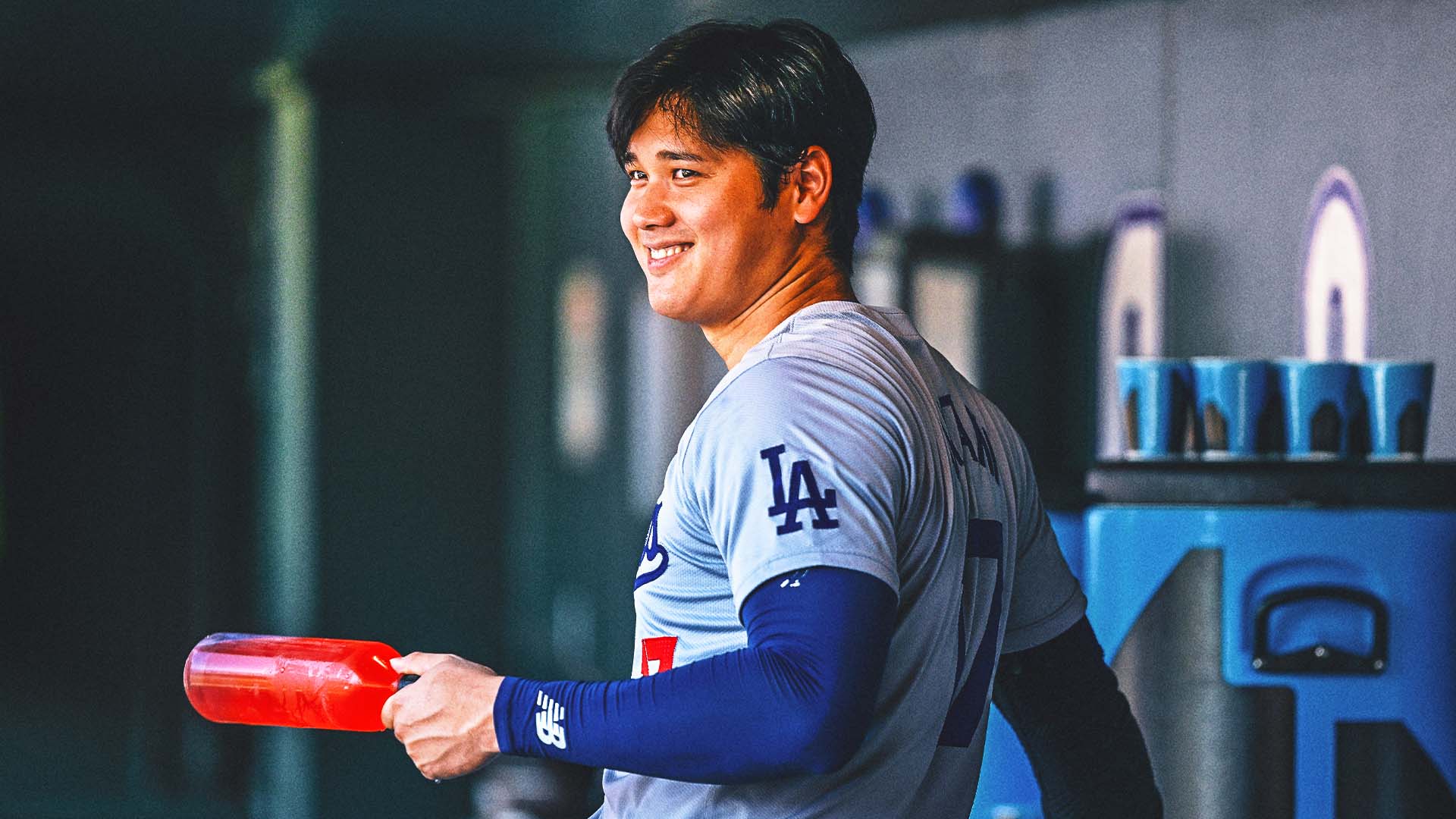
In the grand theater of modern baseball, where contracts stretch into the stratosphere and free agency becomes a spectacle of staggering figures, one name echoes louder than the rest: Shohei Ohtani. The two-way sensation, the transcendent talent, the man who defies the very laws of what a player can be on a diamond. Yet, as the ink dries on a contract rumored to be worth a cool $700 million, a provocative question lingers in the air like the scent of fresh-cut grass after a rainstorm: Is Shohei Ohtani actually underpaid?
The Myth of the $700 Million Man: A Contract That Defies Convention
At first glance, the notion of Ohtani being “underpaid” seems preposterous. A $700 million deal isn’t just a number; it’s a seismic shift in the financial tectonics of sports. To put it into perspective, if you stacked $700 million in $100 bills, you’d reach a height taller than the Empire State Building. Yet, when viewed through the lens of Ohtani’s impact—both on the field and in the cultural zeitgeist—the contract begins to feel less like a windfall and more like a calculated investment in the future of baseball itself.
Baseball, once the unchallenged king of American sports, now finds itself in a fierce battle for attention with the likes of the NFL and the NBA. Ohtani isn’t just a player; he’s a global ambassador, a walking highlight reel, and a symbol of the sport’s enduring ability to produce transcendent talent. His contract isn’t just about wins and losses; it’s about relevance, about drawing eyes to a game that must evolve or risk being left behind in the dust of modernity.
The Dual-Threat Dynamo: Why Ohtani’s Value Extends Beyond the Boxscore
Ohtani’s two-way brilliance is the stuff of legend. A pitcher who can throw 100 mph fastballs and a hitter who can launch 500-foot moonshots isn’t just a rare commodity—it’s a unicorn in a sport where specialization has become the norm. But his value isn’t confined to the stat sheet. Consider the intangibles: the awe he inspires in fans, the buzz he generates in media markets, the way he turns a routine Tuesday night game into must-see television.
In an era where analytics dominate decision-making, Ohtani represents something far more primal: the joy of the game. His presence on the mound or at the plate isn’t just a strategic advantage; it’s an emotional one. Teams don’t just pay for production; they pay for the electricity he brings to the ballpark, the way he turns casual observers into die-hard fans. In that sense, his $700 million price tag isn’t just a reflection of his talent—it’s a bet on his ability to elevate the entire sport.
The Paradox of the “Underpaid” Superstar: When Greatness Becomes a Bargain
Here’s where the paradox deepens. If Ohtani is underpaid, it’s not because his contract is too small—it’s because his impact is too vast to quantify. Baseball, unlike the NFL or the NBA, operates in a financial ecosystem where player salaries are a fraction of league revenue compared to other sports. The NBA’s salary cap is a ceiling; baseball’s payrolls are a floor. In that context, Ohtani’s deal isn’t just fair; it’s a steal.
Consider the alternative: What if Ohtani had signed elsewhere? The ripple effects would have been felt across the league. His absence would have created a void no amount of money could fill. The Angels, for all their struggles, have become the epicenter of baseball’s most compelling narrative because of him. His contract isn’t just a payroll expense; it’s a cornerstone of the franchise’s identity. In that light, $700 million isn’t a sum; it’s an investment in the soul of the game.
The Shadow of Scarcity: The Scarcity Principle and Ohtani’s Unmatched Talent
The economic principle of scarcity dictates that the rarer the commodity, the higher its value. Ohtani isn’t just a great player; he’s a once-in-a-generation phenomenon. There hasn’t been a true two-way player of his caliber since Babe Ruth, and even then, Ruth’s dominance was confined to one side of the diamond. Ohtani’s ability to dominate as both a hitter and a pitcher is a statistical anomaly, a freak of nature that defies the laws of probability.
In a league where specialization has led to the rise of the “opener” and the “three true outcomes” era, Ohtani is a relic—a throwback to a time when players were expected to do it all. His scarcity isn’t just a matter of skill; it’s a matter of versatility. He’s the last of a dying breed, a unicorn in a world of horses. And in a sport where the supply of such talent is virtually nonexistent, his contract price isn’t just justified; it’s inevitable.
The Ripple Effect: How Ohtani’s Contract Reshapes the Financial Landscape of Baseball
Ohtani’s deal doesn’t just set a new standard for player compensation; it redefines the financial calculus of the entire league. If a player of his caliber can command $700 million, what does that say about the future of baseball economics? Will we see a new era of super-contracts, where the game’s elite command sums that dwarf even the most lucrative deals of the past?
There’s a risk here, of course. Baseball’s financial structure is already a delicate balance of tradition and innovation. A league-wide shift toward Ohtani-level contracts could strain the system, creating a divide between the haves and the have-nots. But if there’s one thing Ohtani has proven, it’s that the game is willing to adapt when the right talent comes along. His contract isn’t just a reflection of his value; it’s a blueprint for the future.
The Ultimate Litmus Test: Can Ohtani Live Up to the Hype?
Of course, no discussion of Ohtani’s contract would be complete without addressing the elephant in the room: performance. A $700 million investment demands a return, and in sports, that return is measured in wins, championships, and legacy. Ohtani’s deal isn’t just a bet on his talent; it’s a bet on his durability, his resilience, and his ability to stay healthy in a game that chews up even the toughest athletes.
The challenge is monumental. Ohtani isn’t just being paid to play; he’s being paid to defy the odds. He’s being paid to be the exception to every rule. And if he can deliver on that promise, his contract won’t just be justified—it will be immortalized as one of the greatest investments in sports history. But if he can’t? Well, that’s the risk that comes with betting on greatness.
The Verdict: A Contract That Transcends the Game
So, is Shohei Ohtani underpaid? The answer, as with most things in baseball, is complicated. His contract isn’t just a sum of money; it’s a statement. It’s a declaration that the game is evolving, that the old rules no longer apply, and that the future belongs to those who dare to defy convention. In that sense, Ohtani isn’t underpaid—he’s priceless.
Baseball has always been a game of numbers, but Ohtani reminds us that it’s also a game of stories. His $700 million contract isn’t just a financial transaction; it’s the beginning of a new chapter in the sport’s history. And if the Angels can harness the power of his legend, they won’t just have a franchise player—they’ll have a legacy.