In the high-stakes theater of Major League Baseball, few moments stir as much drama and debate as the collision at home plate. This tumultuous clash, a dazzling blend of athleticism and raw aggression, has long been a focal point of the game’s physicality and the evolving conversation around player safety. Yet, beyond the amplified roar of the crowd and the shock of impact, lies an intricate story about how to navigate this perilous juncture—how to engage in the melee without bearing the brunt of injury. Understanding the mechanics and mindset behind avoiding harm during these collisions promises to transform the way fans, players, and coaches perceive this quintessential moment in baseball.
The Anatomy of a Home Plate Collision
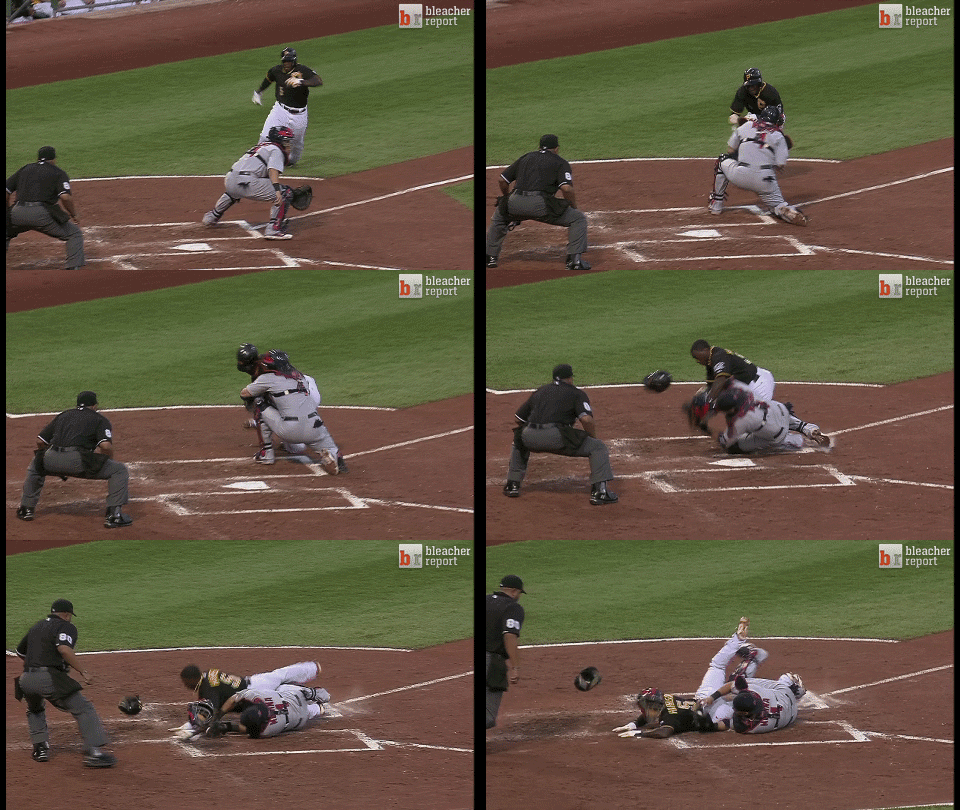
To appreciate how to stay safe during a collision at home plate, one must first dissect its anatomy. These encounters occur when a baserunner, driven by the imperative to score, barrels toward the plate, and the catcher braces to block the runner’s path. The dynamic tension inherent in these moments is palpable, with split-second decisions converging in a confluence of force and velocity. The collision’s nature is not merely a happenstance of impact but a complex interplay of positioning, momentum, and anticipation.
Identifying the precise angles of approach, the deceleration tactics of the catcher, and the runner’s body mechanics reveals patterns that can be exploited to minimize personal harm. A key element lies in the timing of the block and the runner’s choice of evasive maneuvers. The collision becomes, in essence, a choreographed confrontation where prudence and precision can spell the difference between a game-changing play and a sidelining injury.
Historical Context: Lessons from Legacy Incidents
Reflecting on landmark collisions in MLB history unearths a treasure trove of insights into the vulnerabilities and resilience of players. Legendary collisions, both celebrated and lamented, have shaped the evolving ethos of safety protocols within the sport. From the legendary hustle of Pete Rose confronting the catcher to dramatic, game-altering impacts that left players sidelined, these moments underscore systemic risks.
The evolution of rule changes—such as the elimination of the “takeout slide” or the enforcement of stricter blocker guidelines—has been stimulated by these hard-earned lessons. These historical precedents showcase not only the physical tribulations endured but also the progressive attitude the league has adopted towards protecting athletes while preserving the sport’s competitive essence.
Biomechanics and Body Positioning: The Science of Safe Contact
Delving into the biomechanical facets reveals strategies steeped in scientific reasoning for dodging injury. The human body’s response to high-impact collisions can be optimized by mastering posture and movement. Catchers, for instance, learn to adopt a balanced, low center of gravity to absorb the runner’s force without compromising spinal alignment. Flexibility, core strength, and anticipatory reflexes become paramount in stabilizing the body upon impact.
For runners, the logic of safe contact involves modulating speed and choosing angles that allow for either distraction of the blocker or minimization of collision intensity. Avoidance tactics are not about shying away but rather mastering subtle body tilts and modified slides to dissipate kinetic energy safely. The finesse in these movements demands rigorous training and an intimate understanding of one’s physical limits and capabilities.
The Psychological Warfare: Anticipation and Mental Preparedness
Beyond the corporeal, the collision is as much a contest of mental acuity as it is of physical might. Anticipating the opponent’s moves and maintaining composure under extreme pressure can drastically reduce the odds of injury. A catcher’s ability to predict the timing of the runner’s slide or dodge can turn potential calamity into calculated success.
Mental preparedness entails visualization techniques and split-second decision-making that coaches increasingly incorporate into training regimens. The readiness to absorb or redirect impact without panicking is a learned skill, cultivated through experience and rigorous scenario drills. Athletes who master this mental edge often emerge from collisions with less trauma and greater control.
Equipment Evolution: From Rudimentary Gear to Advanced Protection
The advancement of protective equipment continues to shift the paradigm of safety in home plate collisions. Early days of minimal padding and fragile gear have given way to scientifically engineered catcher’s masks, chest protectors, and leg guards. Innovations in materials that blend lightweight flexibility with shock absorption reduce the transmission of force to vulnerable areas.
For runners, while protective gear has been less emphasized historically, emerging designs in sliding pads and compression wear provide incremental defense. The intersection of technology and tradition generates equipment that not only shields players but also preserves the fluidity of their movements, ensuring protection does not come at the expense of performance.
Rule Adaptations and Their Impact on Player Safety
In response to heightened awareness and growing concerns about injuries linked to home plate collisions, governing bodies have implemented rule changes that redefine permissible contact. The MLB’s introduction of the “Buster Posey Rule,” named after the catcher severely injured in a notorious collision, exemplifies this transformative shift. Under the current rules, mandatory blocking without the ball and deliberate collisions are penalized to encourage safer play.
These adaptations do not merely limit actions; they promote strategic batting and fielding that prioritize health without sacrificing the game’s thrilling unpredictability. As the rules adjust, players recalibrate their tactics, fostering a culture where safety coexists with competitive intimacy.
Training Regimens: Conditioning for Collision Resilience
Teams now embrace training programs designed explicitly to prepare players for the rigors of home plate clashes. Strengthening exercises focus on core stability, neck and shoulder fortification, and agility drills that enhance quick directional changes. Conditioning extends beyond physicality to include proprioceptive training to heighten spatial awareness during high-speed pursuits.
Customized regimens incorporating simulated collisions and scenario-based drills allow athletes to internalize movement patterns that reduce injury likelihood. Emphasis on recovery techniques, including physiotherapy and muscle conditioning, further contribute to long-term durability and resilience against inevitable impacts over the season.
Shifting Perspectives: Embracing a Culture of Safety and Strategy
The narrative of the collision at home plate is evolving from a reckless display of brute force to a nuanced dance of strategy and safety. This shift challenges entrenched perceptions that valorize pain over prudence, heralding a new era where preservation of athlete well-being is paramount. Fans and analysts alike are beginning to appreciate the delicate balance between competitive zeal and conscientious play.
As education around risk mitigation permeates the sport, players are emboldened to refine their approach, making calculated decisions rather than reckless gambles. This reimagining not only extends careers but enriches the fabric of the game, melding spectacle with sustainability.
Conclusion: Redefining the Collision Paradigm
The collision at home plate, once viewed merely as a perilous rite of passage, is undergoing a profound transformation. Through the fusion of biomechanics, psychological insight, equipment innovation, and regulatory foresight, the aspirational goal of “how NOT to get hurt” is becoming a tangible reality. This paradigm shift invites all who cherish baseball to reconsider what valor means in the modern era—a valor not of reckless confrontation, but of enlightened resilience and calculated courage. Understanding the intricate dance of collision safety not only enriches appreciation of the sport but safeguards its most precious asset: the athletes themselves.