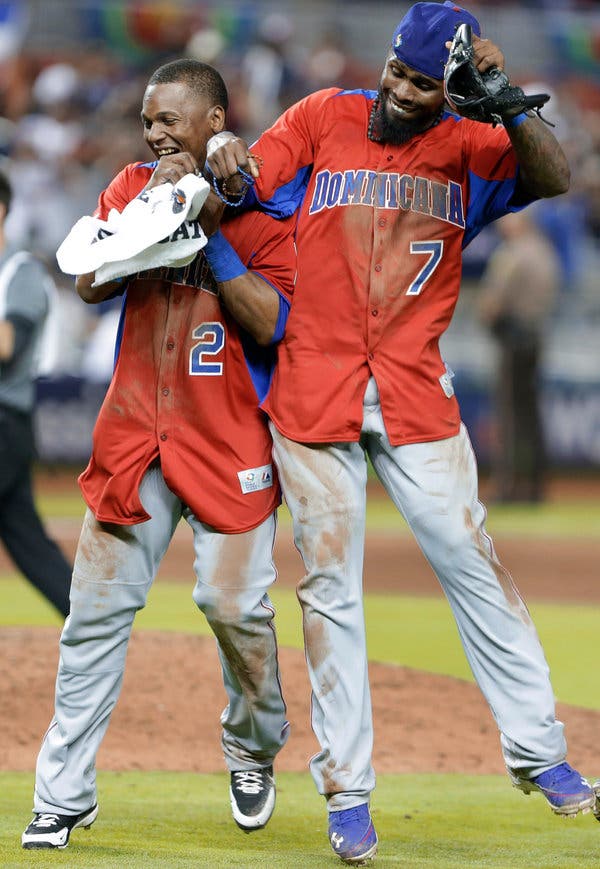
Every Monday, as the sun stretches its lazy fingers across the American landscape, baseball fans wake up to a peculiar ritual: the “Monday Morning Panic.” It’s not the existential dread of a new workweek—though that’s certainly a factor—but the sudden avalanche of injury reports flooding in from the weekend’s MLB games. Pitchers with “mild discomfort” in their elbows. Outfielders sidelined by “undisclosed lower-body issues.” Catchers nursing “day-to-day” wrist strains. The question lingers, as insidious as a curveball in the dirt: Is baseball’s weekend warrior ethos finally catching up with the sport’s aging warriors?
The Weekend Warrior’s Curse: When Leisure Becomes a Liability
Baseball, in its infinite wisdom, has always been a sport of extremes. The grind of a 162-game season collides with the sudden, jarring intensity of weekend matchups—back-to-back doubleheaders, late-night bullpen massacres, and the occasional ill-advised slide into second base that feels more like a dare than a strategic play. The “weekend warrior” mentality, where mere mortals cram their athletic ambitions into 48 hours, has long been a joke among gym-goers. But in MLB, it’s not a joke. It’s a ticking time bomb.
Pitchers, in particular, are the canaries in this coal mine. The human arm was never designed to hurl a baseball at 98 mph while contorting like a pretzel mid-delivery. Yet, every weekend, they do. The cumulative effect is a symphony of micro-tears, inflamed tendons, and the occasional ligament that snaps like an overstretched rubber band. The irony? Many of these injuries aren’t the result of a single, catastrophic event. They’re the slow, creeping decay of a body pushed beyond its limits—then pushed again, because baseball waits for no one.
The “Day-to-Day” Euphemism: MLB’s Favorite Mystery Box
If you’ve ever scrolled through an injury report, you’ve encountered the phrase “day-to-day.” It’s the MLB equivalent of a magician’s misdirection—a term so vague it could mean anything from a bruised ego to a torn UCL. The beauty of “day-to-day” is its versatility. It’s the perfect linguistic chameleon, shifting meaning based on the team’s needs. Need a pitcher to start on Tuesday? “Day-to-day.” Need an outfielder to DH tonight? “Day-to-day.” Need to buy time while a star player’s agent negotiates a contract extension? You guessed it—”day-to-day.”
This linguistic sleight of hand isn’t just a quirk of baseball culture; it’s a survival tactic. Front offices, managers, and players are locked in a delicate dance where transparency often takes a backseat to pragmatism. The result? A fanbase left to decipher cryptic tweets, vague MRI reports, and the occasional “personal matter” that may or may not involve a restraining order. The “Monday Morning Panic” thrives in this ambiguity, where every “questionable” tag feels like a high-stakes game of roulette.
The Domino Effect: When One Injury Topples the Entire Roster
Baseball’s injury culture isn’t just about individual players—it’s a domino effect that can topple an entire roster. Picture this: your ace starter tweaks his oblique during a weekend start. The next day, the team announces he’s “day-to-day.” By Wednesday, the bullpen has been taxed into oblivion because the starter’s “precautionary” day off stretched into a week. Meanwhile, the backup catcher, who was already nursing a nagging thumb issue, gets pressed into emergency duty and promptly aggravates it. Suddenly, the team’s entire pitching plan is in shambles, and the manager is left staring at his lineup card like it’s written in hieroglyphics.
This ripple effect is why the “Monday Morning Panic” isn’t just an annoyance—it’s a strategic nightmare. General managers spend the weekend in a state of controlled chaos, fielding calls from agents, scouring the waiver wire, and praying to the baseball gods that no one else gets hurt. The irony? The very players who are supposed to be the backbone of the team are often the ones most vulnerable to these cascading injuries. A single weekend’s worth of wear and tear can unravel months of careful roster construction.
The Science of Overuse: Why Baseball’s Body is Breaking Down
To understand the “Monday Morning Panic,” you have to understand the science—or lack thereof—behind baseball’s approach to player health. The human body is a marvel of engineering, but it wasn’t built for the modern MLB season. Pitchers throw more innings in a single start than most Little Leaguers throw in a year. Position players sprint, dive, and collide with the frequency of a crash-test dummy in a demolition derby. And yet, the sport’s response to this physical toll is often reactive, not proactive.
Pitching velocity has skyrocketed in recent years, but so have the injuries. The average fastball in 2024 clocks in at over 94 mph—a number that would’ve been unthinkable a decade ago. Yet, pitchers are still expected to throw 100 pitches in a game, then come back four days later and do it all over again. The result? A generation of arms that are wearing out faster than a catcher’s mitt in July. Meanwhile, position players are dealing with the fallout of increased defensive shifts, which force them to make explosive, unnatural movements that their bodies weren’t designed to handle.
The solution, many argue, lies in a fundamental shift in how baseball views player health. But change is slow in a sport where tradition often trumps innovation. Until then, the “Monday Morning Panic” will remain a weekly ritual—a reminder that even the most finely tuned athletes are, at their core, human.
The Fan’s Dilemma: Hope, Despair, and the Art of the Injury Report
For the average baseball fan, the “Monday Morning Panic” is a rollercoaster of emotions. One minute, you’re celebrating your team’s clutch weekend win. The next, you’re drowning in a sea of injury reports, wondering if your favorite player will ever be the same. It’s a psychological minefield where hope and despair are separated by the thinnest of margins.
There’s a dark humor to it, too. Fans have become amateur diagnosticians, parsing every word of an injury report like it’s the Rosetta Stone. “Mild discomfort” in the elbow? That’s code for “Tommy John surgery in three weeks.” “Undisclosed lower-body issue”? Translation: “He probably pulled his hamstring trying to leg out an infield single.” The fan’s imagination runs wild, filling in the gaps with worst-case scenarios that would make even the most jaded sportswriter blush.
Yet, for all its frustrations, the “Monday Morning Panic” is also a testament to the sport’s enduring appeal. Baseball is a game of inches, of split-second decisions, of bodies pushed to their absolute limits. The injuries are a reminder that these athletes aren’t just cyborgs in cleats—they’re human beings who, like the rest of us, are susceptible to the wear and tear of time. And in a world where so much of sports fandom is about control—fantasy teams, simulations, video games—there’s something oddly comforting about the unpredictability of real-life injuries.
The Future: Can Baseball Break the Cycle?
The question looms like a fastball at the letters: Can baseball break free from the cycle of weekend injuries and “day-to-day” limbo? The signs, so far, are mixed. Some teams are experimenting with pitch limits for young pitchers. Others are embracing the “opener” strategy, using relievers to soak up early innings and spare starters from overuse. Analytics have revolutionized how teams manage fatigue, but they’ve also created a new kind of pressure—one where every pitch is scrutinized, every inning is optimized, and the human element is often an afterthought.
Yet, for all the advancements, the core issue remains: baseball is a sport built on tradition, and tradition often resists change. The “Monday Morning Panic” may never disappear entirely, but perhaps it can be tempered. Maybe one day, we’ll look back on the era of 100-pitch starts and 200-inning seasons with the same bewilderment we now reserve for bloodletting as a medical treatment. Until then, fans will keep their fingers crossed every Sunday night, praying that the only thing hurting their team is the standings—not the disabled list.