What if the most pivotal player on a baseball diamond isn’t the slugger who sends home runs soaring over the fence, nor the pitcher who orchestrates the dance of deception with every pitch? What if, instead, it’s the quiet sentinel crouched behind home plate—the catcher—whose true mastery lies not in the roar of the bat, but in the whisper of a second? Enter the enigmatic world of Pop Time, a metric so precise it borders on sorcery, where split-second decisions dictate the fate of stolen bases, rallies, and even championships. This is the story of the catcher who doesn’t just catch the ball, but commands time itself.
The Art of Pop Time: Where Physics Meets Reflexes
Pop Time is more than a stat; it’s a ballet of biomechanics, a symphony of human reflexes set to the rhythm of a 95 mph fastball. At its core, it measures the time elapsed from the moment the ball hits the catcher’s glove to the instant the throw reaches the fielder’s mitt at second base. The average Pop Time hovers around 1.9 to 2.1 seconds, but the elite—those who wield it like a scalpel—dip below 1.8. To achieve this, catchers must synchronize three critical phases: the transfer (glove to hand), the footwork (the pivot from home plate to second), and the throw itself. Each is a microcosm of precision. A misstep in the transfer can cost a tenth of a second; a lazy footwork sequence can erase the advantage entirely. The best catchers, like Yadier Molina or J.T. Realmuto, make it look effortless, but the reality is a relentless pursuit of perfection.
Why Pop Time is the Ultimate Chess Move
In the high-stakes game of baseball, stolen bases are the currency of momentum. A runner on first is a ticking time bomb, and the catcher’s Pop Time is the detonator—or the fuse cutter. A throw that arrives in 1.7 seconds might nab a speedy runner; one that takes 2.2 seconds could gift him second base without a fight. But Pop Time isn’t just about raw speed. It’s about anticipation. The best catchers read the pitcher’s delivery, the runner’s lead, even the umpire’s positioning. They know when to hold the ball slightly longer to disrupt the runner’s timing, or when to unleash a laser beam to catch him napping. It’s a psychological duel as much as a physical one. A catcher with a sub-1.8 Pop Time doesn’t just stop steals; he psychologically disarms opponents, turning potential rallies into defensive triumphs.
The Hidden Toll: The Catchers Who Pay the Price
Yet for all its glory, Pop Time exacts a toll. The physical demands are brutal. Catchers endure the wear of crouching for 150+ games a season, their knees screaming in protest with every explosive pivot. The mental strain is equally taxing. A single misread—a hesitation in the transfer, a misstep in footwork—can cost a game. The best catchers develop an almost supernatural ability to compartmentalize, to block out the roar of the crowd and the pressure of the moment. But even they are human. The late Roy Halladay once remarked that catching is “the most physically demanding position in sports,” and Pop Time is the crucible where that demand is most visible. The catchers who thrive here are not just athletes; they are cyborgs of instinct, their bodies and minds finely tuned to the millisecond.
Breaking Down the Elite: What Separates the Good from the Great
Not all Pop Times are created equal. The difference between a 1.9 and a 1.7 often lies in the details. Take, for example, the transfer. Some catchers, like Salvador Perez, use a one-motion transfer—glove to hand in a single fluid motion—while others, like Buster Posey, employ a two-motion sequence for added control. Footwork is another battleground. The ideal pivot involves a quick shuffle step to the throwing side, followed by a powerful stride toward second. A catcher who lingers too long in the crouch or takes an extra shuffle loses precious milliseconds. Then there’s the throw itself. The arm action must be compact yet explosive, the follow-through precise. Even the grip on the ball matters—some catchers prefer a four-seam grip for speed, others a two-seam for accuracy. The elite catchers don’t just execute; they optimize every variable.
The Unseen Variable: The Pitcher’s Role in Pop Time
Pop Time isn’t solely the catcher’s domain. The pitcher’s delivery plays a crucial role. A pitcher with a slow, high leg kick gives the catcher more time to transfer and throw. Conversely, a pitcher with a quick, compact delivery like Jacob deGrom forces the catcher to be even more efficient. The best pitching-catching duos—think Sandy Koufax and Johnny Roseboro or Greg Maddux and Javier López—develop a sixth sense for each other’s timing. The catcher knows when the pitcher will release, allowing him to start his footwork early. The pitcher, in turn, trusts the catcher to handle the ball with surgical precision. It’s a partnership built on trust, communication, and an almost telepathic understanding of the game’s rhythms.
Can Pop Time Be Taught—or Is It Innate?
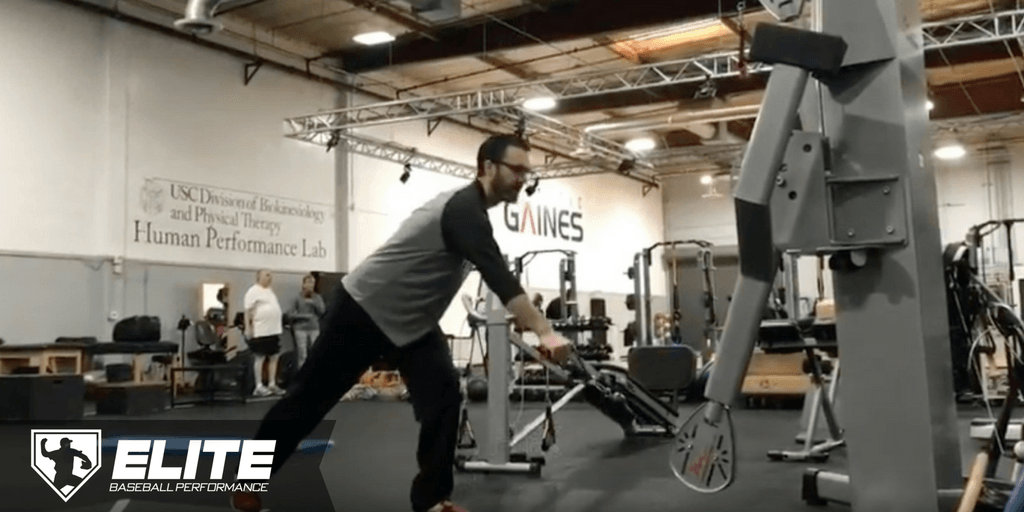
This is where the debate heats up. Some argue that Pop Time is a gift, a natural reflex honed by years of practice. Others believe it can be taught, that with the right coaching and repetition, any catcher can shave tenths of a second off their time. The truth likely lies somewhere in between. Raw athleticism plays a role—explosive hips, quick hands, and a strong arm are prerequisites. But technique is the great equalizer. Coaches like former MLB catcher and current catching coordinator Jose Molina (brother of Yadier) emphasize drills that isolate each phase of the Pop Time process. They use high-speed cameras to analyze footwork, resistance bands to strengthen the transfer motion, and weighted balls to build arm strength. The result? Catchers who once struggled to break 2.1 seconds now routinely dip below 1.8. The question isn’t whether Pop Time can be taught, but how far it can be pushed.
The Future of Pop Time: Technology and the Next Frontier
As baseball embraces the age of analytics, Pop Time is no exception. Teams now use TrackMan and other radar-based systems to measure every aspect of a catcher’s throw, from the angle of the release to the spin rate of the ball. Wearable technology tracks the biomechanics of the transfer and footwork, identifying inefficiencies that the naked eye might miss. Even virtual reality is entering the fray, with catchers using VR headsets to simulate game situations and refine their reactions. The next frontier? Real-time feedback during games. Imagine a catcher wearing a smart glove that vibrates when his transfer is too slow, or a heads-up display in his mask that flashes the Pop Time of a potential steal attempt. The line between human and machine is blurring, and Pop Time is at the forefront of this evolution.
A Final Thought: The Catchers Who Define an Era
Pop Time is more than a stat; it’s a legacy. It’s the reason why legends like Johnny Bench and Ivan Rodriguez are remembered not just for their bats, but for their ability to control the game from behind the plate. It’s why modern catchers like Yasmani Grandal and Will Smith command eight-figure contracts—not just for their offensive contributions, but for their defensive mastery. And it’s why, when the game hangs in the balance, the catcher’s glove isn’t just a piece of equipment. It’s a time machine, capable of rewinding rallies, defusing threats, and turning the tide of history in an instant. So the next time you watch a runner attempt a steal, ask yourself: Is he challenging the catcher’s arm, or the catcher’s time itself?