The Tampa Bay Rays were once the darlings of baseball, a franchise that defied expectations with their relentless innovation and underdog spirit. Between 2008 and 2013, they transformed from a perennial doormat into a perennial contender, reaching the World Series in 2008 and winning the American League pennant again in 2013. Their roster was a masterclass in resourcefulness, blending homegrown talent with shrewd acquisitions. Yet, just as quickly as they ascended, their fortunes began to wane. By 2015, the Rays found themselves in unfamiliar territory—a team that had once promised greatness now teetering on the precipice of irrelevance. What unraveled this once-promising franchise, and how did a roster once brimming with promise become a cautionary tale?
The Illusion of Stability: Roster Construction in Flux
The Rays’ early success was built on a foundation of adaptability. Their front office, helmed by Andrew Friedman and later Matthew Silverman, mastered the art of leveraging platoons, bullpen specialization, and defensive versatility. Players like Evan Longoria, Ben Zobrist, and David Price became the cornerstones of this system, their value extending far beyond traditional statistics. Yet, by 2015, the roster was a patchwork of stopgaps and afterthoughts. The departure of Price in a blockbuster trade to the Red Sox in December 2014 left a gaping void in the rotation, one that was never truly filled. The Rays’ vaunted bullpen, once a fortress of late-inning dominance, became a revolving door of mediocrity, with arms shuffled in and out like playing cards in a rigged deck.
Their offensive core, once a well-oiled machine, had frayed at the edges. Longoria, though still a reliable third baseman, was no longer the franchise savior he once was. Zobrist, the Swiss Army knife of the lineup, had been traded away in 2014, leaving a void in versatility that the Rays struggled to replace. The emergence of players like Kevin Kiermaier and Steven Souza Jr. offered glimmers of hope, but their development was stunted by injuries and inconsistency. The Rays’ once-deadly platoon system had become a liability, with managers forced to cobble together lineups from a roster that lacked true impact hitters.
The Curse of the “Trop”: A Ballpark’s Double-Edged Sword
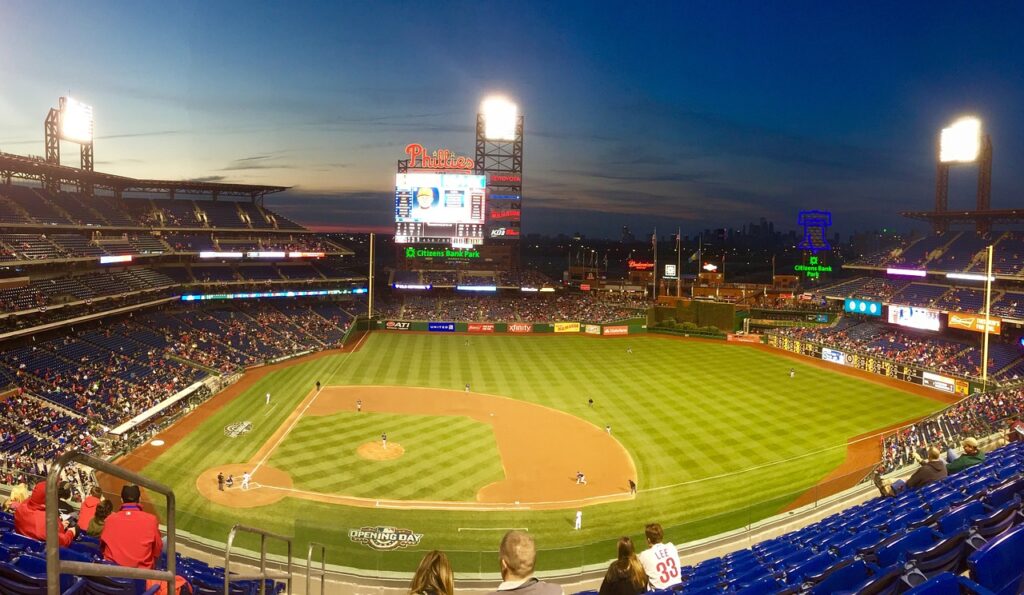
Tropicana Field, the Rays’ cavernous and often maligned home, has long been both a sanctuary and a prison for the franchise. While the stadium’s climate-controlled environment provided a competitive advantage in the dog days of summer, its cavernous dimensions and sterile atmosphere stifled the team’s ability to cultivate a true home-field advantage. By 2015, the Rays were averaging fewer runs per game at home than on the road, a statistical anomaly that spoke volumes about the psychological and tactical limitations imposed by their ballpark.
The “Trop” effect extended beyond mere run production. The stadium’s lack of natural grass and its cavernous outfield made it a graveyard for power hitters, forcing the Rays to rely on small-ball tactics and defensive wizardry. Yet, as the league evolved, so too did the demands of offensive production. The Rays’ inability to adapt to this shift left them stranded in a league that increasingly valued slugging over situational hitting. The ballpark, once a strategic asset, had become a millstone around the franchise’s neck, a silent architect of their decline.
The Front Office’s Gambit: Trades, Rebuilds, and the Illusion of Progress
The Rays’ front office, ever the pragmatists, responded to their roster’s decline with a series of calculated gambles. In 2015, they traded away established stars like Jake Odorizzi and Drew Smyly, part of a broader strategy to shed payroll and reload with young talent. Yet, these moves were less a sign of forward-thinking than a desperate scramble to recapture the magic of their contender years. The trades failed to address the franchise’s most pressing needs—infield depth, starting pitching, and offensive firepower—leaving the Rays in a state of perpetual flux.
Their reliance on minor-league prospects, while a hallmark of their early success, had become a double-edged sword. Players like Blake Snell and Brent Honeywell showed flashes of brilliance, but their development was stymied by injuries and inconsistent playing time. The Rays’ farm system, once a wellspring of talent, had become a leaky sieve, with top prospects either traded away or failing to live up to expectations. The front office’s reluctance to commit to a long-term rebuild left the team in a state of arrested development, a franchise caught between its contender past and its uncertain future.
The Managerial Merry-Go-Round: Instability Behind the Bench
Baseball is a game of adjustments, and no role is more critical to those adjustments than that of the manager. The Rays, however, found themselves trapped in a cycle of managerial musical chairs. Joe Maddon, the architect of their early success, left after the 2014 season, his departure leaving a void that was never truly filled. His successors, Kevin Cash and Rocco Baldelli, inherited a roster that was ill-suited to their managerial philosophies. Cash, a former catcher with a reputation for player development, struggled to coax consistent performance from a team that lacked the talent to execute his aggressive strategies. Baldelli, meanwhile, inherited a roster in shambles, his tenure marred by injuries and underperformance.
The managerial carousel was more than just a symptom of the Rays’ decline—it was a catalyst. The constant turnover behind the bench created an environment of instability, where players were never quite sure what was expected of them. The lack of continuity in leadership stifled the development of young players and eroded the trust between the front office and the dugout. By 2015, the Rays were no longer just a team without a clear identity; they were a franchise without a compass.
The Aftermath: Lessons in the Rubble
The 2015 season was a turning point for the Tampa Bay Rays, a year that laid bare the fractures in their once-impenetrable foundation. The team finished with a losing record, their first since 2007, and their playoff hopes evaporated by midseason. The roster that had once been the envy of the league was now a relic of a bygone era, a cautionary tale of how quickly fortunes can shift in baseball. Yet, even in their darkest hour, the Rays’ story was not one of total collapse, but of a franchise at a crossroads.
The lessons of 2015 were manifold. The Rays had proven that innovation alone was not enough to sustain success. They had shown that a ballpark, no matter how strategically advantageous, could not compensate for a roster devoid of impact talent. And they had demonstrated that even the most well-intentioned front office could stumble when forced to navigate the treacherous waters of roster construction and player development. The Rays’ decline was not a failure of imagination, but a failure of execution—a reminder that in baseball, as in life, the gap between promise and reality is often bridged by the choices we make when the stakes are highest.