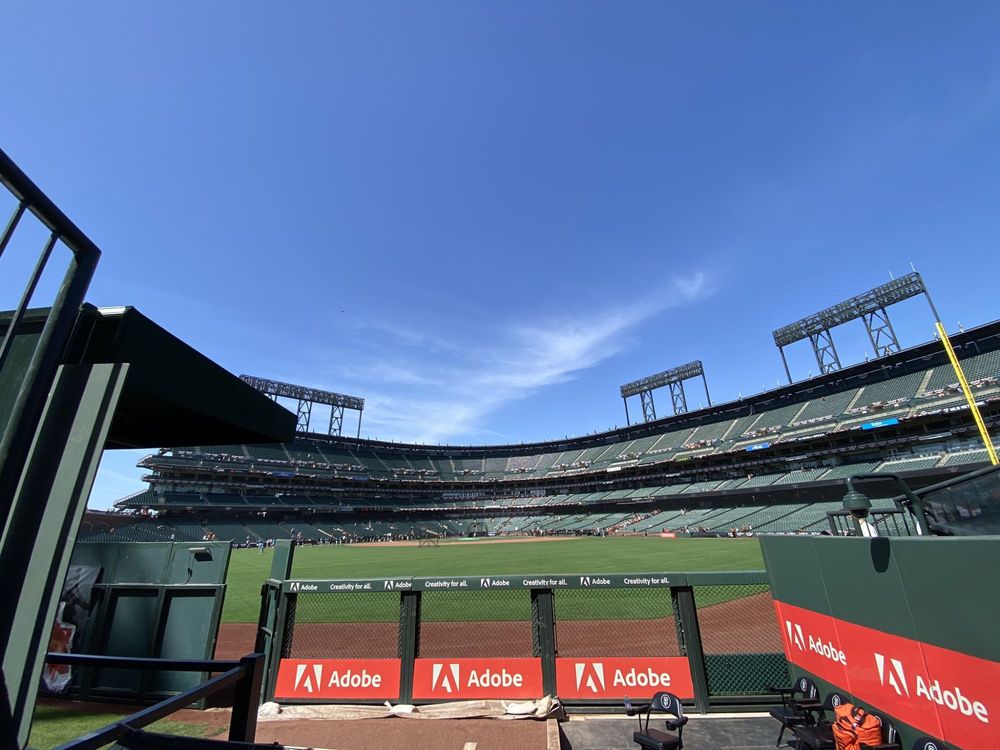
The moment the visiting team’s relief pitcher steps onto the mound at Oracle Park, a palpable shift occurs—not just in the air, but in the collective consciousness of the crowd. The bullpen, tucked away in the depths of the stadium’s cavernous outfield, becomes a stage for both redemption and ridicule. For the pitcher, it’s a solitary walk, a journey that can either crown them a hero or consign them to the annals of baseball’s most infamous “jog of shame.” This is the story of the visitor’s bullpen in San Francisco, where every step is a gamble, and every pitch is a potential turning point in a game that may already feel lost.
The Bullpen as a Psychological Battleground
Oracle Park’s bullpen is not merely a functional space—it’s a psychological crucible. Perched in the right-field corner, it’s a world away from the dugout, a liminal zone where relief pitchers must mentally recalibrate in seconds. The walk from the bullpen to the mound is a gauntlet, a corridor of judgment where the weight of a team’s fortunes rests on a single pair of shoulders. The crowd, ever the maestro of baseball’s emotional symphony, doesn’t just watch—they *react*. A slow jog earns murmurs; a brisk stride invites jeers. The bullpen’s design, with its open-air exposure to the elements and the fans, ensures that no pitcher can hide. Every stumble, every hesitation, is magnified under the gaze of 40,000 spectators. It’s a test of composure, where the difference between a triumphant stride and a trudging march can hinge on something as trivial as the angle of one’s cap.
The Jog of Shame: A Rite of Passage for Relievers
Few experiences in baseball are as universally dreaded as the “jog of shame.” This is the slow, heavy-footed procession back to the dugout after a blown save, a walk that feels like a forced march through enemy territory. In San Francisco, where the Giants’ fanbase is as passionate as it is vocal, the jog is more than a metaphor—it’s a ritual. The bullpen’s proximity to the outfield bleachers means that the visiting pitcher’s retreat is often accompanied by a chorus of boos, a sonic reminder of failure. Yet, it’s not just the crowd that amplifies the humiliation. The very architecture of Oracle Park ensures that the pitcher’s path is a spectacle. The long, exposed walk forces them to confront their shortcomings, to feel the full brunt of a game slipping away. For some, it’s a lesson in humility; for others, it’s a scar that lingers long after the final out.
The Bullpen’s Role in the Game’s Narrative
The bullpen isn’t just a place—it’s a character in the story of every baseball game. In San Francisco, it’s a protagonist that can shift the narrative in an instant. A reliever’s appearance is often the climax of a slow-burning tension, the moment when the game’s fate hangs in the balance. The bullpen’s location, far from the infield’s drama, makes its influence all the more intriguing. It’s a place of preparation, of last-minute adjustments, where pitchers warm up in isolation, their routines a silent ballet of concentration. Yet, when they’re called upon, they must transition seamlessly into the spotlight, their every move dissected by analysts and fans alike. The bullpen’s role is to be the great equalizer, the wildcard that can turn a deficit into a victory or a lead into a collapse. In San Francisco, where the Giants have built their legacy on clutch performances, the bullpen’s reputation is as much a part of the lore as the players themselves.
The Challenges of the Visitor’s Bullpen
For visiting teams, the bullpen in San Francisco presents a unique set of challenges. The park’s dimensions—especially the short porch in right field—favor power hitters, making it a daunting environment for relievers tasked with preserving a lead. The bullpen’s distance from the mound also means that pitchers must be ready to enter the game at a moment’s notice, often without the luxury of a full warm-up. The humidity and wind off the bay can further complicate matters, turning a routine fastball into a potential disaster. Compounding these physical challenges is the psychological pressure. The Giants’ fanbase is known for its intensity, and the bullpen’s open-air design ensures that visiting pitchers are never far from the roar of disapproval. It’s a high-wire act, where one misstep can unravel weeks of preparation. For relievers, the visitor’s bullpen in San Francisco isn’t just a test of skill—it’s a crucible of mental fortitude.
The Ritual of the Bullpen Phone
Before the advent of instant replay and advanced analytics, the bullpen phone was the lifeline between the dugout and the relief corps. In San Francisco, this ritual takes on a near-mythic quality. The phone, a relic of a bygone era, is now a symbol of tradition in a sport that’s increasingly dominated by technology. When the manager calls down to the bullpen, the reliever’s heart rate spikes. The conversation is brief, cryptic—often just a number (“We need you in the 7th”) or a pitch type (“Get ready to slurve”). The walk back to the dugout, phone in hand, is a moment of suspended animation. Will they be the hero or the goat? The bullpen phone doesn’t just relay instructions; it carries the weight of expectation, a silent witness to the highs and lows of relief pitching. In San Francisco, where every game is a story, the phone is the first line of the next chapter.
The Aftermath: Redemption or Relegation
The walk back to the dugout after a blown save is a study in contrasts. Some pitchers straighten their caps, their faces a mask of determination. Others slump, their shoulders betraying the exhaustion of a game that slipped through their fingers. In San Francisco, the aftermath is never just about the individual—it’s about the team’s resilience. The bullpen’s role extends beyond the mound; it’s a microcosm of baseball’s ebb and flow. A reliever who fails today may be the hero tomorrow, their redemption arc playing out in the same outfield where they once trudged in shame. The visitor’s bullpen, with all its challenges and indignities, is a reminder that baseball is a game of second chances. Yet, for the pitcher who’s just endured the jog of shame, the path to redemption is never guaranteed. It’s a gamble, a roll of the dice, and in San Francisco, the house always has the advantage.