
In the pantheon of baseball legends, few names resonate as deeply as Tony Gwynn’s. The man they called “Mr. Padre” wasn’t just a hitter—he was a maestro at the plate, a virtuoso of contact hitting whose bat seemed to defy the very laws of physics. But beyond the 3,141 hits and eight National League batting titles lies another dimension of his legacy: the world of baseball cards. Gwynn’s cards aren’t just collectibles; they’re time capsules, each one a frozen moment of greatness that continues to captivate fans and investors alike. Whether you’re a seasoned collector or a newcomer to the hobby, the Tony Gwynn baseball card market offers surprises, hidden gems, and a few jaw-dropping price tags that might just make you reconsider what you thought you knew about sports memorabilia.
The Hall of Fame Halo: Why Tony Gwynn Cards Command Attention
Tony Gwynn’s induction into the Baseball Hall of Fame in 2007 wasn’t just a ceremonial milestone—it was a seismic event for collectors. Hall of Fame cards instantly gain prestige, and Gwynn’s are no exception. His 1983 Topps rookie card, for instance, is the crown jewel of many collections. But why does it hold such allure? It’s not just about the Hall of Fame plaque; it’s about the story. Gwynn’s rookie year came during a transitional era in baseball, when the sport was shifting from the high-scoring 1970s to the more analytical 1980s. His card represents the dawn of a new kind of hitter—one who prioritized precision over power, a trait that defined his career. The scarcity of high-grade versions of this card, especially those graded PSA 10, has driven prices into the stratosphere. A pristine copy can fetch well over $10,000, a figure that would make even the most seasoned collectors do a double-take.
Rookie Cards: The Gateway to Gwynn’s Legacy
If you’re looking to dip your toes into the Tony Gwynn market, his rookie cards are the natural starting point. The 1983 Topps card is the undisputed king, but it’s not the only game in town. The 1984 Fleer Update is another coveted piece, often overlooked in favor of its Topps counterpart but no less desirable. What makes these rookie cards so special? For starters, they capture Gwynn in his prime, before the wear and tear of a long career could dull the shine of his legend. The 1983 Topps card, in particular, benefits from the fact that Gwynn was a rookie sensation, winning the NL Rookie of the Year award that season. The combination of his on-field success and the card’s age has created a perfect storm of demand. But be warned: finding a high-grade version is like searching for a needle in a haystack. The market is flooded with lower-grade copies, but those pristine PSA 10s? They’re rarer than a Gwynn inside-the-park home run.
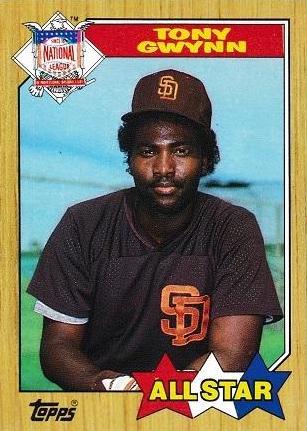
Vintage Gems: The 1987 Topps Set and Beyond
While rookie cards often steal the spotlight, vintage Tony Gwynn cards from the late 1980s and early 1990s are where the real intrigue lies. The 1987 Topps set, for example, features Gwynn in his prime, a season where he batted .370 and won his second batting title. His card from this set isn’t as iconic as his rookie, but it’s a testament to his consistency. What makes these cards fascinating is their relative affordability compared to rookie cards. A high-grade 1987 Topps Gwynn can be had for a fraction of the cost of a PSA 10 rookie, yet it offers nearly the same nostalgic appeal. Collectors who want to own a piece of Gwynn’s prime without breaking the bank often turn to these mid-career cards. And let’s not forget the 1991 Topps set, another vintage gem that captures Gwynn at the height of his powers. These cards are like hidden treasure—underrated, underappreciated, but brimming with potential.
Modern Marvels: The Rise of Autographed and Memorabilia Cards
If vintage cards are the foundation of the Tony Gwynn market, then modern autographed and memorabilia cards are the scaffolding that’s pushing it into new territory. Gwynn’s autograph, especially on cards from the 1990s and early 2000s, has become a hot commodity. The 1993 Upper Deck SP Authentic autograph is a prime example. These cards aren’t just about the signature; they’re about the story behind it. Gwynn was notoriously selective with his autographs, making each one a rare find. But it’s not just autographs that are driving the market. Memorabilia cards, featuring game-used bat chips or jersey swatches, are also gaining traction. These cards offer a tangible connection to Gwynn’s on-field exploits, and collectors are willing to pay a premium for that intimacy. The 2001 Upper Deck Premier game-used bat card, for instance, is a modern marvel that blends artistry with authenticity. It’s a far cry from the static images of Gwynn’s rookie cards, offering instead a piece of the man himself.
The Investment Angle: Are Tony Gwynn Cards a Safe Bet?
For many collectors, the appeal of Tony Gwynn cards isn’t just sentimental—it’s financial. But is investing in Gwynn’s cards a smart move? The answer isn’t as straightforward as you might think. On one hand, Gwynn’s Hall of Fame status and his reputation as one of the greatest hitters of all time provide a strong foundation for long-term value. His cards have consistently appreciated over the years, and there’s little reason to believe that trend will reverse. On the other hand, the market for Gwynn cards isn’t immune to fluctuations. Like all collectibles, prices can be volatile, influenced by factors like grading trends, market saturation, and even broader economic conditions. That said, Gwynn’s cards have a built-in fanbase. The nostalgia factor alone ensures that demand will remain steady, if not grow. For investors, the key is to focus on high-grade cards with strong provenance. A PSA 10 rookie card, for example, is a safer bet than a lower-grade version, simply because the supply of pristine copies is so limited. And if you’re willing to take a gamble on modern autographed cards, the potential rewards could be substantial.
Beyond the Obvious: Lesser-Known Tony Gwynn Cards Worth Your Attention
If you’re tired of the same old Tony Gwynn cards dominating the conversation, it’s time to dig deeper. The market is full of hidden gems that offer just as much character, if not more. Take the 1985 Topps Traded card, for instance. It’s not as flashy as his rookie, but it’s a unique piece of Gwynn’s early career, capturing a moment when he was still proving himself. Then there’s the 1990 Leaf card, a stunning piece of artwork that’s often overshadowed by more mainstream sets. And let’s not forget the regional issues, like the 1988 Pacific Coast League All-Star card. These cards are like secret handshakes for collectors, offering a glimpse into Gwynn’s journey that most people overlook. The beauty of collecting Tony Gwynn cards isn’t just about owning the most expensive pieces—it’s about uncovering the stories they tell. Each card is a chapter in a larger narrative, one that’s still being written.
The Future of Tony Gwynn Cards: What’s Next for Collectors?
As we look ahead, the Tony Gwynn card market is poised for some fascinating developments. One trend to watch is the rise of relic and autograph cards featuring Gwynn’s game-used memorabilia. These cards are already gaining traction, but as more collectors seek unique connections to the past, their value is likely to soar. Another area of growth is the international market. Gwynn’s popularity extended far beyond the United States, and his cards are increasingly sought after in countries like Japan and Korea. This global demand could drive prices even higher, especially for rare vintage cards. And let’s not forget the role of technology. Grading services like PSA and BGS are constantly refining their processes, which means that the bar for high-grade cards is only getting higher. A PSA 10 Gwynn rookie card today might be the equivalent of a PSA 9 in a decade—further tightening the supply of top-tier copies. For collectors, the future is bright. The question isn’t whether Tony Gwynn cards will retain their value—it’s how much more they’ll be worth in the years to come.
The world of Tony Gwynn baseball cards is a microcosm of the man himself: rich, layered, and full of surprises. Whether you’re drawn to the pristine beauty of a rookie card, the understated charm of a mid-career gem, or the modern allure of an autographed relic, there’s something for every type of collector. Gwynn’s cards aren’t just pieces of cardboard and ink—they’re portals to a bygone era, a time when baseball was simpler, purer, and more magical. And as long as fans continue to celebrate his legacy, those cards will remain a testament to the enduring power of the game’s greatest hitters.









