In the grand bazaar of baseball cards, where nostalgia and speculation collide like a fastball and a Louisville Slugger, a new phenomenon has emerged—one that’s reshaping the very landscape of collecting. These are the Topps Buyback Cards, a curious blend of exclusivity and legacy, where the past and present intertwine in a way that feels almost alchemical. Imagine stumbling upon a relic from a bygone era, only to discover it’s been kissed by the modern era’s golden touch. That’s the allure of these cards: they’re not just pieces of cardboard; they’re time capsules with a pedigree, artifacts that whisper promises of value and prestige.
At their core, Topps Buyback Cards are a fusion of tradition and innovation, a bridge between the vintage charm of yesteryears and the high-stakes world of contemporary collecting. They’re like the baseball equivalent of a secret handshake among the initiated—a way for the powers that be to reward loyalty while stoking the flames of desire among those who chase the rarest of gems. But what makes them so magnetic? Why are they causing such a stir in a hobby already brimming with hyperbole and hype? To understand their appeal, we must first peel back the layers of their creation, their purpose, and the psychology that makes them irresistible.
The Genesis of a Collectible: How Buyback Cards Came to Be
Picture this: the late 1980s and early 1990s, a time when baseball cards were as ubiquitous as bubblegum and as essential as a mitt in the dugout. Topps, the titan of the trading card industry, was riding high on the wave of the junk wax era, churning out stacks of cardboard that flooded living rooms and schoolyards alike. But as the market became saturated, the novelty wore thin. Enter the Buyback Program—a stroke of genius that transformed the mundane into the magnificent.
The concept was simple yet revolutionary: Topps would buy back select cards from the secondary market, repackage them with a special stamp or sticker, and reintroduce them as limited-edition treasures. These weren’t just any cards; they were the crown jewels of the hobby, the ones that had stood the test of time and proven their worth. By repurchasing and reissuing them, Topps didn’t just acknowledge their significance—they immortalized them, turning them into artifacts of both history and desire.
It was a masterclass in scarcity economics. In a world where abundance had dulled the thrill of the chase, Topps created artificial scarcity, a trick as old as the game itself. The Buyback Program wasn’t just about preserving the past; it was about redefining the future of collecting. It turned every card into a potential lottery ticket, a gamble on what might one day be deemed worthy of the Buyback treatment. And like all great gambles, it worked.
The Alchemy of Scarcity: Why These Cards Are Worth Their Weight in Gold
Scarcity is the lifeblood of collectibles, the invisible hand that turns the ordinary into the extraordinary. But Buyback Cards aren’t scarce in the way that a limited print run is scarce—they’re scarce because they’re handpicked, curated, and imbued with a story. Each one is a testament to its own legacy, a badge of honor for the collector who possesses it. It’s the difference between a mass-produced trinket and a one-of-a-kind relic, between a faceless crowd and a singular star.
Consider the psychology at play. When a collector acquires a Buyback Card, they’re not just buying a piece of cardboard; they’re buying a narrative. They’re saying, “This card matters.” And in doing so, they elevate its status from mere collectible to cultural artifact. The Buyback stamp isn’t just ink on paper—it’s a seal of approval, a wink from the powers that be that says, “Yes, this one is special.” It’s the baseball card equivalent of a Michelin star, a mark of distinction that transforms the mundane into the magnificent.
This alchemy of scarcity and storytelling is what makes Buyback Cards so potent. They’re not just investments; they’re trophies. They’re the kind of cards that inspire envy, admiration, and a healthy dose of FOMO (fear of missing out) among those who haven’t yet secured one. In a hobby where the next big thing is always just around the corner, Buyback Cards offer a rare commodity: certainty. They’re a reminder that not all that glitters is gold, but some of it most certainly is.
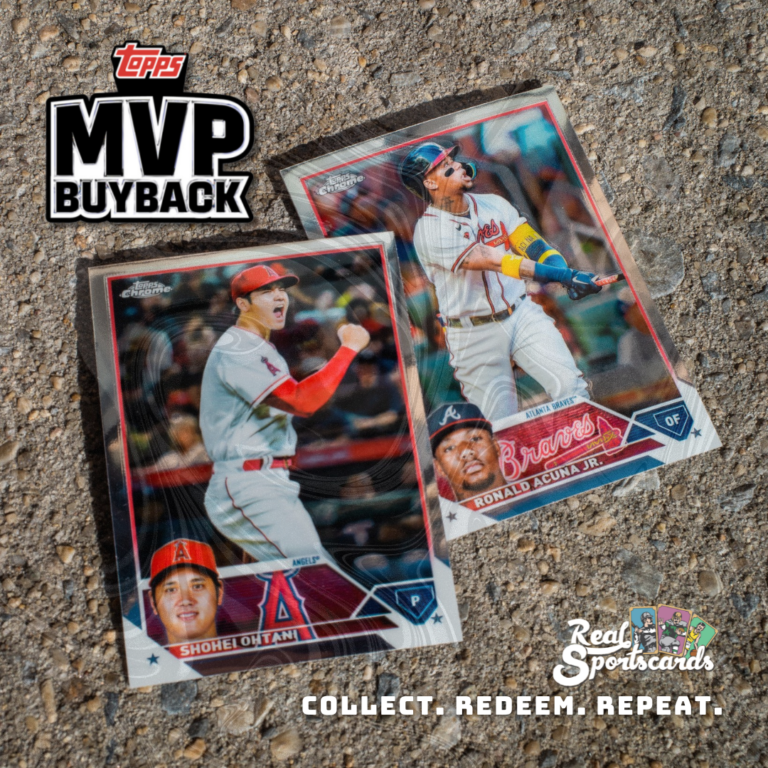
The MVP Factor: How Buyback Programs Elevate the Game’s Brightest Stars
Not all Buyback Cards are created equal. Some are the stuff of legend, the kind of cards that make collectors weak in the knees and reach for their checkbooks without hesitation. These are the MVP Buyback Cards—the ones that feature the game’s most iconic players, the ones that carry the weight of history and the promise of future glory. They’re the Babe Ruths, the Mickey Mantles, the Mike Trouts of the trading card world, cards that transcend their physical form to become symbols of greatness.
The MVP Buyback Program is a masterstroke of marketing and nostalgia, a way to celebrate the legends of the game while also tapping into the zeitgeist of modern collecting. By focusing on the most recognizable names in baseball, Topps ensures that these cards will always have an audience. They’re the kind of cards that can sit in a display case for decades, gaining value with each passing year, like a fine wine aging in a cellar. But they’re also the kind of cards that can spark a bidding war at an auction, the kind that make headlines when they change hands for six or seven figures.
What makes the MVP Buyback Cards so compelling is their duality. They’re both a nod to the past and a wink to the future. They honor the players who defined generations while also catering to the new wave of collectors who see baseball cards as more than just a hobby—they see them as investments, as pieces of art, as windows into the soul of the game. It’s a delicate balance, one that Topps has struck with remarkable precision. The result is a program that feels both timeless and timely, a bridge between eras that collectors can’t help but cross.
The Ripple Effect: How Buyback Cards Are Reshaping the Market
The introduction of Buyback Cards hasn’t just changed the way we think about trading cards—it’s changed the way we think about value itself. In a market where the next big thing is always just around the corner, Buyback Cards offer a rare commodity: stability. They’re the kind of cards that don’t just hold their value; they appreciate it, like a vintage car that becomes more desirable with each passing year. And in a hobby where the ground can shift beneath your feet at any moment, that kind of certainty is priceless.
But the impact of Buyback Cards goes beyond the individual collector. They’ve created a ripple effect that’s transforming the entire market. For one, they’ve elevated the status of vintage cards, proving that not all that’s old is obsolete. In fact, in the world of Buyback Cards, old is gold. The older the card, the more likely it is to be deemed worthy of the Buyback treatment, and the more valuable it becomes. It’s a virtuous cycle that rewards patience, discernment, and a deep appreciation for history.
They’ve also sparked a renewed interest in the art of collecting itself. In an era where digital collectibles and NFTs are all the rage, Buyback Cards offer a refreshing counterpoint—a reminder that sometimes, the simplest things are the most rewarding. There’s a tactile pleasure to holding a Buyback Card in your hands, to feeling the weight of its history, to tracing the edges of its design with your fingertips. It’s a sensory experience that digital collectibles can’t replicate, a connection to the past that feels almost sacred.
And let’s not forget the social aspect. Buyback Cards have become a currency of camaraderie among collectors, a way to bond over shared passions and mutual admiration. Whether it’s debating the merits of a particular Buyback stamp or swapping stories about the hunt for a rare card, these cards have brought people together in ways that transcend the hobby itself. They’ve turned collecting from a solitary pursuit into a communal experience, a celebration of the game and the people who love it.

The Future of Buyback Cards: A Glimpse into What’s Next
As the baseball card market continues to evolve, so too will the Buyback Program. Topps has already shown a willingness to experiment, to push the boundaries of what’s possible and redefine the limits of collecting. And with each new iteration of the program, the stakes get higher, the cards become more coveted, and the market responds in kind.
One can only imagine what the future holds. Will we see Buyback Cards featuring players from the Negro Leagues, a long-overdue acknowledgment of the game’s rich and diverse history? Will there be Buyback Cards that celebrate the most iconic moments in baseball, cards that freeze time and preserve the magic of a walk-off homer or a no-hitter? The possibilities are as endless as they are exciting. One thing is certain: the Buyback Program will continue to be a driving force in the world of baseball cards, a beacon of exclusivity and prestige that collectors will chase for generations to come.
But perhaps the most intriguing aspect of the Buyback Program’s future is its potential to inspire other innovations. If Topps can turn the act of repurchasing and reissuing cards into an art form, what’s to stop other companies from following suit? Imagine a world where every major trading card company has its own Buyback Program, where scarcity is engineered with the precision of a master craftsman. It’s a tantalizing prospect, one that could revolutionize the hobby as we know it.
The Collector’s Dilemma: To Hold or To Sell?
For collectors, the rise of Buyback Cards presents a tantalizing dilemma: to hold or to sell? On one hand, there’s the undeniable allure of holding a card that’s destined to appreciate in value, a card that could one day be the centerpiece of a museum exhibit or a headline-grabbing auction. On the other hand, there’s the joy of sharing your collection with the world, of letting others marvel at the cards that bring you so much pleasure.
It’s a question that every collector must answer for themselves, a balance between the thrill of the chase and the satisfaction of ownership. But one thing is clear: Buyback Cards have made the decision harder than ever. They’ve turned collecting from a simple hobby into a high-stakes game, a dance between passion and profit. And in that dance, there are no wrong moves—only choices that reflect the collector’s heart.
Whether you’re a seasoned veteran with a collection that spans decades or a newcomer dipping your toes into the world of baseball cards, the Buyback Program offers something for everyone. It’s a reminder that collecting is about more than just the cards—it’s about the stories they tell, the memories they evoke, and the connections they forge. It’s about the thrill of the hunt, the joy of discovery, and the pride of ownership.
In the end, Buyback Cards are more than just a trend—they’re a revolution. They’re a testament to the enduring power of baseball, to the magic of collecting, and to the timeless appeal of the game itself. They’re a bridge between eras, a celebration of the past, and a promise for the future. And as long as there are collectors who dream of owning a piece of history, they’ll remain a cornerstone of the hobby, a beacon of exclusivity and prestige that shines as brightly as the game it represents.