There is something almost hypnotic about watching a batsman in full flow. The way the body coils and uncoils, the precise timing of the bat’s descent, the quiet confidence of a well-struck cover drive—it feels like a dance between human instinct and mechanical perfection. Yet, for all its elegance, batting remains one of cricket’s most misunderstood arts. Beginners often see only the surface: the swing, the sound, the spectacle. What they don’t realize is that beneath every elegant stroke lies a symphony of biomechanics, muscle memory, and split-second decision-making. To truly appreciate batting, you must first understand what it *really* looks like—not just in motion, but in the intricate mechanics that make it possible.
The Stance: Where It All Begins
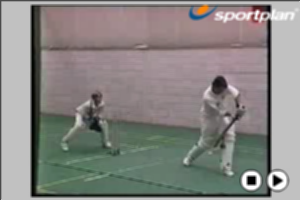
The foundation of any great innings is the stance. It’s not just about standing still; it’s about creating a dynamic equilibrium. A batsman’s stance is a carefully calibrated blend of stability and readiness, where the feet shoulder-width apart, knees slightly bent, and weight evenly distributed form the base of a pyramid. The front shoulder should be slightly closed, pointing toward the bowler, while the back shoulder remains open, allowing for a full range of motion. This positioning isn’t arbitrary—it’s designed to minimize lateral movement while maximizing rotational power. The key lies in the subtlety: too rigid, and the batsman loses fluidity; too loose, and balance becomes a liability. The stance is the silent architect of every shot, dictating the trajectory of the ball before it’s even bowled.
The Grip: A Delicate Dance of Fingers and Will
Few aspects of batting are as overlooked as the grip, yet it is the conduit through which every intention flows. The hands must cradle the bat with the precision of a surgeon, fingers wrapped around the handle in a V-shape just above the splice. The top hand, usually the left for right-handed batsmen, provides the primary control, while the bottom hand acts as the stabilizer, adjusting pressure in real time. The grip isn’t static—it’s a living thing, shifting subtly as the ball approaches. A death grip stifles wrist flexion; a loose hold invites disaster. The ideal grip balances firmness with suppleness, allowing the batsman to manipulate the bat’s angle at the last millisecond. It’s a reminder that batting is as much about touch as it is about power.
The Backlift: The Prelude to Power
Watch closely, and you’ll notice that the backlift is where the magic begins. As the bowler approaches, the bat rises in a smooth arc, not too high, not too low—just enough to generate momentum without sacrificing control. The key is the *plane* of the backlift. A vertical lift (where the bat points skyward) can lead to over-swinging, while a horizontal one (parallel to the ground) risks underpowering the shot. The optimal backlift is a diagonal one, angled between 45 and 60 degrees, allowing the batsman to transition seamlessly into the downswing. This isn’t just about aesthetics; it’s about physics. The angle of the backlift determines the bat’s speed at impact, which in turn dictates the ball’s trajectory. A well-executed backlift is the difference between a mistimed slog and a perfectly timed cover drive.
The Downswing: Where Timing Meets Technique
The downswing is where theory meets reality. It’s the moment when the batsman’s intentions collide with the ball’s trajectory, and it’s governed by two critical factors: bat speed and bat path. The bat must accelerate through the hitting zone, not before or after, but *during* contact. This requires a whip-like motion, where the wrists hinge naturally, adding an extra burst of velocity. The path of the bat is equally crucial. A straight downswing (where the bat moves vertically) is ideal for straight drives, while a slightly horizontal path (where the bat moves across the body) suits square cuts and pulls. The challenge lies in synchronizing the downswing with the ball’s arrival—too early, and the shot goes skyward; too late, and it’s a bottom-edge disaster. The best batsmen make it look effortless, but the mechanics are anything but.
The Follow-Through: The Silent Storyteller
After the ball has flown to the boundary, the batsman’s work isn’t quite done. The follow-through is the final act in this mechanical ballet, and it reveals more about the shot than any other phase. A high follow-through, where the bat finishes above the shoulder, often indicates a lofted drive or a cut shot. A low follow-through, where the bat ends near the hip, suggests a defensive prod or a late cut. The follow-through isn’t just for show—it’s a visual cue to coaches and teammates alike, offering instant feedback on the shot’s quality. But it’s also a biomechanical necessity. A full follow-through ensures that the energy from the downswing isn’t wasted; instead, it’s transferred into the shot, maximizing power and control. Even in failure, the follow-through tells a story—one of commitment, or perhaps, of a slight miscalculation.
The Weight Transfer: The Invisible Force
Beneath every shot lies an invisible force: weight transfer. It’s the subtle shift of body weight from the back foot to the front, a transfer that begins the moment the bowler releases the ball. The back foot acts as the anchor, grounding the batsman, while the front foot becomes the fulcrum, dictating the shot’s direction. A late weight transfer (where the front foot lands after the ball is bowled) is a common flaw among beginners, leading to mistimed shots and poor balance. The ideal transfer is smooth and continuous, with the front foot pivoting slightly to allow the hips to rotate. This rotation is the engine of power—without it, even the most technically sound batsman will struggle to generate force. Weight transfer is the unsung hero of batting mechanics, the silent partner to every stroke.
The Head Position: The Anchor in the Storm
Of all the elements in batting mechanics, the position of the head is perhaps the most critical—and the most neglected. The head must remain still, like a rock in a storm, providing a stable reference point for the eyes to track the ball. A common mistake among beginners is to jerk the head forward or sideways, disrupting the line of sight and leading to poor judgment. The ideal head position is directly over the front shoulder, with the eyes level and focused on the ball’s seam. This alignment ensures that the batsman sees the ball in its entirety, from release to impact. But it’s not just about sight—it’s about balance. A moving head disrupts the body’s center of gravity, making it harder to transfer weight and rotate the hips. The best batsmen make it look effortless, but maintaining a steady head under pressure is one of the hardest skills to master.
The Mental Game: The Invisible Batting Coach
No discussion of batting mechanics would be complete without acknowledging the mental aspect. The best players don’t just execute; they *anticipate*. They read the bowler’s grip, the seam position, the angle of delivery—all before the ball has left the hand. This isn’t just instinct; it’s the result of countless hours of practice and observation. The mental game also involves managing pressure, staying present, and adapting to conditions. A batsman who is mentally rigid will struggle against swing bowling, while one who is too reactive will fall to short-pitched deliveries. The key lies in finding the middle ground: a calm, focused mind that can process information in real time. Batting is as much a psychological challenge as it is a physical one, and the greats are those who can master both.
To truly understand batting, you must look beyond the spectacle and into the mechanics. It’s a sport where artistry and science intertwine, where every stroke is a testament to precision and patience. For beginners, the journey starts with the stance and ends with the follow-through—but the real mastery lies in the details in between. The grip, the backlift, the weight transfer, the head position—each is a piece of a puzzle that, when assembled correctly, creates something extraordinary. So the next time you watch a batsman play a cover drive, don’t just see the shot. See the mechanics behind it—the silent symphony of movement that makes it possible.