The shortstop is the sentinel of the infield, the lone wolf who straddles the line between defense and offense, the maestro of the diamond’s most fluid geometry. This is not merely a position—it is a role that demands the precision of a watchmaker, the reflexes of a jungle cat, and the strategic mind of a grandmaster. To understand the shortstop is to peer into the soul of baseball itself, where every ground ball is a riddle, every throw a brushstroke in a living canvas of motion.
The Shortstop: Baseball’s Unsung Architect of Chaos and Control
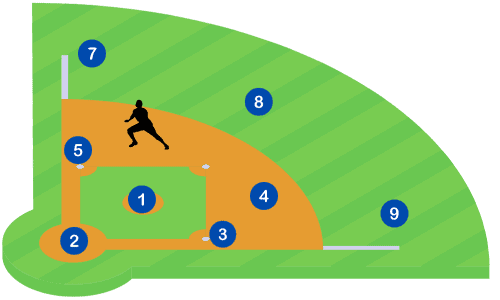
Imagine the infield as a vast, shifting chessboard where pawns become kings in the span of a single play. The shortstop stands at the center of this transformation, a figure both anchor and catalyst. Unlike the first and third basemen, who are bound by the rigid geometry of their corners, the shortstop roams the hinterlands between second and third, a roving sentinel who must be equally adept at snuffing out bunts, gobbling up line drives, and pivoting into double plays with the grace of a dancer.
This role is not for the faint of heart. It is a crucible where split-second decisions dictate the fate of innings. A shortstop must read the batter’s swing like a cryptographer decodes a cipher, anticipating whether the ball will scream down the third baseline or trickle weakly toward the hole between first and second. The position is a paradox: a defender who must also be an offensive spark, a player who must balance aggression with restraint, intuition with calculation.
The Duality of the Shortstop: Gladiator and Poet
On defense, the shortstop is a gladiator, a warrior who thrives in the crucible of pressure. The crack of the bat is his battle cry, the sudden lunge for a grounder his war cry. His arm is a catapult, his range a testament to the limits of human reflexes. A diving stop in the hole, a backhanded stab that snuffs out a rally—these are the moments that define the position’s mythos. The shortstop does not merely field balls; he choreographs them, turning chaos into order with a single, decisive throw.
Yet, when the bat is in his hands, the shortstop transforms into a poet, a craftsman of offensive poetry. His role at the plate is not merely to hit, but to orchestrate. A well-placed bunt can ignite a rally. A clutch single can break a deadlock. The shortstop’s offensive contributions are often subtle, but no less vital. He is the player who must think several moves ahead, who must anticipate the pitcher’s next offering while also scanning the field for opportunities to advance runners. In this duality lies the position’s unique allure—the shortstop is both the guardian of the infield and the architect of its destruction.
The Shortstop’s Arsenal: Tools of a Modern Gladiator
The shortstop’s toolkit is a marvel of athletic engineering. First and foremost is his glove—a supple, responsive extension of his hand, designed to swallow hard-hit grounders and line drives with equal aplomb. The modern shortstop’s glove is a marvel of craftsmanship, its pocket deep enough to cradle a screaming line drive yet shallow enough to allow for quick transfers into the throwing hand.
But the glove is only the beginning. The shortstop’s arm is his most feared weapon, a cannon capable of firing a bullet to first base in under two seconds. The mechanics of a shortstop’s throw are a study in efficiency—no wasted motion, no unnecessary flourish. The transfer from glove to hand must be seamless, the footwork precise. A single misstep can mean the difference between an out and a runner safe at first.
Then there is the shortstop’s range—the ability to cover ground that seems, at first glance, impossible. The best shortstops possess what scouts call “plus-plus range,” a term that barely scratches the surface of their defensive prowess. They must sprint diagonally, dive horizontally, and recover instantaneously, all while maintaining the spatial awareness of a fighter pilot. This range is not merely a physical attribute; it is a mental one, a sixth sense that allows the shortstop to anticipate where the ball will go before it is struck.
The Shortstop’s Mind: A Chess Grandmaster in Cleats
If the shortstop’s body is a weapon, his mind is the command center. This is a player who must think like a quarterback, a point guard, and a grandmaster all at once. The shortstop is the on-field general, the player who must see the entire board—the pitcher’s tendencies, the runner’s speed, the batter’s weaknesses, the positioning of the outfielders. He must decide in an instant whether to charge a bunt, hold his ground for a potential double play, or drift toward second base to cut off a runner’s path.
This mental acuity is what separates the good shortstops from the great ones. The greats do not merely react; they anticipate. They study hitters like a detective studies a suspect, memorizing their tendencies, their tells, their weaknesses. They communicate constantly with their teammates, calling out shifts, adjusting positioning on the fly. The shortstop is the hub of the infield’s nervous system, the player who must process more information in a single inning than most players do in an entire game.
This mental load is what makes the position so grueling. The shortstop cannot afford to zone out, even for a second. A lapse in concentration can result in a passed ball, a stolen base, or a runner advancing when he shouldn’t. The best shortstops thrive under this pressure, turning the infield into their personal stage and every play into a masterclass in execution.
The Shortstop’s Legacy: From Honus Wagner to Derek Jeter
The shortstop position has evolved dramatically over the years, shaped by the legends who have occupied it. In the dead-ball era, shortstops were expected to be defensive anchors, players who could make the routine play with aplomb. But as the game evolved, so too did the role of the shortstop. By the time Honus Wagner strode onto the diamond, the position had become a hybrid of offense and defense, a role that demanded versatility and flair.
In the modern era, the shortstop has become the face of the franchise for many teams. Derek Jeter’s iconic plays for the New York Yankees turned him into a global icon, a player whose name became synonymous with clutch performances and defensive brilliance. Today, the shortstop is often the most marketable player on the team, a testament to the position’s unique appeal. Players like Francisco Lindor, Carlos Correa, and Trea Turner have redefined what it means to be a shortstop, blending defensive wizardry with offensive firepower to create a new archetype of the modern ballplayer.
The shortstop’s legacy is one of reinvention. From Wagner’s brute-force defense to Jeter’s elegance, from Ozzie Smith’s acrobatics to Lindor’s power-hitting, the position has continually adapted to the changing demands of the game. It is a role that celebrates both the art and the science of baseball, a position that rewards those who can master the chaos of the infield and turn it into something beautiful.
The Shortstop’s Future: A Position in Evolution
As baseball continues to evolve, so too will the role of the shortstop. The rise of advanced analytics has already begun to reshape how teams evaluate and deploy their shortstops. Metrics like “defensive runs saved” and “out of zone plays” have given teams new ways to quantify the intangibles that make a shortstop great. Meanwhile, the increasing emphasis on launch angle and exit velocity has forced shortstops to adapt their offensive approaches, blending power with the traditional emphasis on contact and speed.
But for all the changes, the essence of the shortstop remains the same. It is a position that demands versatility, intelligence, and a willingness to embrace the chaos of the game. The shortstop is the player who must be ready for anything—a liner screaming toward the hole, a runner breaking for second on a delayed steal, a pitcher shaking off a sign. He is the player who must balance the poetry of the game with the brutality of its execution, who must be both artist and artisan.
The shortstop is not just a position. It is a philosophy, a way of playing the game that celebrates the beauty of its unpredictability. And as long as baseball is played, the shortstop will remain its most vital and enigmatic figure.