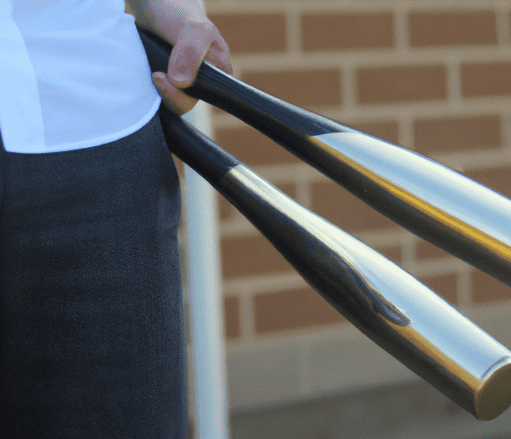
Imagine stepping up to the plate, the crack of the bat echoing through the stadium, but instead of the familiar *thwack* of wood meeting leather, you hear a hollow *ping*—the unmistakable sound of metal slicing through the air. This isn’t a futuristic baseball league; it’s the reality of college baseball, where aluminum bats have reigned supreme for decades. But why does college baseball cling to these gleaming, high-tech sluggers while the pros swing for the fences with vintage wooden bats? The answer isn’t just about tradition or cost—it’s a tangled web of physics, economics, and even a dash of controversy. Let’s dive into the curious case of metal bats in college baseball, weighing their advantages, dissecting their drawbacks, and untangling the debates that have left fans and players divided.
The Physics Behind the Ping: Why Metal Bats Outperform Wood
At first glance, the difference between a wooden bat and an aluminum one seems trivial—until you consider the science. Wooden bats, particularly those made from ash or maple, are rigid and unyielding. When a pitch meets the sweet spot, the energy transfers directly into the ball, sending it soaring—but also absorbing much of the impact into the bat itself. The result? A satisfying *thwack*, but also a bat that’s prone to splintering after repeated use.
Enter the aluminum bat, a marvel of engineering designed to cheat physics. Its hollow barrel and composite materials allow it to flex upon impact, storing and releasing energy like a coiled spring. This “trampoline effect” propels the ball farther and faster than a wooden bat ever could, turning line drives into tape-measure homers and turning good hitters into sluggers overnight. For college athletes still refining their swing, the forgiving nature of metal bats means fewer broken bats, more consistent contact, and—let’s be honest—a lot more highlight-reel moments.
The Economic Advantage: Why Colleges Love Metal Bats
Beyond the on-field performance, metal bats offer a financial lifeline for college programs operating on tight budgets. A single wooden bat can cost upwards of $100, and with the wear and tear of a 50-game season, teams can burn through dozens in a year. Aluminum bats, while pricier upfront (often $200–$400 each), last for years, surviving collisions with pitches, foul tips, and even the occasional bat-flip gone wrong.
Then there’s the issue of supply. Wooden bats are subject to the whims of lumber markets, with shortages or price spikes forcing teams to scramble for replacements. Metal bats, on the other hand, are mass-produced with predictable costs. For cash-strapped athletic departments, this reliability is a godsend—especially when every dollar counts in recruiting or facility upgrades. It’s a pragmatic choice, if not a romantic one.
The Controversy: When the “Ping” Becomes a Problem
But the trampoline effect isn’t without its critics. The most damning accusation leveled against metal bats is that they’ve warped the game itself, turning pitchers into targets and turning what was once a pitcher’s duel into a home run derby. Studies have shown that balls off metal bats can travel 10–15% faster than those off wooden bats, a difference that turns a line drive into a missile capable of injuring an unsuspecting hurler. In 2009, a college pitcher, Andy Baldwin, suffered a fractured skull after being struck by a line drive off a metal bat—a incident that reignited calls for stricter regulations.
The debate reached a fever pitch in the early 2010s, with the NCAA eventually mandating stricter bat performance standards (the infamous BBCOR certification) to curb the offensive explosion. These bats, designed to mimic the performance of wood, reduced the trampoline effect but also sparked a new controversy: were they making the game *too* dull? Purists argued that the crack of wood was part of baseball’s soul, while others countered that safety and fairness should take precedence.
Safety First? The Injury Debate
Speaking of safety, the conversation around metal bats often circles back to player protection. Proponents argue that the lighter weight of aluminum bats reduces the risk of broken bones for batters, while opponents point to the increased exit velocity as a hazard for pitchers and infielders. The data is murky—some studies suggest metal bats pose no greater risk than wood, while others highlight the brutal reality of a 90+ mph line drive to the chest. The NCAA’s shift to BBCOR bats was, in part, a concession to these concerns, though it did little to silence the critics who believe the problem was never fully addressed.
Then there’s the issue of bat shards—a nightmare scenario where a bat fractures mid-swing, sending razor-sharp debris flying toward the mound or the dugout. Wooden bats splinter into jagged shards, but metal bats can explode catastrophically, turning a routine groundout into a potential disaster. While safety protocols (like bat inspections and breakaway models) have mitigated some risks, the specter of injury looms large in any discussion about metal bats.
The Cultural Divide: Tradition vs. Innovation
Perhaps the most contentious aspect of metal bats isn’t their performance or their cost, but their cultural implications. Baseball is a sport steeped in ritual, from the crack of the bat to the scent of freshly cut wood. For many, the shift to metal bats feels like a betrayal of the game’s heritage—a concession to convenience over craftsmanship. Minor league and international leagues still use wood, and the pros have never wavered from their tradition. Why, then, does college baseball cling to its gleaming aluminum totems?
The answer may lie in the very nature of college baseball itself. Unlike the pros, college teams are transient, with players cycling in and out every few years. Metal bats offer a level playing field for young athletes still developing their skills, while wooden bats demand a precision that only seasoned pros can consistently deliver. In this light, metal bats aren’t just a practical choice—they’re a bridge between raw talent and polished performance.
The Future of the Bat: Will Wood Ever Make a Comeback?
As college baseball grapples with its identity, the question lingers: could wood ever stage a comeback? Some conferences, like the Ivy League, have already made the switch back to wood, arguing that it better prepares players for the professional ranks. Others point to the success of BBCOR bats as proof that metal is here to stay. Yet the debate is far from settled. Innovations like hybrid bats (combining wood and metal) and advanced composite materials could offer a middle ground, blending tradition with technology.
For now, the ping of metal bats remains the soundtrack of college baseball—a sound that’s as divisive as it is distinctive. Whether you see it as a necessary evolution or a betrayal of the game’s soul, one thing is clear: the battle over bats is far from over. And in a sport where every swing counts, the choice of weapon could determine the fate of the game itself.