What if I told you that a 40-year-old baseball card, tucked away in shoeboxes and attics across America, could be worth more than your monthly rent? Not just a few bucks more—we’re talking hundreds, even thousands, if you know where to look. The 1983 Topps Nolan Ryan card isn’t just a relic of a bygone era; it’s a sleeper gem in the world of sports memorabilia, quietly appreciating while collectors chase the flashier, more obvious treasures. But here’s the twist: most people don’t even realize it’s hiding in plain sight. So, what makes this card so special, and why are savvy collectors suddenly snapping them up like rare Pokémon cards?
Let’s take a stroll through the back alleys of the baseball card market, where dusty corners hide untold riches—and where a single card can rewrite your financial future.
The Card That Defies Time: Why 1983 Topps Nolan Ryan Stands Out
At first glance, the 1983 Topps Nolan Ryan card doesn’t scream “investment-grade.” It’s not a rookie card. It’s not from the golden era of the 1950s or 1960s. It’s not even from Ryan’s legendary 1973 season, when he set the modern strikeout record with 383 punchouts. No, this card is from the early 1980s—a time when Topps was churning out cards like a printing press on steroids, and most of them were destined for the bargain bin. So why does this one stand apart?
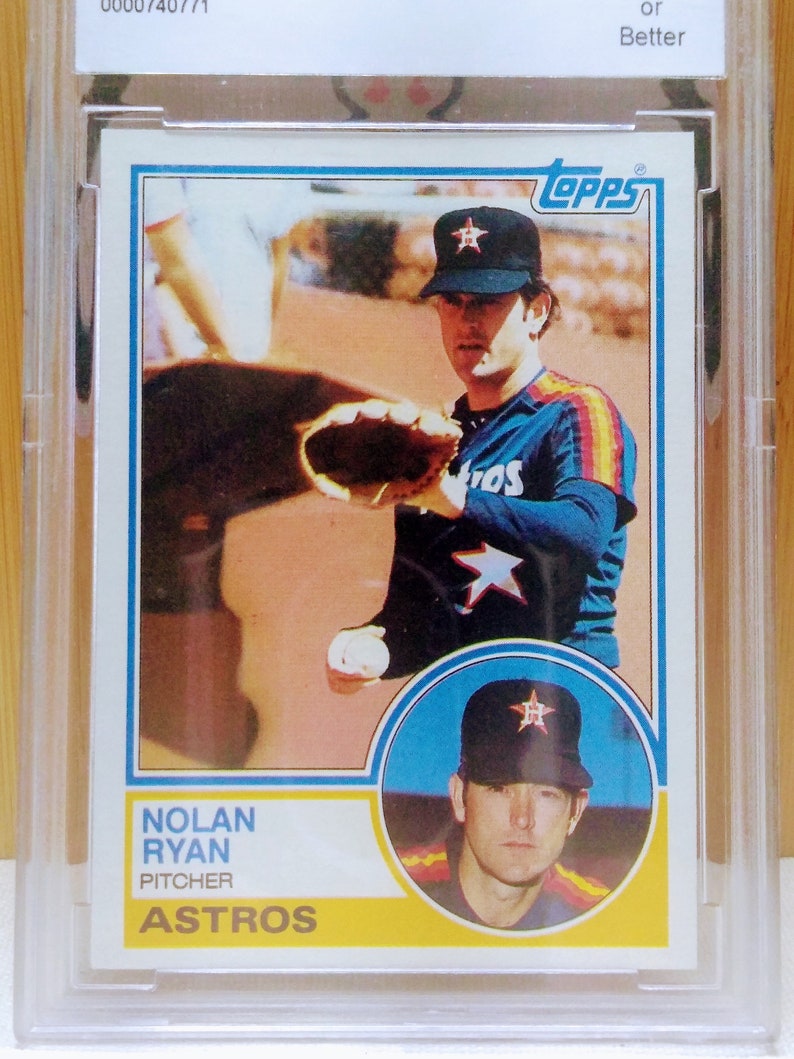
The answer lies in the perfect storm of nostalgia, scarcity, and Ryan’s mythic status. By 1983, Nolan Ryan was already a legend—a man who threw harder than anyone else, who pitched seven no-hitters, and who defied Father Time like a vampire refusing to age. But this card captures him at a pivotal moment: still in his prime, still dominating, still the kind of pitcher who made batters question their life choices. The artwork is clean, the photo is sharp, and the design is quintessential Topps—simple, bold, and unmistakably 1980s.
Yet, here’s the kicker: most 1983 Topps Nolan Ryan cards aren’t worth much. They’re common. They’re everywhere. You can find them in bulk lots on eBay for pennies. But dig deeper, and you’ll find that the real value lies in the condition, the grading, and the story behind the card. A professionally graded PSA 10? That’s a unicorn. A raw, ungraded gem in near-mint condition? That’s a potential goldmine. And then there’s the error cards—the misprints, the off-center prints, the ones that slipped through Topps’ quality control like a phantom fastball.
The Grading Game: Why a Slab Could Make or Break Your Investment
If you’re holding a 1983 Topps Nolan Ryan card in your hands right now, don’t get too excited—yet. The difference between a card worth $5 and one worth $500 could be as thin as the paper it’s printed on. That’s where grading services like PSA, BGS, and SGC come into play. These companies are the gatekeepers of the card world, assigning a numerical grade based on condition, centering, corners, edges, and surface quality. A card graded PSA 9? That’s a home run. A PSA 10? That’s a lottery ticket.
But here’s the catch: not all 1983 Topps Nolan Ryan cards are eligible for top grades. The print quality of Topps’ 1983 set is notoriously inconsistent. Some cards have fuzzy edges. Others have print lines that look like they were drawn by a sleep-deprived intern. And then there’s the centering issue—a card that’s perfectly centered front and back is rarer than a Ryan no-hitter in the World Series. If your card has even a slight tilt, it could drop from a potential PSA 10 to a PSA 7 in the blink of an eye.
So, what’s a collector to do? Get it graded—but choose your grader wisely. PSA is the gold standard, but their wait times can stretch into months. BGS is known for stricter subgrades, which can be a double-edged sword. And SGC? They’ve gained a cult following for their black slabs and quick turnaround times. The key is to research recent sales of graded 1983 Topps Nolan Ryan cards to see which graders are commanding the highest premiums. Sometimes, a BGS 9.5 sells for more than a PSA 10—because the market is fickle, and perception is everything.
The Error Card Enigma: When Topps Messed Up and Collectors Got Lucky
Every now and then, a card slips through the cracks—a misprint, a color shift, a typo. And in the world of baseball cards, those mistakes can turn a $10 card into a $1,000+ treasure. The 1983 Topps Nolan Ryan set has its fair share of errors, but the most coveted one is the “Ryan Express” color variation. Some cards were printed with a slightly different shade of blue in the background, giving them a distinct, almost ethereal glow. Others have a misaligned photo, where Nolan’s face is cut off at the chin. And then there’s the “wrong team” error, where a few cards were accidentally printed with Ryan in a Houston Astros uniform instead of the California Angels.
These errors are like finding a rare Pokémon card in a pack of 100—you never know when you’ll stumble upon one. But here’s the problem: most error cards are indistinguishable from the regular printings unless you compare them side by side under a loupe. And even then, it’s not always clear-cut. That’s why provenance matters. If you can trace your card back to a specific printing run or factory, you might have a winner on your hands. Otherwise, you’re rolling the dice—and hoping that the card gods smile upon you.
The Market’s Secret: Why Now Is the Time to Buy (or Sell)
Baseball card markets are cyclical. They boom, they bust, they boom again. And right now, the 1983 Topps Nolan Ryan card is experiencing a quiet renaissance. Prices have been creeping upward for the past few years, driven by a mix of nostalgia, speculative investing, and the sheer unpredictability of the hobby. But why now? A few factors are at play:
- Generational Wealth Transfer: Baby boomers are downsizing, and their kids don’t want their old baseball cards. Suddenly, these “useless” pieces of cardboard are flooding the market—and smart collectors are pouncing.
- Digital Collecting Fatigue: After the NFT boom and bust, collectors are craving something tangible. A physical baseball card is a tangible piece of history, and Nolan Ryan’s legacy makes it even more appealing.
- The “Forever Young” Factor: Ryan pitched until he was 46. He defied age like a superhero. That longevity makes his cards feel timeless—a quality that resonates with collectors who want to hold onto something that feels eternal.
But here’s the challenge: the market is unpredictable. Just because prices are rising now doesn’t mean they’ll keep climbing. In fact, some analysts warn of a “card bubble”, where overinflated prices could burst when the next generation of collectors moves on to the next shiny object. So, is it too late to get in? Or is this the perfect moment to cash out?
The answer depends on your strategy. If you’re a long-term investor, holding onto a graded 1983 Topps Nolan Ryan could pay off in a decade. If you’re a flippers, you might want to sell now before the market cools. But one thing’s for sure: the clock is ticking. The longer you wait, the more competition you’ll face—and the harder it’ll be to find a gem in the rough.
The Final Pitch: Should You Hold, Sell, or Walk Away?
So, you’ve got a 1983 Topps Nolan Ryan card in your possession. What now? The first step is to assess its condition. Is it raw? Is it creased? Are the corners sharp enough to cut glass? If it’s in rough shape, your best bet might be to hold onto it as a sentimental keepsake—or donate it to a local Little League team. But if it’s in decent shape, the next step is to get it graded.
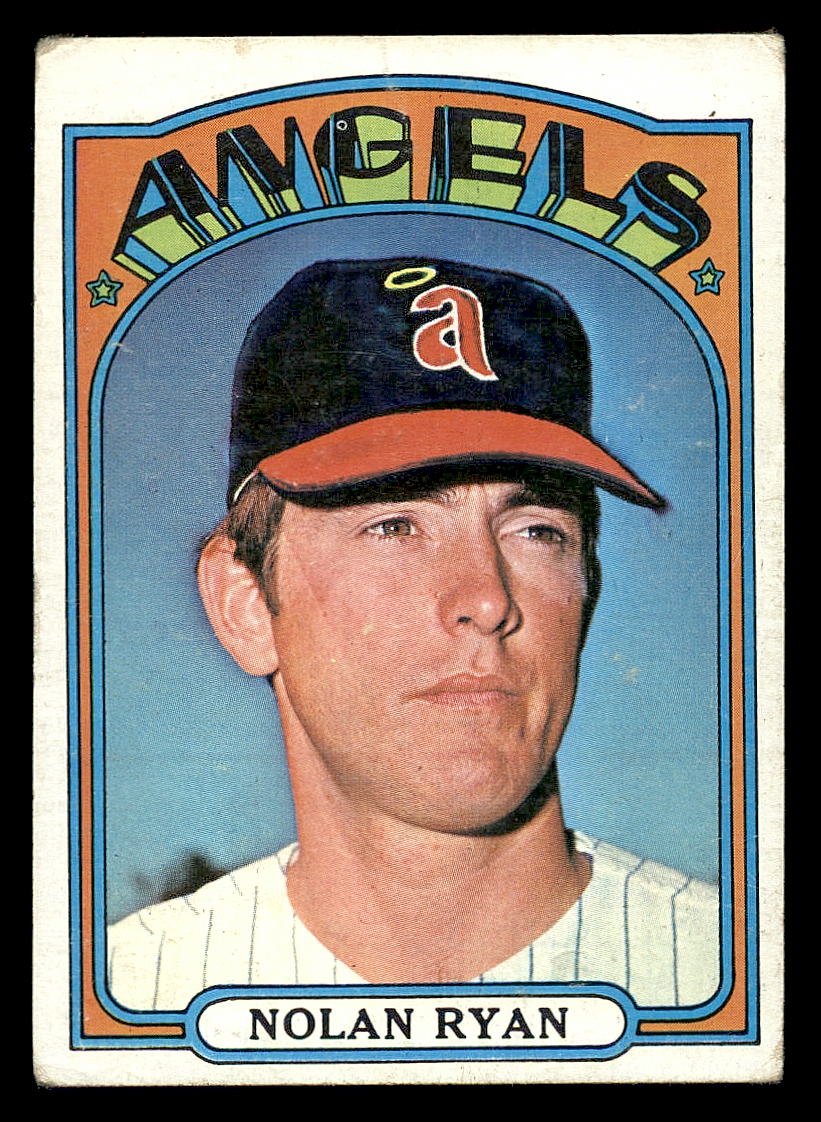
Once you have that slab in hand, you can decide whether to hold, sell, or trade. If you’re patient, holding onto a high-grade card could yield big returns down the line. If you need cash now, selling on eBay or through a reputable auction house might be the way to go. And if you’re feeling adventurous, you could always trade it for a different card—maybe a 1972 Topps Nolan Ryan, or a 1993 SP Derek Jeter, just to mix things up.
But no matter what you choose, remember this: the 1983 Topps Nolan Ryan card isn’t just a piece of cardboard. It’s a time capsule, a snapshot of a pitcher at the peak of his powers, a reminder of an era when baseball cards were as much about art as they were about statistics. And in a world where everything feels disposable, that’s a rarity worth holding onto.
So, the next time you’re digging through a box of old cards, take a closer look. That unassuming Nolan Ryan might just be the ticket to your next big score—or at the very least, a story to tell your grandkids.