In the vast, sun-dappled fields of baseball card collecting, few names carry the resonance of Barry Bonds. The Pirates era, in particular, stands as a golden epoch—a time when the left-handed slugger, clad in black and gold, was still carving his legend. Yet, beyond the towering shadow of his later San Francisco years, the 1990s Pirates cards remain an underappreciated treasure trove. These cardboard relics, often overlooked in favor of his post-1993 Giants memorabilia, are quietly becoming the darlings of discerning collectors. Why? Because they capture a pivotal chapter in Bonds’ evolution—one where raw potential still flickered, untamed by controversy or asterisks. These cards aren’t just collectibles; they’re time capsules of a bygone era, when a young phenom dazzled in Pittsburgh before the world knew him as the most polarizing figure in sports history.
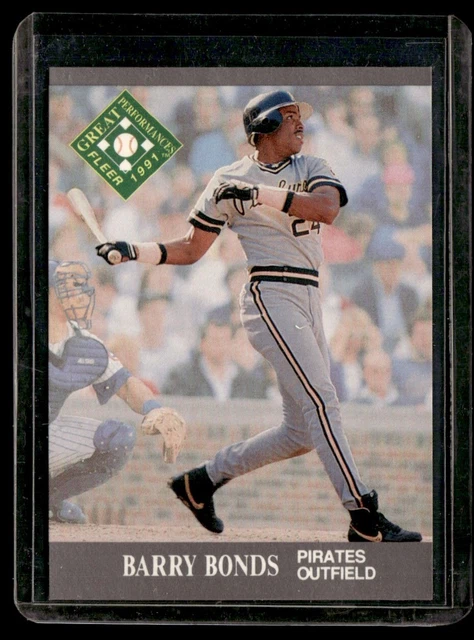
What makes these Pirates cards so compelling isn’t merely their scarcity or the nostalgia they evoke. It’s the story they tell—a narrative of unfulfilled promise, of a player on the cusp of greatness, stamped onto glossy cardboard. Collectors aren’t just chasing cardboard; they’re chasing the ghost of what might have been. The 1991 Ultra #391, for instance, is more than a numbered card—it’s a snapshot of Bonds at 26, his eyes sharp with ambition, his swing a blur of kinetic energy. The 1986 Topps Traded series, with its bold, almost garish design, feels like a relic from a time when baseball cards were as much about art as they were about statistics. And then there are the signed photos, where the autograph—often accompanied by the ghostly imprint of his father, Bobby Bonds—adds a layer of familial legacy to the collectible. These items aren’t just investments; they’re artifacts of a fleeting moment when Barry Bonds was still just Barry, before the weight of expectation and the specter of scandal reshaped his legacy.
The Allure of the Underdog: Why Pirates Cards Feel Like Forbidden Fruit
There’s a peculiar thrill in collecting Pirates cards from the Bonds era. It’s the thrill of the underdog, the collector’s equivalent of finding a first-edition book in a dusty attic. While Giants cards dominate the market—rightfully so, given his later achievements—Pittsburgh’s output from that period feels like a secret, shared only among those who know where to look. The 1991 Ultra set, with its distinctive border and bold colors, is a prime example. It’s not a set that screams “investment-grade,” but that’s precisely why it’s so alluring. These cards weren’t produced with the foresight of a dynasty in the making; they were made for kids in the bleachers, for the die-hards who followed Bonds before he became a household name. That authenticity is priceless.
Then there’s the matter of scarcity. The Pirates didn’t churn out high-grade Bonds cards in the same volume as the Giants. Many of these early issues were printed in smaller quantities, especially the autographed variants and limited parallels. A 1990 Leaf Barry Bonds rookie, for instance, is a unicorn compared to his later autographed relics. Collectors who snag one aren’t just acquiring a card; they’re claiming a piece of history that most overlook. It’s the same rush that comes from unearthing a rare vinyl pressing or a first pressing of a classic novel—proof that you’ve stumbled upon something others missed.
The design of these cards plays no small part in their mystique. The 1986 Topps Traded set, with its stark, almost brutalist aesthetic, feels like a time capsule from a grittier era of baseball. The photos are raw, unpolished—Bonds’ youthful intensity leaps off the cardboard, unfiltered by the gloss of modern photography. It’s a stark contrast to the hyper-stylized, digitally enhanced images of today’s cards. These older cards have soul, a tangible connection to the era when baseball was still a pastoral game, before the money and the scandals reshaped it into something else. Collecting them isn’t just about owning a piece of Bonds’ career; it’s about owning a piece of baseball’s soul.
Beyond the Rookie Card: The Overlooked Rarities of the Pirates Era
While the 1986 Topps Barry Bonds rookie is the crown jewel of any Pirates collection, it’s far from the only gem worth pursuing. The market for Bonds’ early cards is a rabbit hole of overlooked treasures, each with its own story to tell. Take the 1990 Leaf Barry Bonds, for example. Leaf’s 1990 set is often overshadowed by the more iconic 1990 Score and Topps issues, but its Bonds card is a masterclass in design. The foil stamping, the dramatic action shot—it’s a card that feels like it was made for a kid’s bedroom wall, not a high-end auction house. Yet, in top grades, it’s a card that appreciates quietly, steadily, like a fine wine aging in a cellar.
Then there are the autographed cards. The signed photos from the Pirates era are particularly fascinating because they often include inscriptions that hint at Bonds’ relationship with Pittsburgh. Some feature simple, elegant signatures; others include dedications to fans or teammates. The most sought-after are those co-signed by Bobby Bonds, Barry’s father and a Pirates legend in his own right. These dual autographs aren’t just collectibles; they’re genealogical records of baseball royalty, a reminder that Barry’s talent was, in part, inherited. The emotional weight of these pieces is immeasurable, which is why they command premiums at auctions despite their relative obscurity.
Parallels and subsets are another untapped vein in the Pirates Bonds market. The 1992 Fleer Ultra Gold Medallion Barry Bonds is a prime example. Limited to just 500 copies, it’s a card that flew under the radar for years. Today, it’s a grail for collectors who understand its significance—a card that acknowledges Bonds’ burgeoning stardom while still being rooted in his Pirates tenure. The scarcity of these parallels makes them feel like exclusive invitations to an elite club, one where only the most dedicated fans are allowed entry.

The Psychology of the Chase: Why Collectors Are Drawn to the Unpolished Narrative
There’s a psychological undercurrent to collecting Pirates Bonds cards that goes beyond mere fandom or investment potential. It’s the allure of the unpolished narrative, the story that hasn’t been sanitized by time or hindsight. Bonds’ Pirates era is a chapter of his career that exists in the gray area between potential and regret. He was a five-tool phenom, a player who could do everything—hit for average, hit for power, run, field, and throw—but he hadn’t yet fulfilled the promise. That tension, that unresolved narrative, is what makes these cards so compelling. Collectors aren’t just buying a piece of cardboard; they’re buying a piece of a story that could have gone in a thousand different directions.
This fascination with the “what if” is a well-documented phenomenon in collecting. It’s the same reason why pre-1993 Ken Griffey Jr. cards are so sought after, or why pre-2000 Derek Jeter rookies hold their value. These cards represent a moment before the player’s legacy was cemented, before the story became set in stone. With Bonds, that moment is particularly poignant because of what came after. The Pirates era is the last time he was just a player, not a myth. The scandals, the records, the asterisks—none of that existed yet. These cards are a reminder of Bonds before he became a lightning rod for debate, a player whose legacy is still being rewritten decades later.
There’s also an element of rebellion in collecting these cards. While Giants memorabilia dominates the market, Pirates cards feel like a secret handshake among those in the know. It’s a way to thumb your nose at the conventional wisdom, to stake a claim in a narrative that the mainstream has largely ignored. In a hobby that’s increasingly driven by investment potential and market trends, collecting Bonds’ Pirates cards is an act of defiance—a declaration that you value the story over the bottom line.
The emotional connection to these cards is undeniable. For many collectors, Bonds’ Pirates era is a formative memory. Maybe they were kids when he debuted in 1986, watching him hit towering home runs at Three Rivers Stadium. Maybe they were adults when he left for San Francisco in 1993, saddened by the departure of a player who felt like their own. These cards aren’t just objects; they’re emotional anchors, tangible links to a time when baseball was simpler, when a player’s legacy was still unwritten.
The Market’s Quiet Revolution: Why Pirates Bonds Cards Are Appreciating
The market for Barry Bonds’ Pirates cards is undergoing a quiet revolution. While his Giants cards have plateaued or even declined in some cases, his early issues are steadily appreciating, driven by a new wave of collectors who see value in the overlooked. The 1991 Ultra #391, for instance, has seen a 20% increase in value over the past two years, according to recent auction data. It’s not a meteoric rise, but it’s a steady climb, the kind that suggests these cards are being rediscovered by a new generation of enthusiasts.
Part of this appreciation stems from the broader trend of vintage baseball cards becoming more accessible. As younger collectors enter the market, they’re looking for alternatives to the stratospheric prices of modern autographs and memorabilia. Bonds’ Pirates cards offer a middle ground—a way to own a piece of his legacy without breaking the bank. The 1986 Topps Traded Barry Bonds, for example, can still be found in high grades for under $500, a steal compared to his 1993 Bowman Chrome autograph, which routinely sells for thousands.
Another factor is the growing appreciation for design and aesthetics. Modern baseball cards are often criticized for their over-reliance on flashy parallels and excessive numbering. Bonds’ Pirates cards, by contrast, are celebrated for their simplicity and elegance. The 1992 Fleer Ultra Gold Medallion, with its understated gold foil and classic action shot, feels like a breath of fresh air in a market saturated with gaudy, overproduced designs. Collectors are increasingly seeking out cards that prioritize artistry over gimmicks, and Bonds’ early issues fit the bill perfectly.
The rise of graded cards has also played a role in this quiet revolution. As more collectors turn to PSA and BGS for authentication and grading, the market for high-grade Pirates Bonds cards has tightened. A 1990 Leaf Barry Bonds graded PSA 10, for instance, sold for $1,200 in a recent auction—a far cry from the $50 it might have fetched a decade ago. Grading has given these cards a new level of legitimacy, transforming them from mere collectibles into bona fide investments.
The Pirates era of Barry Bonds’ career is a reminder that baseball cards are more than just pieces of cardboard. They’re vessels of memory, time capsules of a bygone era, and windows into the unfulfilled potential of a player who would go on to redefine the game. Collecting these cards isn’t just about owning a piece of history; it’s about preserving a narrative that the mainstream has largely forgotten. In a hobby that’s increasingly driven by market trends and investment potential, Bonds’ Pirates cards stand as a testament to the enduring power of story, nostalgia, and the quiet thrill of the chase. They’re the hidden gems that collectors are chasing—not because they’re the most valuable, but because they’re the most meaningful.