In the vast, glittering galaxy of baseball collectibles, few names shine as brightly—or as controversially—as Gerrit Cole. The towering right-hander, with his laser-focused fastball and a resume that includes a Cy Young Award and a World Series ring, has long been a magnet for both fans and investors. Yet, when it comes to his rookie cards, the conversation often spirals into a debate as heated as a ninth-inning showdown: Are Gerrit Cole rookie cards a hidden gem poised for meteoric appreciation, or merely overhyped investments destined to gather dust in the bargain bin? To answer that, we must venture beyond the surface-level allure of his name and examine the intricate tapestry of market dynamics, card attributes, and the psychological undercurrents that drive collector behavior.
The fascination with Gerrit Cole’s rookie cards isn’t just about his on-field prowess; it’s about the story they represent. Every card is a tangible fragment of a player’s journey—from unproven prospect to dominant ace. For collectors, these cards are more than ink and cardboard; they’re time capsules, frozen moments that encapsulate the thrill of a breakout season or the promise of greatness. But like any good narrative, the tale of Gerrit Cole’s rookie cards is layered with complexity, where hype and reality often collide in unpredictable ways.
The Anatomy of a Rookie Card: What Makes Cole’s Stand Out
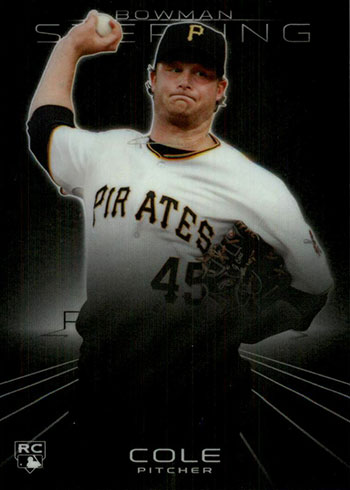
Not all rookie cards are created equal, and Gerrit Cole’s offerings are a masterclass in how design, scarcity, and timing converge to create collectible gold—or, in some cases, fool’s gold. The most coveted of his rookie cards emerged from the 2013 Bowman Chrome set, a series renowned for its shimmering refractor surfaces and the way it captures the raw potential of baseball’s next generation. The 2013 Bowman Chrome Gerrit Cole RC isn’t just a card; it’s a relic of the moment he transitioned from a highly touted draft pick to a major league phenom. Its value is bolstered by the set’s reputation for producing iconic cards, from Mike Trout’s debut to Kris Bryant’s early glow.
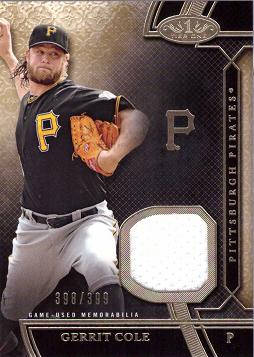
Yet, the chrome finish isn’t the only factor at play. The 2015 Topps Tier Relic Jersey card takes the concept of a rookie card into the realm of game-used memorabilia, blending the player’s early career with a tactile piece of his uniform. These “tier” cards are part of Topps’ premium tier, reserved for the most sought-after rookies, and their inclusion of actual jersey swatches adds a layer of authenticity that mass-produced parallels lack. For investors, these cards represent a bridge between traditional collectibles and high-end sports memorabilia, where the line between card and artifact blurs.
But here’s the rub: not all rookie cards are built for longevity. The 2013 Bowman Sterling Gerrit Cole RC, while visually striking with its metallic sheen, occupies a more niche market. Sterling sets are produced in limited quantities, often appealing to a smaller, more dedicated subset of collectors. Their value fluctuates wildly based on set prestige and collector demand, making them a high-risk, high-reward proposition. The key to understanding Cole’s rookie card market lies in recognizing which cards are built to last and which are merely fleeting flashes in the collector’s spotlight.
The Market’s Whims: Why Prices Swing Like a Fastball’s Late Movement
The baseball card market is a living, breathing entity, and like any organism, it’s subject to the vagaries of supply, demand, and the ever-shifting winds of collector psychology. Gerrit Cole’s rookie cards have experienced their fair share of volatility, with prices that can swing as dramatically as a pitcher’s ERA in a high-leverage inning. The 2013 Bowman Chrome RC, for instance, saw a meteoric rise in value during Cole’s dominant 2021 season with the Yankees, when he led the league in strikeouts and nearly captured another Cy Young. But just as quickly, prices can stagnate or dip when a player’s performance wanes or when market corrections occur.
One of the most intriguing aspects of Cole’s rookie card market is its asymmetry. While his top-tier cards command premiums, lower-grade versions or less desirable parallels often languish in obscurity. This disparity highlights a fundamental truth about collectibles: perceived scarcity is the engine of value. A PSA 10 2013 Bowman Chrome Gerrit Cole RC might fetch thousands, while a PSA 7 version of the same card could be had for a fraction of the price. The market doesn’t just reward talent; it rewards the illusion of exclusivity.
Yet, the market’s whims aren’t entirely arbitrary. They’re shaped by broader trends in the hobby, from the rise of graded card investing to the influx of new collectors lured by the allure of sports cards as an alternative asset class. Gerrit Cole’s rookie cards benefit from his star power, but they’re also subject to the same forces that drive the entire collectibles industry. When the market is hot, prices soar; when it cools, they deflate. The challenge for investors is to discern whether Cole’s cards are truly undervalued or merely riding the coattails of a temporary frenzy.
The Psychology of the Collector: Why We Chase the Unattainable
To understand why Gerrit Cole’s rookie cards command such attention, we must delve into the psychology of collecting—a realm where emotion often trumps logic. Collectors aren’t just buying cardboard; they’re investing in narrative. The story of Gerrit Cole is one of redemption and dominance: a pitcher who overcame early struggles in Pittsburgh to become a Yankees ace and World Series champion. His rookie cards are tangible proof of that journey, and for many, owning a piece of that story is worth more than any financial return.
There’s also the element of FOMO—the fear of missing out—that drives demand. When a player like Cole reaches superstardom, his early cards become instant relics of his ascent. Collectors who hesitated during his rookie years may scramble to acquire them later, fearing they’ll never again have the chance to own a piece of history. This psychological undercurrent is particularly potent in the baseball card market, where the fear of regret can outweigh rational analysis.
But there’s a darker side to this fascination: the speculative bubble. The influx of new investors, many of whom view cards as a quick path to wealth, has inflated prices beyond what fundamentals might suggest. Gerrit Cole’s rookie cards are no exception. When the market is flooded with buyers chasing the next big thing, prices can become untethered from reality. The question isn’t just whether these cards are a good investment; it’s whether they’re a sustainable one. History has shown that collectibles markets are prone to booms and busts, and the current cycle may be due for a reckoning.
Beyond the Hype: Is There Real Value Here?
So, are Gerrit Cole’s rookie cards a hidden gem or an overhyped investment? The answer, as with most things in life, is it depends. For the right collector—a fan who values the emotional connection over financial gain—these cards can be a worthwhile addition to a personal collection. The 2013 Bowman Chrome RC and 2015 Topps Tier Relic Jersey cards, in particular, have the potential to appreciate over time, especially if Cole’s legacy continues to grow. His Hall of Fame trajectory, combined with the nostalgia factor of his early career, could make these cards enduring keepsakes.
For the investor, however, the calculus is more complicated. The baseball card market is notoriously illiquid, and prices can be highly volatile. While Cole’s star power provides a buffer against total collapse, there’s no guarantee that his rookie cards will outperform the broader market. Factors like grading condition, set prestige, and collector demand all play a role in determining long-term value. A PSA 10 2013 Bowman Chrome Gerrit Cole RC might be a sound investment today, but if the market shifts or Cole’s career takes an unexpected turn, its value could stagnate or decline.
Ultimately, the true value of Gerrit Cole’s rookie cards may lie not in their potential resale price, but in what they represent. They’re a testament to a player’s journey, a piece of history that resonates with fans and collectors alike. In a hobby where the lines between investment and passion often blur, these cards serve as a reminder that sometimes, the most meaningful treasures aren’t the ones with the highest price tag.
Baseball cards are more than just collectibles; they’re storybooks, each one a chapter in the grand narrative of the sport. Gerrit Cole’s rookie cards, with their blend of artistry, scarcity, and legacy, occupy a unique space in that story. Whether they’re a hidden gem or an overhyped investment may depend on who you ask—but for those who see beyond the numbers, they’re something far more valuable: a tangible connection to the game’s enduring magic.