In the pantheon of baseball cards, few names resonate as powerfully as Nolan Ryan’s. The flame-throwing legend didn’t just dominate on the mound; his autographed cards have become cornerstones of sports memorabilia collections. Yet, when we talk about the 1987 Topps Nolan Ryan card, we’re not just discussing a piece of cardboard—we’re peering into a world where nostalgia, scarcity, and raw athletic prowess collide. This isn’t your average commemoration. It’s a relic that whispers of a time when Ryan’s fastball could still shatter bats like porcelain. But here’s the twist: the true value of this card might already be hiding in plain sight, tucked away in shoeboxes or forgotten binders. What if the card you’ve overlooked for years is actually a ticking time bomb of appreciation?
Before we dive into the hidden gems, let’s set the stage. The 1987 Topps set is often overshadowed by the iconic 1986 edition, but it’s a treasure trove in its own right. Ryan’s card, featuring his iconic windup and that piercing gaze, captures a moment when his career was still in full throttle. The card’s design is classic Topps—bold colors, crisp photography—but it’s the autograph that elevates it. A signed 1987 Topps Nolan Ryan isn’t just a card; it’s a piece of history that could be worth far more than you think. So, let’s pull back the curtain and explore the nuances that could turn your collection from ordinary to extraordinary.
The Myth of the Common Card: Why 1987 Topps Nolan Ryan Defies Expectations
At first glance, the 1987 Topps Nolan Ryan card might seem like just another insert in a sprawling set. But here’s the first revelation: this card is anything but common. Unlike the mass-produced inserts flooding the market today, the 1987 Topps set was printed in an era when Topps still held a near-monopoly on baseball cards. Yet, Ryan’s card stands apart due to a confluence of factors—his legendary status, the card’s design, and the sheer unpredictability of the autograph market.
Consider this: while the base 1987 Topps Nolan Ryan card is ubiquitous, the autographed version is a different beast entirely. The market for signed cards has exploded in recent years, driven by collectors who crave authenticity and a tangible connection to the game’s greats. Ryan’s autograph, especially on a card from the late ‘80s, is a hot commodity. But here’s where it gets interesting—not all signed 1987 Topps Nolan Ryan cards are created equal. The key lies in the grading, the signature’s placement, and even the card’s condition. A PSA 10 gem mint autographed card could fetch thousands, while a lower-grade version might linger in obscurity. The disparity isn’t just about condition; it’s about perception. And perception, as we know, can shift in an instant.
The Grading Goldmine: How PSA and BGS Can Make or Break Your Card
Grading is the great equalizer in the baseball card world. A card’s value isn’t just about what it is; it’s about what it’s proven to be. The 1987 Topps Nolan Ryan autographed card is no exception. When you send your card to PSA or BGS, you’re not just getting a numerical grade—you’re unlocking a narrative of authenticity and preservation. But here’s the kicker: the grading process itself can reveal hidden flaws or virtues that drastically alter the card’s value.
Take, for example, the centering of the autograph. A perfectly centered signature on a 1987 Topps Nolan Ryan card can elevate it from a $50 card to a $500 card overnight. Similarly, the ink’s vibrancy plays a role. A faded autograph, even if it’s Ryan’s, can tank the value. But what if your card has a signature that’s crisp, centered, and free of smudges? That’s when the grading gods smile upon you. The difference between a PSA 9 and a PSA 10 isn’t just a point—it’s a chasm in value. And in the world of graded cards, that chasm can mean the difference between a casual collector’s keepsake and a serious investor’s prize.
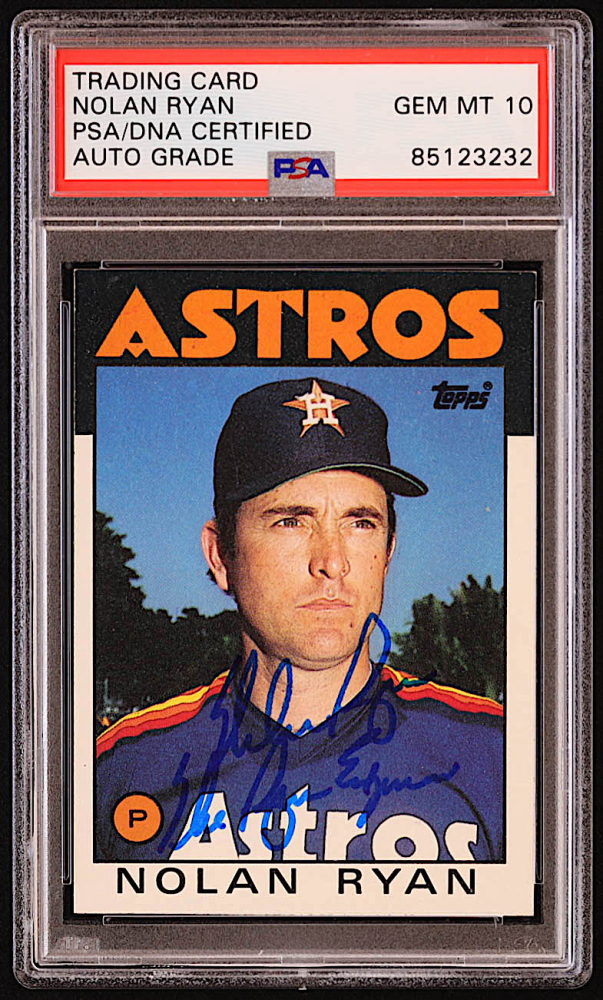
But grading isn’t just about the card’s physical attributes—it’s about the story it tells. A card that’s been well-preserved for decades carries a different weight than one that’s seen the ravages of time. The 1987 Topps Nolan Ryan card, with its retro charm, benefits from the nostalgia factor. Collectors aren’t just buying cardboard; they’re buying a slice of baseball’s golden age. And when that slice is authenticated and graded, it becomes a piece of history that’s worth holding onto.
Condition Rarity: The Forgotten Factor in Card Valuation
In the world of baseball cards, condition is king. But here’s a truth that often gets overlooked: condition rarity can be just as valuable as scarcity. The 1987 Topps Nolan Ryan autographed card is a prime example. While millions of base cards were printed, the number of high-grade autographed versions is a fraction of that. Why? Because autographs are inherently risky. A misplaced pen stroke, a smudge, or even a slight shift in ink can turn a gem into a dud.
Consider the front of the card. The 1987 Topps design is clean, with Ryan’s image taking center stage. But if the card has creases, edge wear, or surface scratches, its value plummets. Now, imagine your card has none of those flaws. It’s crisp, vibrant, and free of defects. That’s when the card’s condition rarity kicks in. Collectors who understand the nuances of condition will pay a premium for a card that’s not just autographed but also in pristine shape. It’s not just about the autograph; it’s about the card’s overall presentation. And in a market where condition is everything, that presentation can make all the difference.
But here’s where it gets even more interesting: the 1987 Topps Nolan Ryan card’s condition rarity extends beyond the physical. The autograph itself can be a condition rarity. A signature that’s bold, clear, and free of hesitation marks is a collector’s dream. Ryan’s autograph, especially on a card from this era, is a testament to his larger-than-life persona. A well-executed signature isn’t just ink on cardboard; it’s a piece of Ryan’s legacy. And when that signature is paired with a high-grade card, the result is a combination that’s hard to beat.
The Autograph Authentication Puzzle: Spotting Fakes and Forgeries
In a market where authenticity is everything, the specter of fakes and forgeries looms large. The 1987 Topps Nolan Ryan autographed card is no exception. With the rise of online marketplaces, the risk of encountering a counterfeit has never been higher. But here’s the good news: there are ways to spot a fake Nolan Ryan autograph. And if you can do that, you’re already ahead of the game.
The first clue lies in the signature’s consistency. Ryan’s autograph is known for its fluidity and confidence. A forged signature often lacks the natural flow of the real thing. Look for hesitation marks, shaky lines, or ink that’s too dark or too light. These are red flags. Another clue is the placement of the autograph. Ryan’s signature on the 1987 Topps card is typically centered on the front, near the bottom. If the signature is off-center or in an unusual spot, it’s worth a closer look.
But the most reliable way to authenticate a Nolan Ryan autograph is through professional grading services. PSA and BGS have strict authentication processes that can confirm the signature’s legitimacy. If you’re unsure about a card’s autograph, sending it in for grading is a smart move. Not only will you get a professional opinion, but you’ll also receive a graded card that’s more valuable and easier to sell. In the world of autographed baseball cards, authenticity isn’t just a bonus—it’s a necessity.
The Investment Angle: Why 1987 Topps Nolan Ryan Cards Are a Sleeper Bet
If you’re a collector with an eye toward the future, the 1987 Topps Nolan Ryan autographed card might just be the sleeper investment you’ve been waiting for. The baseball card market has seen explosive growth in recent years, driven by a new generation of collectors and investors. But while the market is hot, not all cards are created equal. The 1987 Topps Nolan Ryan card, especially in high grades, is a hidden gem that’s poised for appreciation.
Consider the broader trends. Nostalgia is a powerful force, and baseball cards from the ‘80s and ‘90s are experiencing a resurgence. Collectors who grew up with these cards are now in positions of financial power, and they’re willing to pay top dollar for pieces of their youth. The 1987 Topps Nolan Ryan card fits this narrative perfectly. It’s a card that captures a legendary player at the height of his powers, and it’s a card that’s still relatively affordable compared to other Ryan autographs.
But here’s the real kicker: the 1987 Topps Nolan Ryan card’s value isn’t just tied to Ryan’s legacy. It’s tied to the card’s design, its condition rarity, and its place in the broader market. As more collectors seek out high-grade autographed cards, the demand for this card will only grow. And when demand grows, so does the value. It’s a classic case of supply and demand, and the 1987 Topps Nolan Ryan card is perfectly positioned to benefit.
Of course, investing in baseball cards isn’t without risk. The market can be volatile, and trends can shift overnight. But for those who do their homework and focus on quality, the rewards can be substantial. The 1987 Topps Nolan Ryan autographed card isn’t just a piece of cardboard—it’s a potential goldmine waiting to be discovered.
The Collector’s Dilemma: To Hold or To Sell?
So, you’ve got a 1987 Topps Nolan Ryan autographed card. It’s graded. It’s in great condition. It’s a piece of history. Now what? The collector’s dilemma is real: do you hold onto it, hoping its value will appreciate over time, or do you cash in now and reap the rewards? There’s no right answer, but there are factors to consider.
If you’re a sentimental collector, the choice is easy. This card isn’t just an investment; it’s a connection to the game’s past. Holding onto it means keeping a piece of Ryan’s legacy alive. But if you’re an investor, the decision is more nuanced. The baseball card market is cyclical, and timing is everything. Selling now might mean missing out on future appreciation, but holding onto it could mean riding out a market dip.
One strategy is to diversify. If you have multiple copies of the card, consider selling a portion to fund other investments while holding onto the rest. This way, you’re not putting all your eggs in one basket. Another approach is to monitor the market closely. Keep an eye on recent sales of similar cards, and be ready to act when the timing is right. The 1987 Topps Nolan Ryan card’s value can fluctuate, but with the right strategy, you can maximize your returns.
Ultimately, the decision to hold or sell comes down to your goals. Are you in it for the long haul, or are you looking to capitalize on the current market? Either way, the 1987 Topps Nolan Ryan autographed card is a card worth considering. It’s a piece of history, a potential investment, and a testament to the power of baseball’s greatest legends.
As the sun sets on another era of baseball cards, the 1987 Topps Nolan Ryan autographed card stands as a beacon of what’s possible. It’s a reminder that the cards we hold today could be the treasures of tomorrow. Whether you’re a collector, an investor, or simply a fan of the game, this card offers something for everyone. So, take a closer look at your collection. You might just find that the hidden gem you’ve been overlooking is the key to unlocking a world of value and nostalgia.