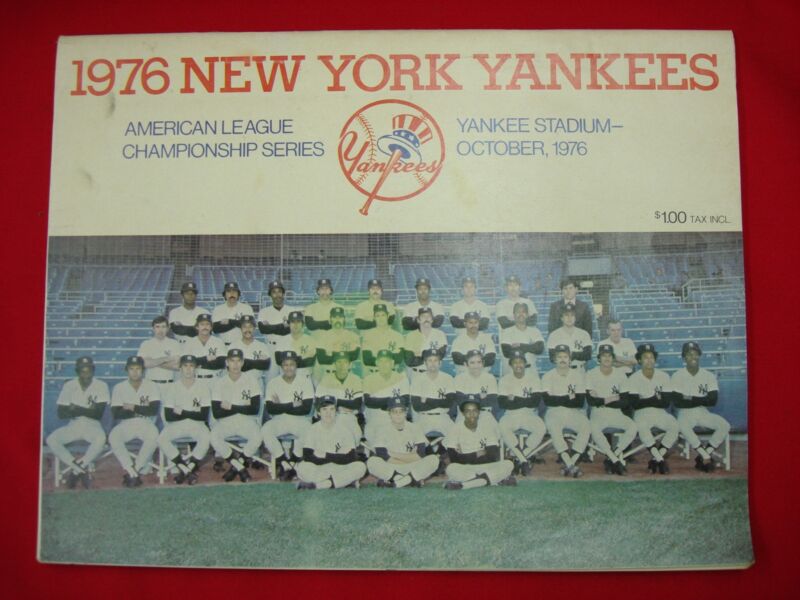
The New York Yankees of the late 1970s were more than a baseball team—they were a cultural phenomenon, a dynasty forged in the crucible of competition and cemented by unyielding ambition. Between 1976 and 1979, the Bronx Bombers didn’t just win championships; they redefined what it meant to dominate a sport, blending raw talent with strategic brilliance under the guidance of a manager who became synonymous with winning. These years were not merely a stretch of victories but a masterclass in resilience, adaptation, and the relentless pursuit of excellence. What makes this era so endlessly fascinating is not just the trophies or the statistics, but the way these teams mirrored the broader transformations of America itself—shifting from the grit of the post-war era into the flash and flair of a new cultural age. The Yankees of this period were both a reflection and a catalyst, embodying the spirit of a city and a nation in transition.
The Architect of Victory: Billy Martin and the Psychology of Leadership
At the heart of the Yankees’ resurgence stood Billy Martin, a man whose reputation as a fiery, volatile leader was as much a part of his identity as his tactical acumen. Martin’s approach was less about systems and more about ignition—he understood that baseball, at its core, is a game of emotion and momentum. His ability to rally players through sheer force of will, to turn slumps into comebacks with a single fiery speech or a well-timed benching, was nothing short of psychological warfare. Martin didn’t just manage lineups; he choreographed emotional arcs, ensuring that every player felt both the weight of expectation and the thrill of possibility. This was leadership as alchemy, transforming raw talent into championship mettle through sheer force of personality. His methods were polarizing, but their effectiveness was undeniable. Under Martin, the Yankees became a team that thrived under pressure, not because they were flawless, but because they learned to feed on the tension of the moment.
The Core Four: A Tapestry of Talent and Tenacity
No discussion of these Yankees teams is complete without acknowledging the legendary quartet that anchored the infield: Thurman Munson, Graig Nettles, Willie Randolph, and Bucky Dent. Each brought a distinct flavor to the lineup, yet together they formed an almost symphonic cohesion. Munson, the fiery captain, was the heartbeat of the team—a leader who played with a warrior’s intensity, his every swing a declaration of intent. Nettles, the third baseman with a cannon for an arm and a knack for the dramatic, became the embodiment of clutch performance, his defensive gems and timely home runs etching his name into postseason lore. Randolph, the steady hand at second, was the metronome of the infield, his precision and baseball IQ elevating the play of those around him. And then there was Dent, the unassuming shortstop whose improbable three-run homer in the 1978 playoff game against the Red Sox remains one of the most mythologized moments in baseball history. These four were not just players; they were characters in a larger narrative, each playing a role that complemented the others, creating a balance of power, defense, and leadership that defined an era.
The Rotation Revolution: Catfish, Guidry, and the Art of Pitching Dominance
The Yankees’ pitching staff in these years was a marvel of versatility and dominance, led by the indomitable Catfish Hunter and the electrifying Ron Guidry. Hunter, the veteran ace with a fastball that seemed to defy physics, brought a sense of reliability and intimidation to the mound. His ability to pitch deep into games, to absorb pressure like a sponge, made him the perfect anchor for a rotation that thrived on consistency. Guidry, on the other hand, was the storm—his high leg kick and explosive delivery a blur of motion that left hitters bewildered. The 1978 season, in particular, saw Guidry author one of the most dominant stretches in modern baseball history, striking out batters with a ferocity that bordered on the surreal. But the rotation’s strength lay in its depth. Ed Figueroa, Dock Ellis, and later, the emergence of young arms like Jim Beattie, provided the perfect blend of experience and youth. This was not a staff built on one superstar, but a hydra-headed monster that overwhelmed opponents through sheer collective force.
The Bullpen: The Unsung Engine of Late-Inning Domination
While the rotation and infield often stole the spotlight, the Yankees’ bullpen was the silent assassin that sealed countless victories. Sparky Lyle, the left-handed closer with a wicked slider, was the closer who defined the role in the modern era. His ability to stifle left-handed hitters and pitch multiple innings when needed made him indispensable. But the bullpen’s true strength lay in its depth and adaptability. Goose Gossage, though not yet the full-time closer he would become in later years, was already a force of nature—a pitcher whose fastball could reach triple digits and whose presence alone could unnerve opposing lineups. Behind them stood a cadre of relievers like Dick Tidrow and Ken Clay, each bringing a unique skill set to the table. This was a bullpen that didn’t just finish games; it erased them, turning late-inning deficits into improbable triumphs with a relentless stream of high-leverage dominance.
The 1976–1978 Dynasty: Three Titles in Four Years
The Yankees’ championship run between 1976 and 1978 was a masterclass in sustained excellence, a period where they transformed from contenders into a modern-day gladiatorial force. The 1976 season marked their return to the top, as they dethroned the Kansas City Royals in the ALCS before falling to the Cincinnati Reds in a hard-fought World Series. Yet, this was no mere defeat—it was a lesson in resilience, a foundation upon which future glory would be built. The 1977 season was the coronation, a year where the Yankees asserted their dominance with a 100-win campaign and a World Series victory over the Los Angeles Dodgers. This was the team at its peak, a blend of power, precision, and sheer willpower that overwhelmed every opponent. But it was the 1978 season that cemented their legacy. The Red Sox, their eternal rivals, pushed them to the brink in a legendary one-game playoff, a contest so charged with drama that it transcended sports and entered the realm of myth. The Yankees’ response? A World Series victory that silenced doubters and reaffirmed their status as the team of the decade. These three titles were not just victories; they were statements, declarations of intent that echoed through the annals of baseball history.
Beyond the Field: The Yankees and the Pulse of New York City
To understand the Yankees of this era is to understand New York City in the late 1970s—a metropolis teetering between decay and rebirth, a place where grit and glamour collided in a daily spectacle. The Yankees were more than a team; they were a symbol of the city’s indomitable spirit. In an era marked by economic strife, rising crime, and social upheaval, the Bronx Bombers offered a respite, a source of pride and unity. Their success on the field mirrored the city’s own slow but steady climb back from the brink. The Yankees’ games at Yankee Stadium were not just sporting events; they were communal gatherings, a chance for New Yorkers to forget their troubles and revel in the shared joy of victory. This symbiotic relationship between team and city elevated the Yankees from mere athletes to cultural icons, their legacy intertwined with the very identity of New York itself.
The Legacy: Why These Teams Still Captivate Decades Later
The fascination with the 1976–1979 Yankees endures because these teams represent more than just a collection of Hall of Famers and championship banners. They embody the essence of what it means to be a champion—not just in sports, but in life. Their story is one of redemption, of rising from the ashes of disappointment to forge an empire. It’s a tale of leadership that transcended tactics, of players who became legends not just for their statistics, but for their character. And perhaps most importantly, it’s a reminder that greatness is not a static achievement but a dynamic process, one that requires adaptability, heart, and an unshakable belief in the power of teamwork. These Yankees teams were not perfect, but their imperfections only made their triumphs more human, more relatable. They were a team for the ages, a reminder that in the world of sports, as in life, the greatest legacies are built not on avoiding failure, but on rising from it.