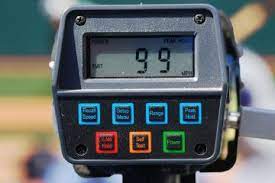
Is anyone else sometimes looking at Major League Baseball (MLB) pitchers on TV and feeling a slight pang of “that could be me, one day” even after decades of not stepping onto a baseball field with intent? You might fixate on the radar guns showing blistering speeds, comparing your own hypothetical max velocities or averages against the established legends of the game. But we need to talk: comparing average pitch speeds by age to MLB professionals is like comparing apples to… orbital fragments. It shortchanges the entire picture. This isn’t just about mph; it’s about the complex, ever-evolving symphony of skill, strength, coordination, and strategy that constitutes a professional pitcher.
The Language of Velocity: Decoding the Pitch Types
Before we dive into numerical comparisons, it’s crucial to understand the different languages the pitching arm speaks. A fastball, for instance, isn’t a monolithic entity but often manifests in three primary forms: the Four-Seam Fastball, the Two-Seam Fastball (or Sinker), and the Cutter. Each boasts slightly different velocity characteristics and movement profiles, influenced by hand placement, grip, and release point variance. Then there are the devastating breaking pitches: the Curveball, the Slider, and the Splitter, each demanding immense command and deception. Furthermore, pitchers often develop off-speed pitches like the Changeup – a deceptive slow-moving pitch that looks deceptively like a fastball until release. Each pitch type doesn’t just have its own average speed; the velocity itself can fluctuate dramatically depending on the pitcher’s intent (e.g., a high-velocity fastball versus a slower pitch designed to disrupt timing). The sheer variety among professional pitchers makes a simple mph comparison an incomplete translation.
Velocity Mile markers: Unpacking MLB Fastball Averages
Alright, let’s navigate the most familiar territory – fastball velocities. When analyzing professional talent, radar guns provide quantifiable data, often cited in casual discussions. Four-seam fastballs typically lead the league in average velocity. Averaging anywhere from 90 to 96 miles per hour (mph) across the major leagues isn’t unusual, with some elite hurlers routinely eclipsing this, bordering on the extraordinary. Sinker pitchers might lean slightly heavier or lighter, but the sheer downward movement achievable at these high averages is a hallmark of MLB dominance. For perspective, consider how legendary pitchers like Nolan Ryan consistently toyed with radar well into his 40s, showcasing that velocity isn’t always a straight line down an age chart, despite the typical decline observed in other physical attributes. However, velocity, even the formidable fastball average among MLBers, represents only one note in a much richer composition.
The Age Factor: A Complex Ecosystem
Now, let’s address the core of your query: age. The trajectory of a pitcher’s velocity across different life stages is neither linear nor predictable. Youth baseball, often peaking pre-puberty, features explosive potential but lacks the coordinated power and refined mechanics of elite adults. Little Leaguers routinely touch the 60-70 mph range, their arms developing rapidly. High school levels begin to layer in enhanced coordination and strength training, velocities steadily climbing toward the 75-85 mph average range for many prospects. College baseball introduces advanced mechanics, refined skill sets, and more specialized pitch mixtures, pushing average fastball velocities into the high 80s for many Division I players, though extremes vary widely. It’s at the professional threshold – the draft for MLB – where pitchers are selected not just for current velocity but immense projectable potential. The average crossing over into MLB territory signifies functional adulthood, where physical maturity is paramount. This is the stage where the velocity curve often plateaus or shows the beginning of a slow, age-related decline, typically starting subtly in the late 20s or early 30s, influenced heavily by pitch selection, load, delivery mechanics, and sheer miles accumulated on the arm. Each year adds wear; however, velocity management often becomes a strategic chess game focused on pitch sequence, command, and pitch selection rather than sheer mph.
Beyond Speed: What Truly Defines a Skilled Pitcher
Veteran scouts and advanced analytics professionals speak in hushed tones about velocity – but they often look for a more valuable metric: Command. It’s the invisible architecture that allows a pitcher to place every pitch precisely, regardless of projected mph. Command involves arm angle control, release point consistency, extension management, and, crucially, the ability to throw off-balanced pitches like curves and sliders effectively. This isn’t something you can directly see on a radar gun; it’s a blend of motor control honed over years. Another critical factor is Spin Rate and Spin Axis. Modern technology reveals that a high, tight spin axis combined with a desirable spin rate (often exceeding 2000 RPM for fastballs) generates devastating lift movement (induced drag) and sharp turn on breaking pitches. An MLB pitcher might deliver a baseball with spin characteristics and movement that would confound a Major League hitter even if the mph were lower, simply because the ball *beats* them to the plate location or generates swings and misses. Furthermore, a pitcher’s ability to manage velocity effectively across their arsenal is vital. Knowing precisely which pitch to throw at any given count relies on control over speed nuances: command fastballs, deceiving changeups, and pitches set up for certain movement velocity profiles.
Context is King: Interpreting Your Place in the Spectrum
Interpreting your personal pitch averages involves stripping away the noise. While comparing your “average pitch speed by age” to MLB benchmarks might fuel introspection, it’s essential to anchor your assessment in your own development context. Are you comparing yourself to current high school standards? College? If you’re participating at a young age, the average pitch speed for your age group is likely lower than a professional’s baseline. Use comparison points thoughtfully – perhaps looking at averages from other players in your developmental group, or focusing on metrics you *can* track consistently (like pitch counts per start or command percentages). Velocity is heavily influenced by skeletal maturity. Younger athletes might have a structure that allows for higher velocity than their muscle mass can yet support sustainably, leading to temporary spikes. Conversely, an older, highly developed athlete might possess world-class muscle strength behind their frame, allowing for velocity that defies chronological age.
The Human Element: Skill Development and Adaptation
The trajectory of a pitcher’s velocity doesn’t just hinge on physical maturation; it’s deeply etched in their skill development path. The early focus in youth leagues is typically ball control and basic pitch recognition. As a pitcher matures, the emphasis shifts towards developing consistency, refining mechanics, and cultivating deceptive arm angles. It requires immense body awareness to maintain velocity while gradually increasing pitch velocity limits and adapting to prevent injury and fatigue-related decline. This journey is rarely about linear velocity spikes. It involves plateaus, strategic adjustments, and periods of refinement where mph numbers remain stable as *meaning* changes – evolving from a fastball average of 80 mph that lacks command to an 80 mph fastball married with pinpoint control and a deceptive curve. Aces often reach their physical peak velocity later than velocity novelties, suggesting that a blend of age, physical maturity, coordinated strength, and accumulated pitch-specific experience shapes true elite performance. This is a multidimensional tapestry, far beyond the simple arithmetic of averages.
Velocity, Strategy, and the Long-Term Future
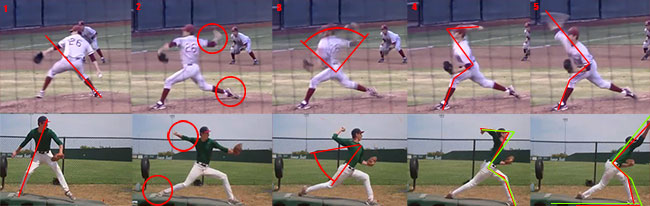
The pursuit of velocity can sometimes overshadow other critical facets of a pitcher’s development. The high-pressure environment of higher leagues demands more than just heat: it requires intelligent sequencing, anticipation, and adaptability. Young pitchers fixated solely on chasing radar mph can miss crucial lessons in pitch selection and reading the opposing hitter, limiting their overall shelf life despite high numbers early on. Furthermore, injury prevention becomes paramount with increased velocity. Pitchers across baseball are learning more about pitch counts, velocity-based workouts, and managing fatigue, influenced partly by the long-term careers seen in professional leagues. A pitcher’s ability to consistently repeat delivery mechanics – the subtle coordination of footwork, arm action, transfer, knee lift, torso tilt, and release point – is arguably more predictive of long-term success and durability than average mph alone. The true comparison is the one focused on command, spin, durability, and pitch sequence intelligence – the entire package, not just the top speed point.
Therefore, while the allure of comparing your average pitch speed by age to Major League Baseball statistics is understandable, it’s only a limited snapshot requiring careful interpretation. The world of pitching is a complex interplay of biological maturation, mechanical refinement, strategic adaptation, and inherent skill development. Velocity is significant, but it’s but one component among many of what makes a pitcher skilled, effective, and potentially enduring in the high-stakes world of baseball. Embracing the broader context – command, spin, sequencing, mechanics, and long-term health – offers a far more insightful and productive measure of your own journey.