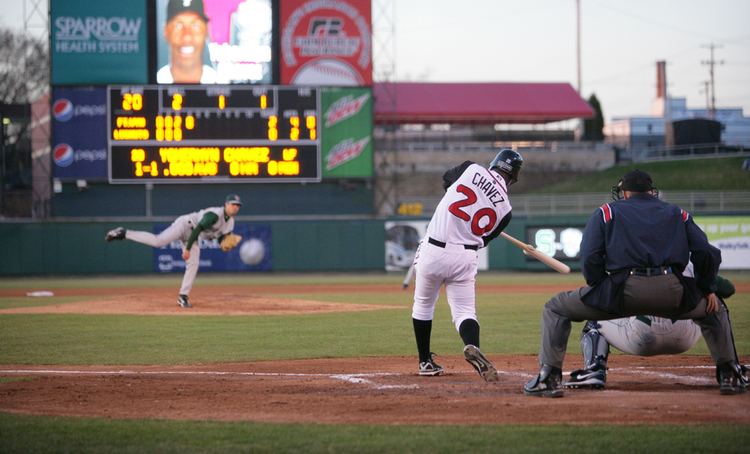
The crack of the bat echoes through the stadium like a gunshot, the crowd roaring as the ball soars into the outfield. Yet, for pitchers, the real magic lies not in the swing, but in the arm—a coiled spring of muscle, tendon, and willpower, unleashed in a single, explosive motion. Throwing harder isn’t just about brute force; it’s about finesse, precision, and the alchemy of physics meeting physiology. The challenge isn’t merely to hurl the ball with greater velocity, but to do so without unraveling the delicate machinery of the throwing arm. This is the paradox of power: the harder you push, the closer you edge toward self-destruction. But what if there were a way to defy this equation? What if velocity and longevity could coexist, like a storm that never exhausts the sky?
The Arm as a Catapult: Understanding the Biomechanics of Velocity
Imagine the throwing arm as a medieval trebuchet, its components—shoulder, elbow, wrist—acting in concert like the counterweight, arm, and sling of the siege engine. The kinetic chain begins in the legs, where ground force is generated, travels up the torso like a shockwave through bedrock, and culminates in the explosive release of the ball. This isn’t mere arm strength; it’s a symphony of leverage and timing. The shoulder, often the weakest link, acts as the fulcrum, while the elbow and wrist serve as the final levers in this biological catapult.
Yet, the arm’s anatomy is a marvel of compromise. The rotator cuff, a quartet of tendons and muscles, stabilizes the shoulder during this violent motion, but it’s prone to fraying under repetitive stress. The ulnar collateral ligament, or Tommy John ligament, bears the brunt of torque, especially in pitchers who rely on torque to generate speed. The key to throwing harder without self-sabotage lies in optimizing this kinetic chain—strengthening the foundation, refining the mechanics, and ensuring no single component bears the burden alone.
The Myth of Arm Strength: Why Raw Power Isn’t Enough
Conventional wisdom dictates that stronger arms throw harder, but this is a half-truth wrapped in a dangerous misconception. The biceps and triceps, while essential, are merely the visible tip of the iceberg. True velocity comes from the hips, the core, and the intricate interplay of smaller stabilizing muscles. A pitcher with Popeye-like forearms but a weak posterior chain is like a sports car with a high-revving engine but no transmission—it’s all noise, no motion.
Consider the case of a pitcher who bench-presses 300 pounds but can’t generate significant velocity. His arm strength is a house of cards, built on sand. Conversely, a pitcher with modest arm musculature but explosive hip rotation and a rigid core can unleash pitches that defy expectation. The arm is the final link in a chain, not the starting point. To throw harder, one must first fortify the links that precede it—legs, glutes, obliques—before even contemplating the arm’s role.
Mechanics Over Muscle: The Art of Efficient Throwing
Efficiency is the silent assassin of wasted effort. A pitcher who relies solely on arm strength is like a runner sprinting with his arms flailing wildly—he’ll tire long before he reaches his destination. The most devastating fastballs are born from economy of motion, where every ounce of energy is directed toward the ball, not dissipated into the ether.
This is where pitching mechanics enter the fray. A high leg kick isn’t just for show; it’s a counterbalance, a way to load the kinetic chain before unleashing it. The stride length, the angle of the front foot, the timing of the arm’s whip—all are critical. A pitcher who short-arms his delivery sacrifices potential velocity, while one who over-rotates risks shoulder impingement. The sweet spot lies in a delivery that’s both fluid and controlled, where the arm acts as the whip’s lash, not its handle.
Technology has given pitchers a window into this world. High-speed cameras, force plates, and motion-capture systems dissect every nuance of a throw, revealing inefficiencies invisible to the naked eye. The best pitchers aren’t just athletes; they’re students of their own motion, constantly refining their craft like artisans chiseling marble.
Mobility and Stability: The Delicate Balance
The arm is a paradox—a structure that must be both supple and unyielding. Mobility allows for a full range of motion, reducing the risk of injury, while stability ensures that force is transferred efficiently. A pitcher with hypermobile shoulders may generate impressive arm speed, but without stability, he’s a ticking time bomb. Conversely, a pitcher with rigid shoulders may avoid injury but lack the whip-like action needed for elite velocity.
This balance is achieved through targeted training. Yoga and dynamic stretching enhance mobility, while resistance band exercises and weighted ball drills build stability. The rotator cuff, often neglected until it’s too late, must be strengthened with precision. Exercises like the “band pull-apart” and “external rotation” aren’t just supplementary; they’re the armor plating for the arm’s fragile framework.
Yet, mobility and stability aren’t static states. They’re dynamic, evolving with each pitch. A pitcher must listen to his body, recognizing the subtle cues that precede fatigue or strain. The line between peak performance and injury is razor-thin, and those who walk it with awareness are the ones who last.
The Role of Recovery: The Unsung Hero of Velocity
Velocity isn’t forged in the crucible of the bullpen alone; it’s tempered in the quiet hours between outings. Recovery is the silent partner in the pitcher’s quest for harder throws, a process as critical as the training itself. Sleep, nutrition, and active recovery aren’t optional—they’re the bedrock upon which velocity is built.
Consider the science of sleep. During deep sleep, the body releases growth hormone, which repairs muscle tissue and reinforces tendons. A pitcher who skimps on sleep is like a blacksmith who never lets his steel cool—it will eventually shatter under the strain. Nutrition plays a similar role. Collagen, found in bone broth and fish, strengthens tendons, while antioxidants combat inflammation. Even hydration is a weapon; dehydration thickens synovial fluid, reducing joint lubrication and increasing the risk of injury.
Active recovery, too, is a tool. Foam rolling, contrast showers, and low-impact cardio promote blood flow, flushing out lactic acid and reducing soreness. The best pitchers aren’t just throwers; they’re caretakers of their bodies, treating recovery with the same reverence as their bullpen sessions.
Mental Fortitude: The Invisible Armor
Velocity is as much a mental game as it is a physical one. The fear of injury can paralyze a pitcher, turning a fluid motion into a stiff, cautious throw. Confidence, on the other hand, is the ultimate performance enhancer. A pitcher who believes in his arm’s resilience is one who can push his limits without fear.
Visualization is a powerful tool. By mentally rehearsing the perfect pitch, a pitcher conditions his nervous system to execute the motion flawlessly. Breathwork and meditation reduce stress, keeping the body in a state of readiness rather than tension. Even the language a pitcher uses matters. “I can’t” is a self-fulfilling prophecy; “I will” is a declaration of intent.
The greatest pitchers aren’t just physically gifted; they’re mentally unbreakable. They embrace the grind, the soreness, the setbacks, and emerge stronger. Velocity isn’t just about how hard you throw—it’s about how resilient you are when the world demands you throw harder.
The Future of Pitching: Innovation and Tradition
The quest to throw harder without self-destruction is evolving. Wearable technology, like smart sleeves and motion-tracking sensors, provides real-time feedback, allowing pitchers to adjust their mechanics on the fly. Biomechanical analysis is no longer the domain of elite athletes; it’s accessible to anyone willing to put in the work. Even the baseball itself is changing, with new designs optimized for grip and aerodynamics.
Yet, amidst this innovation, the fundamentals remain unchanged. The arm is still a fragile instrument, and the laws of physics still govern its limits. The future of pitching lies not in abandoning tradition, but in refining it. The best pitchers will be those who blend cutting-edge science with timeless wisdom, who understand that velocity is a journey, not a destination.
Throwing harder without throwing your arm out isn’t just a skill—it’s an art. It’s the fusion of strength and subtlety, of power and precision. It’s the alchemy of turning potential into performance, of defying the odds with every pitch. And for those who master it, the reward isn’t just a faster fastball. It’s the knowledge that they’ve unlocked the secret to throwing harder, longer, and smarter than ever before.