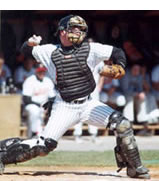
There’s a moment in baseball—rare, electric, almost cinematic—when the game hinges on a single, split-second decision. The crack of the bat has faded. The runner’s cleats dig into the dirt. And then, in a blur of motion, the catcher rises from his crouch, his arm a whip, the ball a comet streaking toward second base. The out. The shift in momentum. The crowd erupts. This is the art of the catcher’s throw, a ballet of precision, power, and instinct that transforms a stolen base attempt into a defensive masterpiece.
The Anatomy of a Steal: When the Runner and Catcher Dance on a Razor’s Edge
Stealing a base isn’t just about speed—it’s a high-stakes negotiation between the runner’s ambition and the catcher’s resolve. The runner gauges the pitcher’s delivery, his eyes locked on the catcher’s glove like a predator sizing up prey. Meanwhile, the catcher’s mind races through a mental checklist: pitch sequence, runner’s lead, his own arm strength, the umpire’s strike zone. Every variable is a variable in a high-stakes equation. A misstep in timing, and the runner is safe. A perfect throw, and the game tilts in an instant.
The catcher’s throw begins long before the ball leaves his hand. It starts with his setup—feet planted, glove low, body coiled like a spring. When the pitch is thrown, his hips rotate, his arm whips forward in a motion so fluid it defies physics. The throw isn’t just an arm movement; it’s a kinetic chain, from the legs driving upward to the shoulder snapping into place, the elbow extending like a piston. The ball isn’t thrown—it’s *launched*, a projectile with a single purpose: to reach the fielder before the runner does.
The Catcher’s Arsenal: Arm Strength, Accuracy, and the Illusion of Omniscience
A great catcher’s arm isn’t just strong—it’s surgical. The best throwers combine velocity with surgical precision, placing the ball in a catcher’s mitt with the consistency of a metronome. But raw power isn’t enough. The throw must be *timed*, arriving at second base the moment the runner’s foot touches the bag—or before. Too early, and the fielder can’t catch it. Too late, and the runner is safe. It’s a Goldilocks scenario: not too hot, not too cold, but *just right*.
Then there’s the mental game. The catcher must anticipate. Does the runner have a tell? Does the pitcher’s windup betray his intentions? The best catchers study tendencies like chess grandmasters, predicting moves before they happen. They know when to hold the ball, when to fake a throw, when to let the runner think he’s got a chance—only to snatch it away at the last second. It’s psychological warfare disguised as athleticism, a battle of wits played out in the dirt of the infield.
The Crowd’s Breathless Pause: When Time Stands Still
There’s a collective hush in the stadium when a steal is attempted. The air thickens. The noise of the crowd dissolves into a dull roar. Every spectator leans forward, eyes glued to the unfolding drama. Will the throw beat the runner? The tension is palpable, a living thing. A second feels like an eternity. The catcher’s arm unfurls. The ball flies. The runner dives. And then—
Thwack. The mitt closes around the ball. The umpire’s arm shoots up. Out. The stadium erupts. The shift in momentum is immediate. The offense’s momentum stalls. The defense’s confidence soars. It’s a microcosm of baseball itself: a single play, a single moment, that can change the course of a game, a season, a career.
The Ripple Effect: How a Single Throw Reshapes the Game
A successful caught stealing isn’t just an out—it’s a statement. It demoralizes the opposition, emboldens the defense, and shifts the psychological balance of the game. Runners hesitate. Pitchers gain confidence. The entire dynamic of the inning changes. A team that can control the running game controls the game itself. It’s why elite catchers are often the unsung generals of the diamond, their throws the silent commands that dictate the flow of play.
Consider the 2023 World Series, where a single caught stealing in Game 4 swung the momentum toward the eventual champions. Or the countless regular-season games where a timely throw turned a potential run into an out, preserving a narrow lead. Baseball is a game of inches, and the catcher’s throw is one of the most critical inches of all. It’s the difference between a stolen base and a defensive gem, between a runner safe and a rally snuffed out.
The Artistry Behind the Throw: From Little League to the Majors
The beauty of the catcher’s throw is that it’s both timeless and ever-evolving. In Little League, it’s a clumsy but earnest attempt to replicate the big-league stars. In high school, it’s a refined skill, the product of hours in the backyard, throwing against a fence until the arm aches. In the minors, it’s a weapon honed under the watchful eyes of scouts. And in the majors? It’s poetry in motion—a fusion of power, precision, and instinct that separates the good from the great.
Some catchers, like Johnny Bench or Yadier Molina, made a career out of their arms. Others, like Iván Rodríguez or Buster Posey, turned their throwing ability into Hall of Fame credentials. But even the most celebrated catchers weren’t born with the gift. They earned it through repetition, through failure, through the relentless pursuit of perfection. Every throw is a lesson. Every out is a reward. Every stolen base denied is a testament to their craft.
The Unseen Cost: The Toll on the Catcher’s Body
For all its glory, the catcher’s throw comes at a price. The arm takes a beating—shoulder strain, elbow soreness, the constant wear and tear of throwing time and time again. The best catchers manage their bodies like prized racehorses, knowing that a single overuse injury can derail a season. They ice their arms, stretch their shoulders, and listen to their bodies with the same intensity they listen to the game.
Yet, they do it anyway. Because there’s no greater thrill in baseball than the moment the ball beats the runner to the bag. No greater satisfaction than knowing that, in that instant, they’ve done their job—and done it better than anyone else could.
The Legacy of the Caught Stealing: More Than Just an Out
A caught stealing is more than a statistic. It’s a story. It’s the tale of a runner’s ambition colliding with a catcher’s resolve. It’s the moment when a game shifts from offense to defense, from chaos to control. It’s the reason fans stay on the edges of their seats, why they hold their breath with every steal attempt, why they cheer when the throw is true.
Baseball is a game of moments—moments of triumph, moments of heartbreak. And few moments are as electric as the catcher’s throw, the instant when the runner’s fate is decided, when the defense seizes control, when the crowd erupts in unbridled joy. It’s the unspoken promise of the game: that no matter how long the season, no matter how many games are played, the next throw could be the one that changes everything.