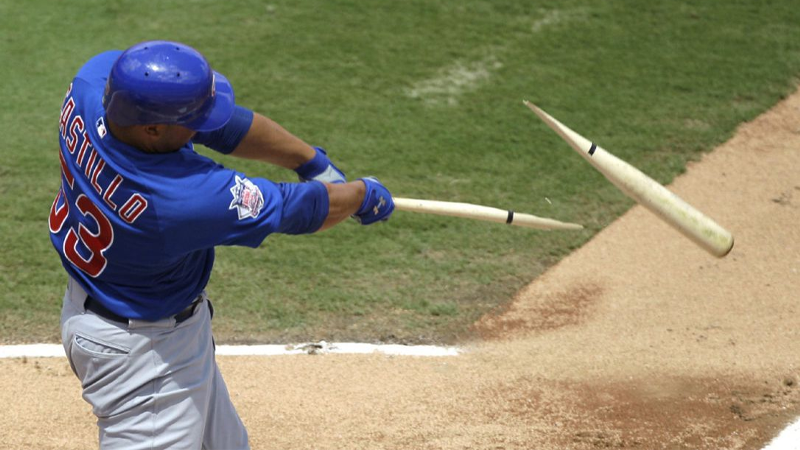
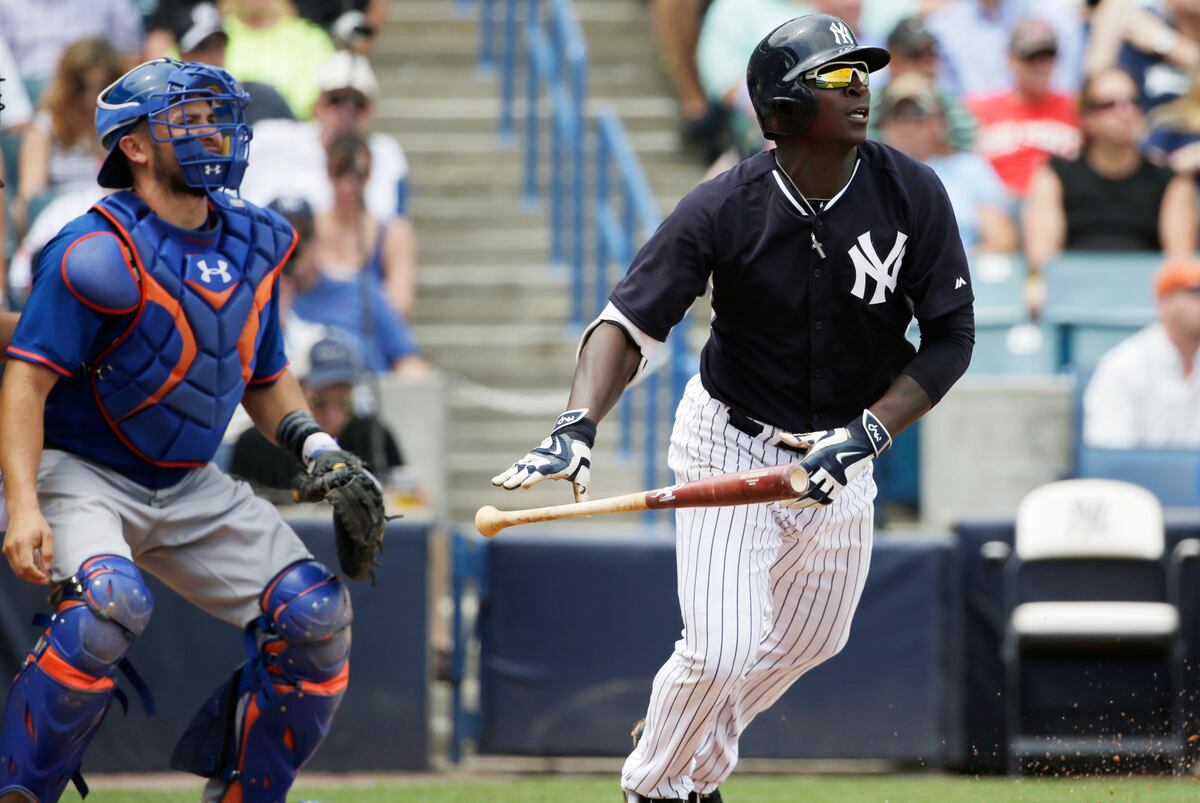
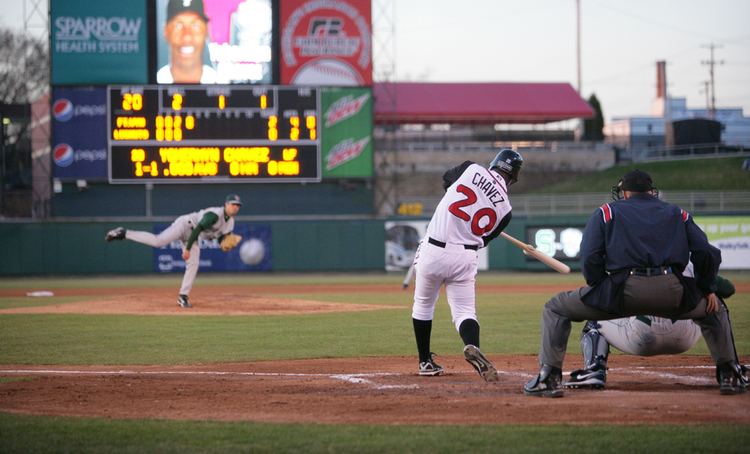
In the cathedral of baseball, where every pitch is a sermon and every swing a hymn, power isn’t merely a statistic—it’s a force of nature. The crack of the bat echoes like thunder, the ball streaks across the sky like a comet, and in that fleeting moment, physics and athleticism collide. But what truly fuels this spectacle? Is it the whip-like fury of the swing, or the relentless velocity of the ball as it leaves the bat? The debate between ball speed and swing speed is less a rivalry and more a symphony, where each element plays a distinct yet harmonious role in crafting the crescendo of a home run.
The Physics of Power: Where Force Meets Flight
Imagine the baseball bat as a conductor’s baton, orchestrating a symphony of energy transfer. When a batter swings, they don’t just apply force—they sculpt it. The speed at which the bat moves (swing speed) determines how much kinetic energy is generated before impact. But here’s the twist: that energy isn’t static. It’s a living, breathing entity, transferring from the bat to the ball in a fraction of a second. The ball, in turn, becomes a projectile, its speed dictated not just by the swing, but by the elasticity of the collision. This is the realm of the coefficient of restitution—a term that sounds like a legal doctrine but is, in fact, the measure of how much energy is preserved in the hit. A higher coefficient means less energy lost to deformation, and thus, a faster ball.
The interplay between swing speed and ball speed is akin to a river carving through stone. The faster the swing, the deeper the cut into the ball’s potential. Yet, even the mightiest river needs the right channel. A batter with a lightning-fast swing but poor technique is like a raging torrent smashing against a dam—powerful, but ineffective. The magic lies in the synergy: swing speed sets the stage, but ball speed is the standing ovation.
The Human Engine: How Batters Cultivate Velocity
Swing speed isn’t born—it’s forged. It’s the product of biomechanical alchemy, where muscle, bone, and instinct fuse into motion. The modern batter is a biomechanical marvel, their body a coiled spring, storing and releasing energy with surgical precision. The hips initiate the rotation, the torso twists like a corkscrew, and the arms—oh, the arms—act as the final whip, accelerating the bat to velocities that defy intuition. But here’s the paradox: raw strength alone won’t cut it. A batter who swings with brute force but poor sequencing is like a race car with a faulty transmission—all revs, no road.
Enter the concept of kinetic linking, the seamless transfer of energy from the ground up. The legs push, the core rotates, the shoulders coil, and the arms extend—each segment contributing to the final velocity. A batter who neglects this chain is like a pianist playing only with their fingers; the music is there, but it lacks depth. Training for swing speed, then, becomes a study in harmony. Weighted bats, resistance bands, and even virtual reality simulations are tools of the trade, each designed to refine the batter’s engine. But the true test? The moment of truth, when bat meets ball, and the body’s work is distilled into a single, searing statistic: exit velocity.
Exit Velocity: The Ball’s Declaration of Independence
Exit velocity is the ball’s emancipation proclamation. It’s the speed at which the ball leaves the bat, a number that doesn’t just measure power—it broadcasts it. A 110 mph exit velocity isn’t just fast; it’s a siren call to outfielders, a challenge to gravity, a dare to the laws of physics. But where does this velocity come from? Partly from the swing, yes, but also from the ball’s own resilience. A livelier ball, one with a higher rebound efficiency, will catapult off the bat with less energy loss. This is why league regulations on ball composition are as much about fairness as they are about spectacle.
Consider the difference between a line drive and a towering fly ball. The line drive, with its blistering exit velocity, is the assassin—quick, lethal, unstoppable. The fly ball, while majestic, trades speed for arc. Here, the batter’s swing speed might be the same, but the launch angle becomes the architect of destiny. Yet, even the most perfectly angled fly ball is at the mercy of the ball’s initial velocity. A 105 mph exit velocity will travel farther than a 95 mph one, regardless of the swing’s grace. This is the tyranny—and the beauty—of exit velocity: it’s the ultimate arbiter of distance.
The Sweet Spot: Where Precision Meets Power
Not all hits are created equal. The sweet spot of the bat is where the collision between bat and ball is most efficient, where energy transfer is maximized, and where the ball’s speed peaks. Miss the sweet spot, and the ball stings the hands, the bat vibrates like a plucked harp string, and the exit velocity plummets. Hit it just right, and the ball sings—a high-pitched whine that’s music to a batter’s ears. This is the realm of vibrational dampening, where modern bat technology (carbon fiber, aluminum alloys) has revolutionized the game. A bat’s sweet spot isn’t just a physical location; it’s a sanctuary of pure energy transfer.
The batter’s quest for the sweet spot is a dance of millimeters. Grip too tight, and the bat’s natural flex is stifled. Grip too loose, and the energy dissipates like mist. The swing must be smooth, unhurried in its acceleration, allowing the bat to load and unload like a trebuchet. This is why batting practice isn’t just repetition—it’s a meditation on precision. Every swing is a prayer to consistency, every contact a testament to the batter’s communion with the bat’s soul.
Beyond the Numbers: The Art of the Home Run
Numbers tell a story, but they don’t capture the soul of the game. A 115 mph exit velocity is impressive, but it’s the crack of the bat, the arc of the ball, the roar of the crowd that lingers in the memory. The greatest home runs aren’t just measured in miles per hour; they’re measured in awe. Think of the 2019 Yankees’ Giancarlo Stanton, whose monstrous swing generated exit velocities that defied belief. Or Aaron Judge, whose combination of swing speed and bat control produced some of the hardest-hit balls in history. These players didn’t just hit the ball harder—they redefined what it meant to hit it with purpose.
The art of the home run is a blend of science and serendipity. A batter can control their swing, their stance, their timing—but they can’t control the wind, the humidity, or the spin of the pitch. The ball’s flight is a collaboration between human and nature, a fleeting moment where physics and fate intertwine. This is why baseball is more than a sport; it’s a narrative. Every home run is a chapter, every swing a sentence, and every stadium a cathedral where the faithful gather to witness the sublime.
The Future of Power: Technology and the Evolution of Swing
The arms race of baseball power isn’t just about stronger players—it’s about smarter ones. Technology has become the batter’s silent partner, offering insights that were once the stuff of science fiction. High-speed cameras dissect swings frame by frame. Wearable sensors track muscle activation in real time. AI-driven simulations predict the optimal launch angle for maximum distance. The modern batter is no longer just an athlete; they’re a data scientist, a physicist, and a virtuoso all at once.
Yet, for all its sophistication, technology hasn’t diminished the human element. If anything, it’s amplified it. The best players don’t just use data—they transcend it. They feel the game, intuit the moment, and trust their instincts. The future of power in baseball may lie in biomechanical perfection, but its soul will always reside in the unpredictable, the unquantifiable—the sheer, exhilarating joy of watching a ball soar.