In the high-stakes arena of baseball, where milliseconds separate triumph from defeat, the ability to throw a fastball with blistering velocity is a game-changer. Whether you’re a seasoned pitcher refining your craft or an aspiring hurler breaking into the sport, the pursuit of added speed is relentless. The good news? Velocity isn’t solely the domain of genetic freaks or years of laborious training. With targeted adjustments and a keen understanding of biomechanics, even modest tweaks can shave precious miles per hour off your fastball—often in a matter of weeks. This guide dissects the art and science behind throwing faster, breaking down the key elements that transform raw power into explosive pitch speed.
The Foundation: Grip and Finger Pressure
The first domino in the velocity chain is your grip. The way your fingers interact with the baseball dictates spin rate, release point, and ultimately, speed. For a four-seam fastball—the gold standard for velocity—the key lies in a firm yet relaxed grip. Place your index and middle fingers across the horseshoe seams, with your thumb positioned directly beneath the ball. The pressure should be uniform, like holding a bird without crushing it. Too tight, and you’ll throttle airflow around the ball, reducing spin efficiency. Too loose, and the pitch will flutter like a leaf in the wind. Experiment with slight variations—some pitchers find that a slightly deeper finger placement on the seams yields a tighter, more aerodynamic rotation. The goal is a seamless transfer of energy from your hand to the ball, where every ounce of force is converted into forward momentum.
Leverage and Momentum: The Kinetic Chain
Velocity isn’t generated in isolation; it’s the product of a kinetic chain—a domino effect of energy transfer from your lower body to your throwing arm. The process begins with your legs. A strong, explosive push off the rubber sets the stage, but the magic happens in the sequencing. As your front foot lands, your hips should already be rotating toward home plate, creating a whip-like effect. The torso follows, acting as a conduit between the lower and upper body. Here’s where many pitchers stall: they over-rely on their arms, treating the throwing motion like a windmill rather than a symphony of coordinated forces. To maximize speed, focus on driving your back hip forward aggressively, as if you’re trying to crush a walnut between your glutes and the mound. This rotational torque stores elastic energy, which is then unleashed through your shoulder and arm like a coiled spring.
Arm Action: Efficiency Over Excess
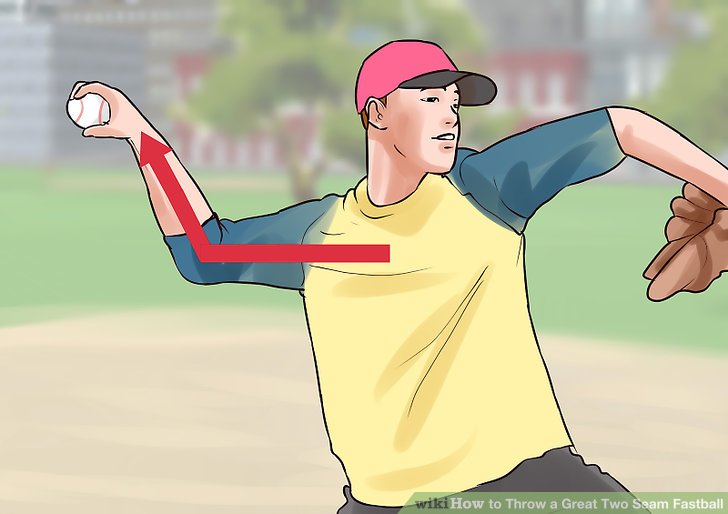
The arm’s role in velocity is often misunderstood. While raw arm strength contributes, the true differentiator is arm action—how efficiently you move your arm through the throwing motion. A long, looping arm path may feel powerful, but it’s a speed killer, as it elongates the time between the cocking and acceleration phases. Instead, aim for a compact, direct path. As your arm whips forward, your elbow should lead the way, staying close to your body until the final moments. This minimizes the deceleration phase, where energy leaks occur. Think of your arm as a slingshot: the tighter the loop, the faster the projectile flies. Drills like towel throws or resistance band exercises can reinforce this compact motion, training your muscles to move in the most velocity-optimized trajectory.
Core Engagement: The Unsung Hero of Velocity
Your core is the silent powerhouse behind every high-velocity pitch. A weak or unstable core forces your arm to compensate, leading to inefficiency and increased injury risk. To harness your core’s potential, focus on rotational strength. Exercises like Russian twists, landmine rotations, and Pallof presses build the anti-rotational stability needed to transfer energy smoothly from your lower body to your arm. During the pitch, brace your core as if preparing for a punch—this rigidity ensures that the force generated by your legs isn’t wasted in unnecessary torso wobble. The result? A more direct energy transfer, where every ounce of your lower-body drive is funneled into the baseball.
Release Point and Follow-Through: The Final Push
The release point is where velocity either flourishes or fizzles. A late release—where the ball leaves your hand after your arm has already begun decelerating—robs you of precious speed. To optimize this, aim for an early, high release point. Imagine your hand is a catapult, and the ball is the projectile; the sooner you release, the more energy is imparted forward. Your follow-through is equally critical. A full, aggressive follow-through ensures that your arm doesn’t cut the motion short, which can sap velocity. After release, your throwing arm should continue downward and across your body, as if you’re reaching for a shelf on the opposite side of your torso. This complete motion maintains momentum and prevents energy leaks.
Additionally, the angle of your wrist at release plays a subtle but significant role. A slight upward tilt (think of a “slightly tilted handshake” position) can add backspin, which stabilizes the pitch and reduces drag, allowing it to carry more speed over distance. This is particularly useful for two-seam fastballs, where grip and wrist action combine to create late movement.
Strength and Conditioning: The Velocity Blueprint
No discussion of velocity is complete without addressing strength and conditioning. While arm exercises like weighted ball throws or resistance band work are valuable, they’re only part of the equation. A well-rounded program should prioritize explosive power, particularly in your posterior chain—the glutes, hamstrings, and calves. Plyometrics like box jumps, depth jumps, and single-leg hops train your muscles to generate force rapidly, mimicking the explosive push required on the mound. Weightlifting should focus on compound movements: deadlifts, squats, and overhead presses build the full-body strength needed to withstand the demands of high-velocity pitching. Don’t neglect mobility work either; tight hips or shoulders can derail even the most powerful delivery. Dynamic stretches and yoga poses like the pigeon stretch or cat-cow can keep your joints supple and your mechanics fluid.
Mental Game: The Invisible Accelerator
Velocity isn’t just a physical endeavor—it’s a mental one. The most gifted pitchers aren’t just strong; they’re mentally resilient. Visualization is a powerful tool here. Before each pitch, close your eyes and imagine the perfect throw: the grip, the leg drive, the arm whip, the crisp release. This mental rehearsal primes your nervous system to execute the motion flawlessly. Additionally, focus on aggression. Fear of overthrowing or losing control can lead to tentative mechanics, which stifle speed. Trust your training. Embrace the chaos of the mound. The best pitchers don’t just throw hard—they throw with intent, as if each pitch is a declaration of dominance.
Recovery and Maintenance: Protecting Your Arm
Velocity gains mean nothing if they come at the cost of your arm’s longevity. Recovery is non-negotiable. Ice baths, contrast therapy, and proper hydration reduce inflammation and keep your muscles primed for action. Sleep is your body’s repair shop—aim for 7-9 hours nightly to allow your nervous system and muscles to recover. Listen to your body. Soreness is normal; pain is not. If your arm feels fatigued or your mechanics feel off, dial back the intensity. Overuse is the fastest way to derail velocity gains permanently. Incorporate active recovery days with light throwing or mobility work to keep your arm fresh without overstressing it.
The Path Forward: Iterative Refinement
Throwing faster is a journey, not a destination. Even the most elite pitchers are constantly tweaking their mechanics, experimenting with grip variations, or refining their strength programs. Start with one or two adjustments—perhaps your grip and leg drive—and track your progress. Use a radar gun or video analysis to measure changes. Keep a pitching journal to note what works and what doesn’t. Over time, you’ll develop an intuitive sense of what adjustments yield the most velocity for your unique physiology. Remember, the goal isn’t to mimic another pitcher’s style but to optimize your own. With patience, persistence, and a willingness to experiment, you’ll unlock the speed hidden within your arm.