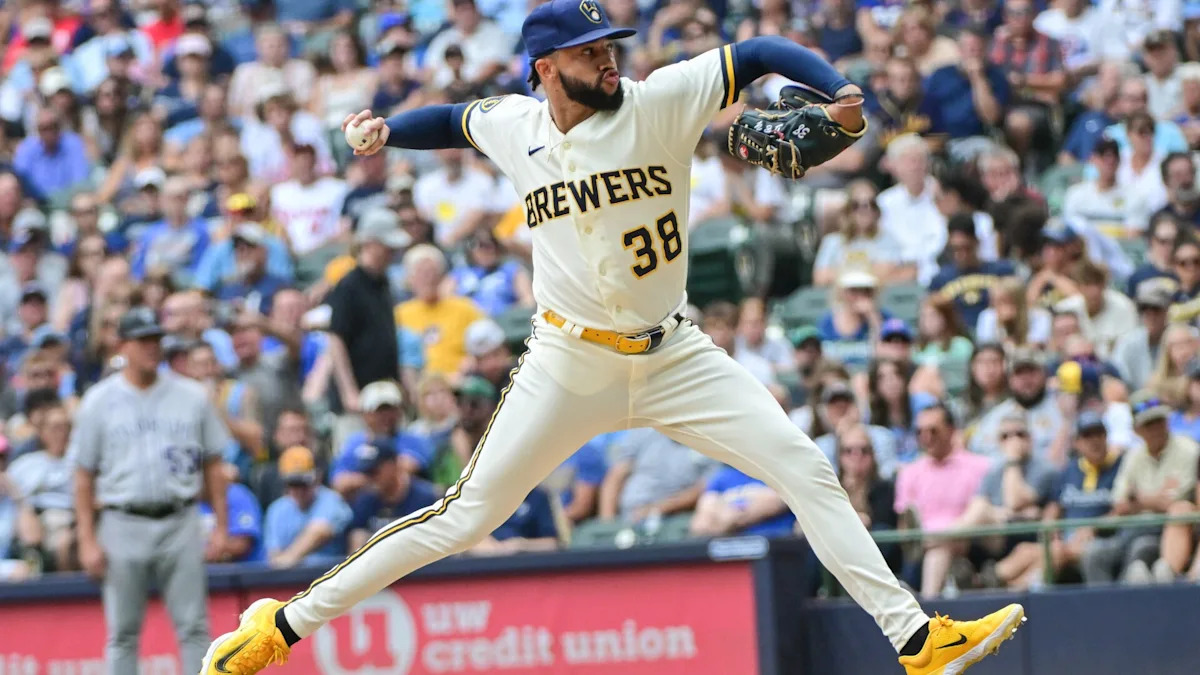
There’s a moment in every pitcher’s journey when the mechanics that once felt instinctive suddenly feel like a betrayal. The fastball that used to hum like a tuning fork now shrieks like a rusty gate. The curveball, once a velvet hammer, now skids like a misfired rocket. For years, I’d blamed my arm, my grip, even the wind—anything but the silent saboteur: my own mechanics. That was until I handed the reins to a pitching coach and let him dissect my delivery live, in real time. What followed wasn’t just a correction—it was a revelation.
The Illusion of Instinct: Why Most Pitchers Throw Like They’re Fighting Themselves
Every pitcher starts with a unique physical blueprint, but too often, that blueprint gets smothered under layers of compensatory habits. You might think you’re throwing naturally, but your body is actually performing a high-wire act to compensate for imbalances you don’t even feel. The shoulders hike up to protect a weak core. The hips spin out early to mask poor stride mechanics. The elbow flares because the forearm isn’t syncing with the shoulder’s rotation. These aren’t flaws—just symptoms of a system trying to survive without proper alignment.
I’d convinced myself my mechanics were “good enough” because I could still touch 88 mph and spin a curveball. But good enough is the enemy of great. And great doesn’t come from repetition alone—it comes from precision. The moment the coach pointed out how my lead leg was collapsing inward like a folding chair, I realized I wasn’t just throwing the ball—I was throwing my body into a structural compromise. That’s when the real work began.
Live Dissection: The Brutal Honesty of a Pitching Coach’s Eye
There’s something terrifying about watching your own mechanics exposed on a screen, frame by frame, in front of someone who sees flaws you’ve spent years rationalizing. The coach didn’t just critique my delivery—he dissected it like a surgeon. “Your glove side is pulling your shoulder out of alignment before you even stride,” he said, pointing to a freeze-frame where my elbow was already drifting skyward before my foot planted. “That’s why your fastball tails instead of cuts.”
What followed was a masterclass in kinetic sequencing. He broke down the kinetic chain—the domino effect from the ground up. How my toes weren’t driving forward, how my hips were firing too late, how my upper half was essentially a passenger in a car being driven by my lower half. The most unsettling part? I’d been doing this for years. The body adapts to dysfunction. It doesn’t scream when it’s compensating—it just gets quieter, until one day, the arm gives out.
The Domino Effect: How One Flaw Topples the Entire Delivery
Pitching isn’t a series of isolated movements—it’s a symphony of interconnected forces. Pull one instrument out of tune, and the whole composition collapses. My coach illustrated this with a simple experiment: he had me throw three fastballs with my normal mechanics, then three with a single adjustment—keeping my lead shoulder closed longer. The difference was night and day. The first set sailed high and tailing. The second set stayed on a straight line, riding the black of the zone. One adjustment, and suddenly, the ball was behaving like it was supposed to.
This is the hidden truth about pitching mechanics: they’re not just about arm strength or wrist snap. They’re about timing, leverage, and the efficient transfer of energy. A late stride means a late hip rotation, which means a late arm whip. A collapsed lead leg means a loss of ground force, which means less velocity and more stress on the elbow. The dominoes fall in milliseconds, but the damage compounds over thousands of throws.
From Compensation to Efficiency: The Art of Rewiring Muscle Memory
Rewiring muscle memory isn’t about brute-force repetition—it’s about deliberate practice. The coach didn’t just tell me what to fix; he gave me drills to ingrain the corrections. We worked on towel drills to sync my glove side with my stride. We used resistance bands to strengthen my lead leg’s drive. We filmed every rep, comparing the before and after like a time-lapse of a broken machine being rebuilt.
At first, the new mechanics felt unnatural—like trying to write with your non-dominant hand. But the coach kept reminding me: “Unnatural now means natural soon.” And he was right. Within two weeks, the adjustments started to stick. My fastball gained two ticks of velocity without added effort. My curveball’s break sharpened like a freshly honed blade. Most importantly, my arm felt lighter. The soreness in my elbow after long bullpens? Gone. The feeling of strain in my shoulder? A distant memory.
The Psychological Shift: Confidence Isn’t Born from Repetition—It’s Born from Precision
There’s a psychological weight to pitching that’s often overlooked. It’s not just about the physical act—it’s about the mental narrative. When you’re constantly fighting your own mechanics, you start to doubt your ability. Every bad outing reinforces the fear that you’re one bad throw away from injury. But when your mechanics are dialed in, that fear dissipates. You’re not just throwing the ball—you’re commanding it.
I remember the first bullpen after the adjustments. I threw 20 pitches, all fastballs, and every one of them found the zone. Not just the zone—the upper third. The coach smiled. “That’s the sound of a pitcher who’s finally in sync.” It wasn’t just about the results—it was about the feeling. The ball was leaving my hand with purpose, not desperation. The arm felt like it was part of a well-oiled machine, not a fragile contraption held together by duct tape and hope.
The Long Game: Why Mechanics Are the Ultimate Investment in a Pitcher’s Future
Pitching is a sport of attrition. Arms wear down. Velocity fades. The players who last aren’t the ones who throw the hardest—they’re the ones who throw the smartest. Mechanics aren’t just about performance today; they’re about longevity tomorrow. A pitcher with pristine mechanics can throw 150 innings a year without issue. A pitcher with flawed mechanics might get by for a season or two, but the body always collects on its debts.
This is why the best pitchers in baseball—from deGrom to Cole—spend as much time refining their delivery as they do throwing bullpens. It’s not about chasing the perfect model; it’s about eliminating the inefficiencies that lead to breakdowns. The coach’s final words to me were simple: “Your mechanics aren’t just about today. They’re about the next 10 years.”
And that’s the shift in perspective. It’s not about fixing what’s broken—it’s about building something that lasts. It’s not about throwing harder—it’s about throwing smarter. It’s not about surviving the grind—it’s about thriving in it.