There’s a certain audacity in attempting to master a baseball pitch that even seasoned professionals treat with reverence. The knuckleball, that elusive, fluttering demon of the mound, has broken the spirits of many a pitcher—myself included. I didn’t just try to throw one; I waded into its treacherous waters with the confidence of a man who had never felt the sting of a line drive off his own kneecap. What followed was a humbling descent into the absurd, a lesson in physics disguised as a game, and a sudden, overwhelming desire to revert to my fastball days. This is the story of my ill-fated tryst with the knuckleball, a pitch so unpredictable it makes a roulette wheel look like a calculator.
The Allure of the Uncontrollable: Why the Knuckleball Lures Pitchers Into Madness
The knuckleball isn’t just a pitch; it’s a rebellion against the very laws of predictability. While fastballs scream toward home plate like a runaway train and curveballs dive with theatrical flair, the knuckleball does something far more sinister: it *drifts*. It taunts pitchers with the promise of deception, only to laugh in their faces when the ball veers wildly off course—sometimes into the catcher’s mitt, sometimes into the opposing batter’s bat. The pitch’s mystique lies in its simplicity: grip the ball with your fingertips, throw it with minimal spin, and let chaos take the wheel. For a pitcher tired of being predictable, it’s the ultimate act of defiance. Or so I thought.
I had watched the greats—R.A. Dickey, Phil Niekro, Tim Wakefield—weave their magic with this pitch, baffling hitters and confounding analysts. Their knuckleballs weren’t just effective; they were *art*. I wanted that artistry. I wanted to be the pitcher who made grown men look foolish with a single, wobbling toss. What I didn’t account for was the sheer *violence* of the learning curve. The knuckleball doesn’t just challenge your arm; it challenges your sanity. Every throw is a gamble, a roll of the dice where the only certainty is that you’ll lose more often than you win.
The First Throw: A Humbling Introduction to the Knuckleball’s Cruelty
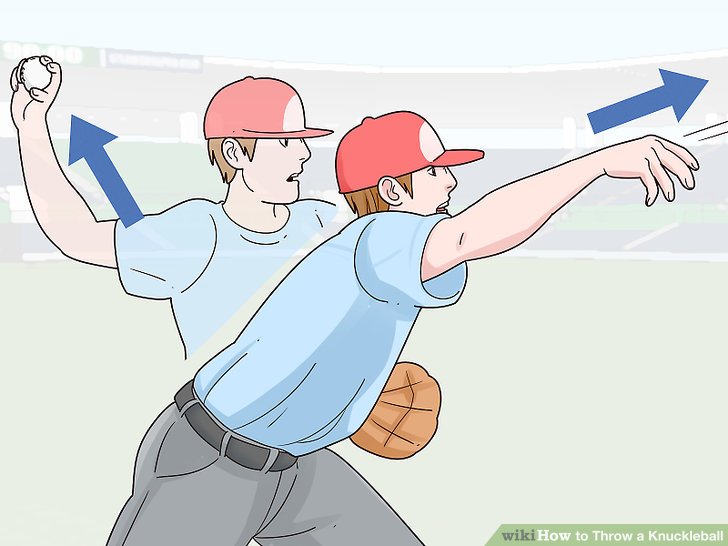
The first time I gripped the ball with my knuckles, I felt like a fraud. The seams dug into my fingertips, and the weight of the sphere suddenly felt alien, as if I were holding a live grenade instead of a baseball. My coach, a man who had seen too many pitchers attempt this folly, gave me a single piece of advice: “Throw it like you’re skipping a stone across a pond.” Easy for him to say. He wasn’t the one standing on a mound, the weight of expectation pressing down like a humid summer sky.
The throw itself was a disaster. The ball left my hand with all the grace of a wounded seagull, lurching erratically before plummeting into the dirt a full six feet in front of the plate. The catcher, a grizzled veteran who had seen this movie before, didn’t even bother to move. He just sighed and said, “Welcome to the knuckleball club. You’ll be paying dues for a while.” I laughed it off, but the seed of doubt had already been planted. If this was the pitch’s idea of a warm-up, what horrors awaited me when I actually tried to throw it with intent?
The Physics of Madness: Why the Knuckleball Defies Logic
To understand the knuckleball’s cruelty, you must first understand its physics—or lack thereof. Most pitches rely on spin to create movement: a fastball’s backspin keeps it aloft, a slider’s side spin makes it slice like a hockey puck. The knuckleball, however, is a spinless wonder. With only 1-2 rotations on its journey to the plate, the ball becomes a victim of the air itself, buffeted by invisible forces that send it drifting in unpredictable patterns. It’s like trying to predict the path of a leaf in a hurricane.
Worse still, the knuckleball’s movement isn’t just random; it’s *deceptive*. A batter expecting a fastball might see the ball hang in the air, only for it to dart left at the last second. Or it might tail away entirely, leaving the hitter swinging at thin air. The pitch’s lack of spin means there’s no telltale “hump” or “break” to tip off the batter. Instead, they’re left staring at a ball that seems to move on its own, as if guided by some unseen puppeteer. It’s no wonder that even Hall of Famers have struggled to hit it consistently.
For the pitcher, this means every throw is a leap of faith. There’s no muscle memory to rely on, no ingrained mechanics to fall back on. The knuckleball demands total surrender to its whims. And when it betrays you—when it sails high and hangs like a piñata for the batter to smash—it’s a reminder that baseball, for all its strategy and skill, is still a game played by humans, and humans are terrible at controlling chaos.
The Mental Toll: When the Knuckleball Turns Pitchers Into Philosophers
It didn’t take long for the knuckleball to worm its way into my psyche. Every errant toss became a personal failure, a testament to my inadequacy. I found myself overanalyzing every throw, questioning whether I’d gripped the ball too tightly or released it too early. The more I tried to “fix” it, the worse it got. The knuckleball isn’t a pitch you can muscle into submission; it’s a pitch that demands patience, humility, and a willingness to embrace failure as part of the process.
I started to see parallels between the knuckleball and life itself. How often do we cling to control, only to be humbled by forces beyond our understanding? The knuckleball, like fate, refuses to be tamed. It’s a lesson in surrender, a reminder that some things—no matter how hard we try—will always slip through our fingers. And yet, there’s a strange beauty in that. The knuckleball isn’t just a pitch; it’s a metaphor for the unpredictability of existence. It teaches you to laugh at your failures, to find joy in the absurd, and to accept that mastery is an illusion.
Of course, that didn’t stop me from wanting to throw a good one. The allure of that perfect, fluttering pitch—one that dances just out of a batter’s reach—was too intoxicating to ignore. But the knuckleball doesn’t reward obsession. It rewards patience, persistence, and a willingness to accept that sometimes, the best you can do is throw the ball and hope for the best.
The Aftermath: What I Learned From My Knuckleball Nightmare
In the end, I didn’t master the knuckleball. I didn’t even come close. But I did gain something far more valuable: perspective. The knuckleball taught me that failure isn’t the opposite of success; it’s a necessary part of it. It showed me that sometimes, the most rewarding experiences come from embracing the absurd, from diving headfirst into the unknown and laughing when you surface, battered but wiser.
I still throw the occasional knuckleball in practice, just for fun. Most of the time, it ends up in the catcher’s glove. Sometimes, it sails into the backstop. And every now and then, it does something unexpected—darts left, hangs in the air, or even sneaks past the batter for a called strike. Those moments are fleeting, but they’re magical. They remind me that baseball isn’t just about winning or losing; it’s about the joy of the game, the thrill of the unexpected, and the humbling realization that some things—like the knuckleball—are beyond our control.
So if you ever find yourself tempted to try the knuckleball, go ahead. But be warned: it will humble you. It will frustrate you. It might even make you question your life choices. But in the end, it might just teach you something about yourself—and about the beautiful, unpredictable nature of the game we love.