In the hallowed halls of baseball card collecting, where cardboard and ink collide to immortalize legends, few names resonate with the same quiet authority as Joe Morgan. A first-ballot Hall of Famer, a two-time MVP, and a cornerstone of the Cincinnati Reds’ legendary “Big Red Machine,” Morgan’s legacy is etched not just in box scores but in the waxy sheen of vintage cardboard. Yet, when it comes to his baseball cards, a curious question lingers like a fastball hanging in the strike zone: Are Joe Morgan cards undervalued relics of a bygone era, or are they the next rising stars of the hobby, poised to rocket in value? Buckle up, because we’re about to dive into the stats, the stories, and the subtle nuances that could make—or break—the investment case for these collectibles.
Before we crack open the case, let’s set the stage. Baseball cards are more than just nostalgia; they’re a tangible connection to the game’s history, a way to hold a piece of the past in your hands. Morgan’s cards span decades, from his rookie cards in the late 1960s to his later issues in the 1980s and beyond. But not all cards are created equal. The value of a Joe Morgan card hinges on a cocktail of factors: scarcity, condition, era, and—perhaps most importantly—collector demand. And here’s where things get interesting. While Morgan’s on-field achievements are undeniable, his cards haven’t always commanded the same premium as those of his contemporaries, like Johnny Bench or Nolan Ryan. Is this an oversight waiting to be corrected, or is there a method to the madness?
The Rookie Card Conundrum: Where It All Began
The journey of a Joe Morgan card’s value often starts with his rookie card, a 1965 Topps issue that’s as unassuming as it is historic. Printed in the era when Topps ruled the hobby with an iron fist, this card captures Morgan in his early days with the Houston Astros, before he became the Cincinnati Reds’ second baseman extraordinaire. In today’s market, high-grade copies of this card can fetch anywhere from $200 to $500, depending on centering, corners, and surface quality. But here’s the kicker: pristine examples—those graded PSA 10—are rarer than a perfect game, and when they surface, they can command prices nearing $2,000. That’s a steep climb from the $5 or $10 they might have cost in 1965, but is it enough?
The challenge with rookie cards, especially from the 1960s, is their sheer ubiquity. Topps churned out millions of them, and over half a century later, many have survived in decent condition. The real value lies in the eye appeal—the crispness of the photo, the vibrancy of the colors, and the absence of creases or stains. A Morgan rookie in NM-MT (Near Mint to Mint) condition might not set the market ablaze, but a PSA 9 or 10? That’s where the potential lies. The question isn’t just about what these cards are worth today, but what they could be worth tomorrow, as a new generation of collectors discovers the joys of vintage cardboard.
The Big Red Machine Era: When Morgan Became a Star
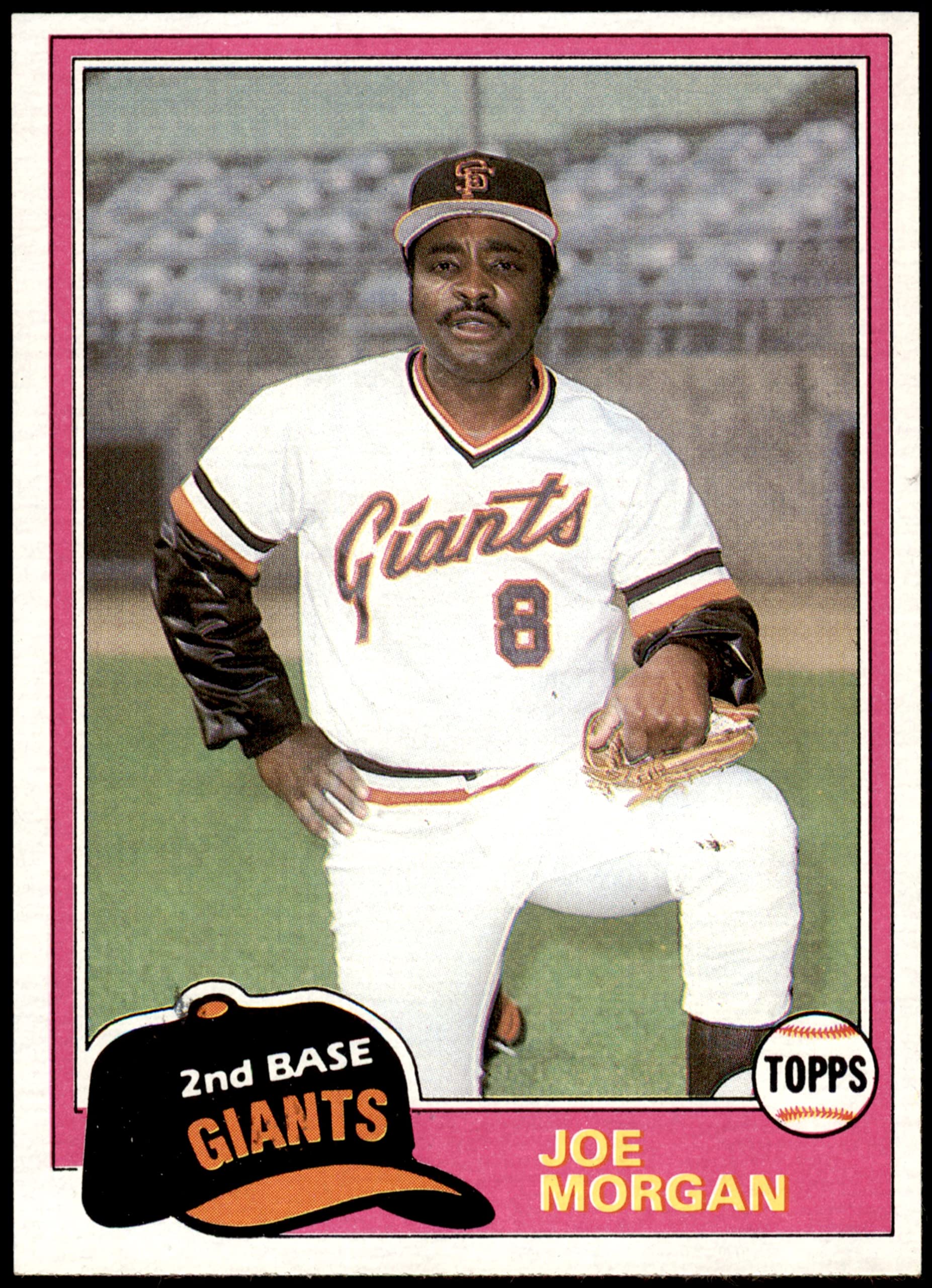
By the time the 1970s rolled around, Joe Morgan was no longer a rookie—he was a superstar, a key cog in the Reds’ machine that dominated baseball like few teams ever have. This era produced some of the most iconic Morgan cards, including his 1973 Topps and 1975 Topps issues. These cards are where the real intrigue begins. Why? Because they represent the peak of Morgan’s career, a time when he was stealing bases, hitting for average and power, and anchoring one of the greatest teams in history. Collectors who prize cards tied to legendary moments or players often gravitate toward these issues.
The 1973 Topps Morgan card, in particular, is a fan favorite. It captures him mid-swing, his compact, powerful stance a testament to his elite bat speed. In high-grade condition (PSA 8 or better), this card can sell for $100 to $300, with top-tier examples pushing closer to $500. But here’s where the market gets tricky. While Morgan’s cards from this era are beloved, they’re not as scarce as you might think. Topps produced them by the boatload, and many have survived in collectible condition. The key to unlocking value here isn’t just the card itself, but the story it tells. A Morgan card from the Big Red Machine era isn’t just a piece of cardboard; it’s a ticket to a bygone era of baseball glory.
Yet, there’s a paradox at play. Morgan’s cards from this period are highly desirable, but their supply is relatively stable. Unless a major auction house suddenly drops a pristine, unopened box of 1970s Topps, the market for these cards is unlikely to see a dramatic surge. That doesn’t mean they’re not a solid investment—far from it. But it does mean that collectors should temper their expectations. These cards are more likely to appreciate steadily, like a well-maintained pitching rotation, rather than explode in value overnight.
The Modern Resurgence: Are Morgan Cards the Next Big Thing?
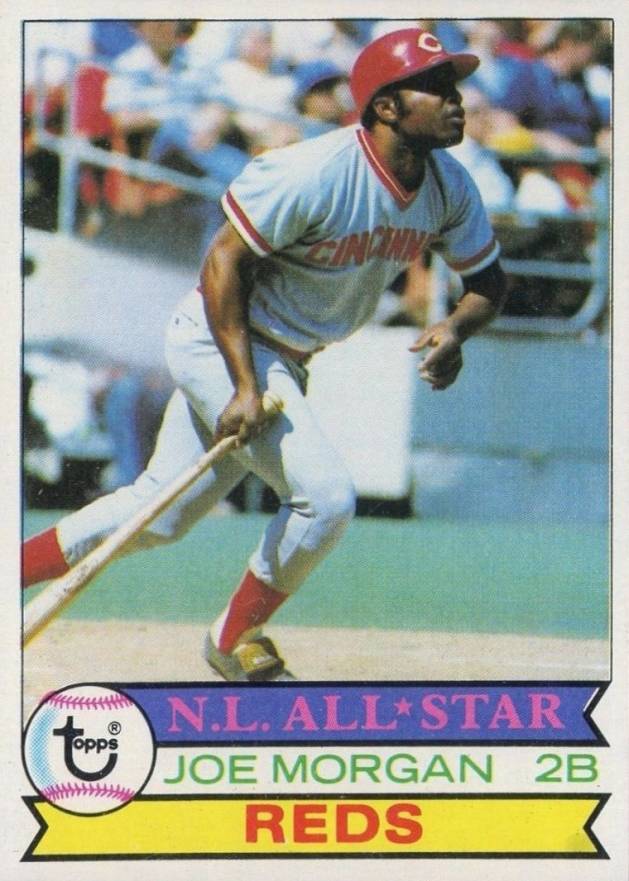
If the 1960s and 1970s represent the foundation of Joe Morgan’s card value, then the modern era—spanning the 1980s to today—is where things get really interesting. This is the territory of limited-edition releases, autographed cards, and relics that tie Morgan to specific moments in his career. Cards from this era often come with higher price tags upfront, but they also carry the potential for greater appreciation. Take, for example, Morgan’s 1982 Donruss or 1983 Fleer issues. These cards are more affordable than their vintage counterparts, but they’re also more accessible to younger collectors who are just dipping their toes into the hobby.
Then there are the autographed cards. Morgan’s signature appears on a variety of modern issues, from relic cards featuring game-used jersey swatches to high-end memorabilia pieces. These cards can range from $50 to several hundred dollars, depending on the scarcity and the quality of the autograph. The challenge here is authenticity. With the proliferation of forgeries and altered signatures, collectors must tread carefully. A certified autograph from a reputable grading company (like PSA or BGS) is worth the premium, while an uncertified card is a gamble.
But perhaps the most intriguing modern Morgan cards are the relics. Imagine holding a piece of a jersey Morgan wore during his MVP seasons, or a bat he used to hit a game-winning home run. These cards blur the line between collectible and artifact, and they’re becoming increasingly popular among high-end collectors. The value of these pieces is tied not just to Morgan’s legacy, but to the specific game or moment they represent. A relic card from Morgan’s 1975 MVP season, for example, could be a home run in an investment portfolio—or a strikeout if the market isn’t ready for it.
The modern era also introduces another layer of complexity: the role of grading. Cards graded PSA 10 or BGS 9.5 are the cream of the crop, and they command premium prices. But grading is subjective, and not all high grades are created equal. A Morgan card graded PSA 9 might look identical to a PSA 10 to the naked eye, but the price difference could be substantial. This is where the challenge lies for collectors: balancing the desire for top-tier condition with the reality of the market.
The Wildcard Factors: Condition, Scarcity, and Sentiment
No discussion of Joe Morgan card values would be complete without diving into the wildcard factors that can make or break an investment. Condition, for starters, is king. A Morgan card in pristine condition is like a perfectly executed double play—smooth, flawless, and executed with precision. But condition is subjective. What one collector considers “near mint,” another might dismiss as “poor.” This is why grading companies exist, to provide a standardized assessment of a card’s condition. Yet, even grading isn’t foolproof. A card graded PSA 8 might be a home run in one collector’s eyes, while another might see it as a strikeout.
Scarcity is another wildcard. Some Morgan cards are inherently rare due to low print runs or distribution issues. Others are common but have become scarce over time due to attrition—cards that were handled frequently, stored poorly, or lost to the sands of time. The 1965 Topps Morgan rookie, for example, is common in lower grades but scarce in PSA 10. This disparity creates opportunities for savvy collectors who are willing to hunt for top-tier examples.
Then there’s sentiment. Baseball cards are as much about emotion as they are about economics. A Morgan card might not be the most valuable card in a collector’s portfolio, but it could hold immense personal significance. Maybe it was the first card they ever owned, or maybe it reminds them of a childhood hero. Sentimentality can drive demand in unexpected ways, creating pockets of value that defy traditional market logic. This is the intangible factor that separates the hobbyist from the investor—the understanding that some cards are worth more than their price tags suggest.
Finally, there’s the role of nostalgia. Morgan’s career spanned the 1960s to the 1980s, a golden era of baseball that’s ripe for rediscovery. As younger collectors turn to vintage cards for a connection to the past, Morgan’s issues could benefit from a groundswell of interest. The challenge? Timing. Nostalgia is fickle, and what’s hot today might be cold tomorrow. Collectors who bet on Morgan’s cards today might be rewarded in a decade—or they might find themselves holding a relic of a market that never quite took off.
So, where does that leave us? Are Joe Morgan baseball cards undervalued relics waiting for their moment in the sun, or are they already shining brightly enough to justify their place in a collector’s portfolio? The answer, as with most things in baseball, is nuanced. Morgan’s cards offer a compelling blend of history, scarcity, and potential upside, but they’re not without their risks. The rookie cards are solid investments for those willing to pay up for top-tier condition, while the Big Red Machine-era issues provide a bridge between affordability and desirability. Modern relics and autographed cards offer the highest upside, but they also come with the highest risk of disappointment.
Ultimately, the value of a Joe Morgan card depends on what you’re looking for. If you’re a collector who values history and legacy, these cards are a home run. If you’re an investor chasing the next big thing, Morgan’s issues might be a gamble worth taking—but one that requires patience, research, and a willingness to embrace the unpredictable nature of the hobby. As the baseball card market continues to evolve, one thing is certain: Joe Morgan’s legacy is far from over. Whether his cards follow suit remains to be seen, but for now, they stand as a testament to a career that defined an era—and a hobby that’s still writing its own story.