The Los Angeles Dodgers have long been celebrated for their storied history and their consistent prowess on the baseball diamond. Amidst the constellation of stars who have graced their roster, the role of catcher often emerges as a quietly pivotal position—one that demands not only physical stamina and defensive agility but a cerebral command that often goes unnoticed. Over the last decade, the Dodgers’ catchers have embodied a mix of veteran presence, emerging talent, and strategic versatility, subtly shaping the team’s trajectory toward ongoing greatness. This exploration promises to shift the conventional perspective on catchers, highlighting their nuanced impact and unlocking curiosity about the layers of influence these guardians behind the plate have wielded.
The Strategic Imperative of the Catcher Position
Few positions in baseball carry the complex dual burden that catchers bear. They serve as the infield’s field strategist, pitch-caller, and, at times, an emotional anchor for the pitching staff. Unlike the power-hitters or flashy outfielders who often capture the limelight, catchers operate in the trenches. Over the last decade, the Dodgers have leveraged this role not merely as a defensive necessity, but as a dynamic chess piece in their broader tactical arsenal. The consistency and reliability of the catcher influence the rotation’s confidence and the team’s overall equilibrium. Their value often transcends statistical measures, seeping into morale, pitcher management, and game tempo control.
Core Figures: The Catchers Who Defined the Last Decade
Examining the Dodgers’ catcher roster over the past ten years reveals a tapestry woven with both stalwart veterans and promising talents. Each brought a distinct flavor to the position, shaping the team’s identity in subtle and profound ways.
First among equals stands Yasmani Grandal. Signing with the Dodgers in 2015, Grandal seamlessly integrated power-hitting pop with tenacious defense. His adept pitch framing and ability to steer the pitching staff were undeniable assets. Grandal provided a consistency behind the plate that fortified the team’s pitching strengths, proving vital during crucial playoff runs.
Complementing Grandal’s tenure was Austin Barnes. Less heralded but no less critical, Barnes excelled as the quintessential backup catcher, capable of stepping into high-pressure moments and delivering clutch performances. His resilience and adaptability painted a picture of a player whose worth surpassed traditional starter metrics. Barnes epitomized the elusive but invaluable “glue guy,” whose presence often stabilized the dugout and pitching staff.
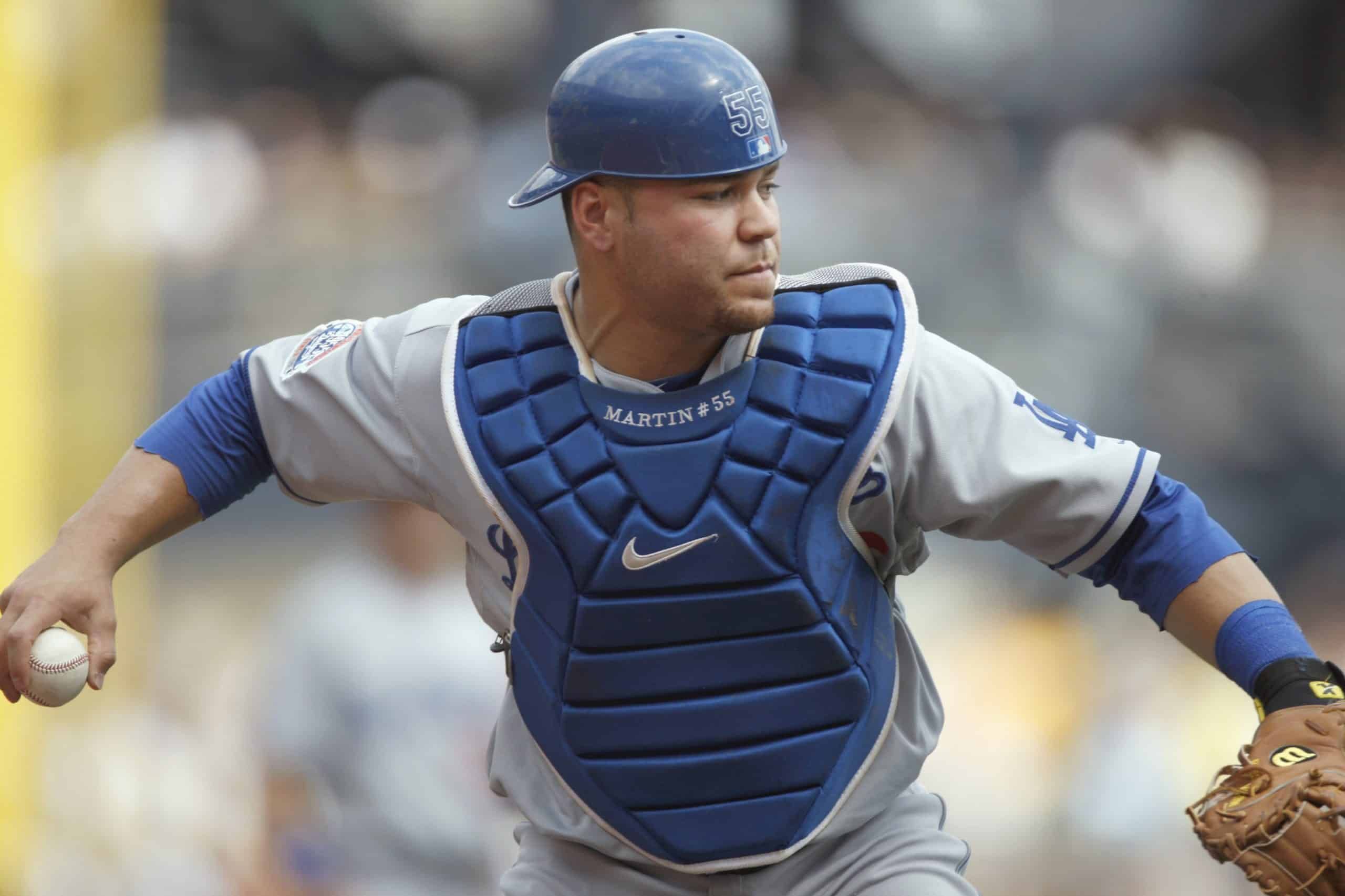
Additionally, players like A.J. Ellis and Russell Martin made indelible marks. Ellis, with his calming presence, maintained the integrity of the clubhouse during transitional years, while Martin brought veteran savvy and leadership in the mid-2010s, further enriching the fabric of Dodgers catching excellence.
Emerging Talent and the Future Outlook
Beyond the veterans, the Dodgers’ catching cadre has been infused with emerging prospects, whetting the appetites of fans and analysts alike. Players such as Keibert Ruiz have signaled a promising next chapter, boasting strong defensive skills combined with high offensive ceilings. With a framework already set by their predecessors, these young catchers are poised to redefine standards for the position within the Dodgers’ system. Their development is keenly watched as they embody both potential and the evolution of catching paradigms, blending traditional roles with modern athleticism and analytical savvy.
Defensive Mastery Versus Offensive Contributions
One of the enduring debates around catchers, particularly within a powerhouse team like the Dodgers, is the balance between defensive mastery and offensive production. This balance has shifted through the last decade, illustrating an intriguing portrait of changing priorities.
Historically, defense reigned supreme. Throughout much of the Dodgers’ catching history, blocking pitches, framing strikes, and expertly handling pitchers have been sacrosanct. Yet, offensive metrics increasingly influenced player valuations. Yasmani Grandal’s tenure exemplified this synthesis—a catcher who offered both a solid bat and defensive leadership.
Conversely, Austin Barnes showed that offensive bursts at strategic moments could elevate team performance dramatically, even if seasonal numbers remained modest. The Dodgers have thus navigated a nuanced path, valuing catchers who can contribute multifaceted skills rather than fitting a monolithic mold.
The Role of Catchers in Playoff Success
When the lights shine brightest and stakes reach their zenith, the Dodgers’ catchers have been pivotal in steering the team’s postseason aspirations. It’s in these crucibles that their true worth emerges beyond raw statistics.
Communication with pitchers, framing borderline pitches, and managing game tempo become magnified and can swing momentum. Yasmani Grandal’s postseason experience was critical in guiding a roster teeming with pitching talent through tense playoff battles, while Austin Barnes’ clutch performances became legendary, carving moments that etched themselves into Dodgers lore.
These high-pressure environments underscore a truth often overlooked: catchers serve as field generals, executing intricate strategies and tempering the emotions that physically demanding playoff series provoke. Their influence resonates throughout the entire defensive apparatus, often tipping the scales between narrow victories and crushing defeats.
Technological Advances and Catcher Adaptation
The last decade has ushered in significant technological advancements in baseball, fundamentally altering scouting, pitch analysis, and player performance tracking. Dodgers catchers have been at the forefront of incorporating these tools into their repertoire.
Video analysis, sophisticated pitch-tracking systems, and real-time data have empowered catchers to refine pitch selection and sequencing. The Dodgers’ catchers learned to meld intuition with data-informed strategy, allowing them to anticipate opposing hitters’ tendencies with heightened acuity.
This adaptability exemplifies a broader trend: catchers who can embrace innovation while stewarding traditional fundamentals become indispensable assets, uniquely blending old-school grit with cutting-edge strategy.
Intangibles: Leadership and Chemistry
The catchers of the Los Angeles Dodgers over the last decade have also illuminated the intangible dimensions of leadership and team chemistry. Optimal defensive coordination and pitcher-catcher synergy thrive on trust and unspoken communication.
Veterans such as A.J. Ellis helped cultivate an environment where pitchers felt secure, which translated into confident mound performances. Similarly, the seamless collaboration between catchers and the pitching staff fostered resilience through fluctuating seasons and high-stakes moments alike.
These qualities—often invisible to the casual observer—have doubtlessly undergirded the Dodgers’ prolonged success. The catcher, posited at the nexus of defense and game management, symbolizes the undercurrent of steady leadership essential to any championship contender.
Conclusion: Reframing the Legacy of Dodgers Catchers
To rethink the last decade of Los Angeles Dodgers catchers is to unearth a narrative that melds pragmatism with artistry. These players epitomized roles that transcend mere statistical output, embodying strategic depth, technical evolution, and leadership subtlety. The catchers may not always command headlines, but their influence permeates every pitched inning and team dynamic. Ultimately, their legacy resides in their quiet command of the game’s fulcrum—a testament to a specialized craft that has quietly steered one of baseball’s most iconic franchises through eras of challenge and triumph.