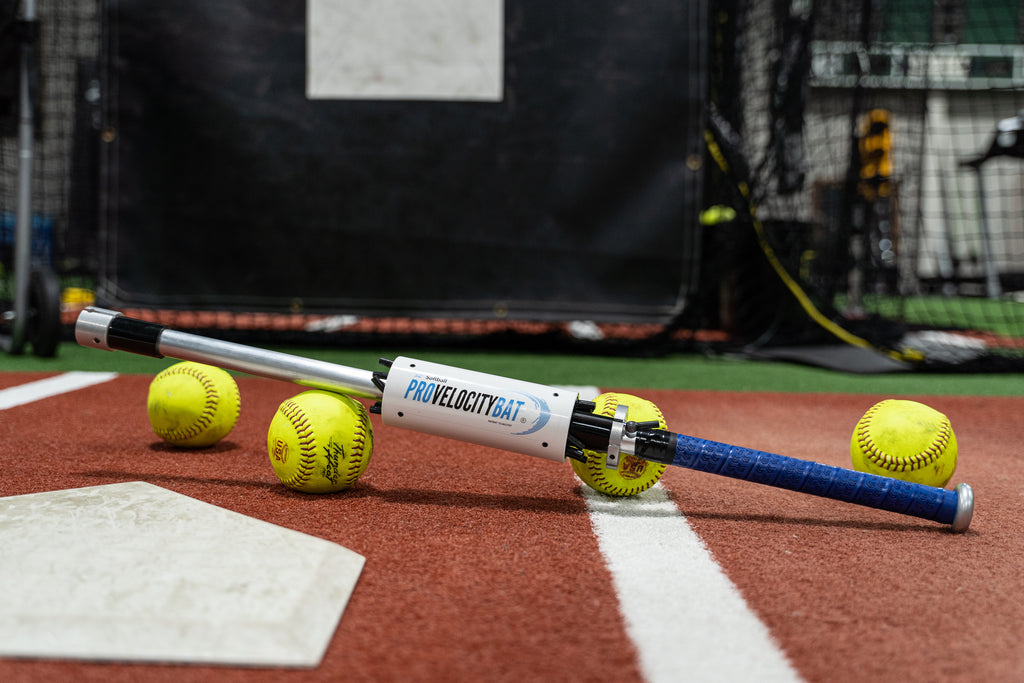
Imagine stepping into the batter’s box with the confidence that every swing could shatter records—not because of brute strength alone, but because your bat is moving faster than ever before. The ProVelocity Training Bat promises just that: a revolutionary tool designed to turbocharge your bat speed, refine your mechanics, and transform your hitting performance. But does it live up to the hype, or is it another flashy gadget destined for the back of the closet? Let’s dissect this training bat’s claims, mechanics, and real-world impact to separate fact from fiction.
The Promise of the ProVelocity Training Bat: A Speed Revolution?
The ProVelocity Training Bat isn’t just another weighted bat—it’s a kinetic disruptor, engineered to rewire your swing through deliberate resistance and momentum. Manufacturers tout its ability to increase bat speed by up to 30% in just weeks, a claim that sounds almost too good to be true. But how? The secret lies in its dynamic weight distribution. Unlike traditional weighted bats that merely add bulk, the ProVelocity bat features an asymmetrical design, with most of its mass concentrated toward the barrel. This forces your muscles to adapt, building explosive power in your core and forearms. The result? A swing that’s not just stronger, but faster—like trading a bicycle for a motorcycle mid-race.
Yet, speed isn’t everything. The bat’s design also claims to improve bat path efficiency, ensuring your swing stays on plane longer. For hitters struggling with late breaks or uppercut tendencies, this could be a game-changer. But does it deliver in practice, or is it all smoke and mirrors?
Breaking Down the Mechanics: How Does It Work?
At its core, the ProVelocity bat operates on the principle of overspeed training—a method where athletes use lighter or weighted implements to train their muscles to move faster than normal. The bat’s unique construction mimics this effect by redistributing weight, forcing your body to compensate with quicker, more controlled movements. Think of it as neuromuscular bootcamp: your brain and muscles must recalibrate to handle the bat’s unorthodox balance.
But here’s the catch: overspeed training only works if you’re already swinging with proper mechanics. If your swing is fundamentally flawed—say, you’re casting your hands or over-rotating your hips—the ProVelocity bat might reinforce bad habits instead of correcting them. It’s like giving a toddler a sports car: they’ll spin the wheels, but they won’t win any races. The bat’s effectiveness hinges on your ability to integrate its feedback into a repeatable, efficient swing.
Additionally, the bat’s grip and length play a role in its performance. A longer bat can encourage a wider swing arc, potentially increasing bat speed but also risking control. Conversely, a shorter bat might feel more manageable but could limit the training effect. Finding the right fit is crucial—like Goldilocks searching for the perfect porridge.
Real-World Testing: Does It Deliver on the Field?
To separate marketing fluff from tangible results, we need to examine real-world feedback. Players who’ve incorporated the ProVelocity bat into their training regimens report mixed experiences. Some swear by its ability to sharpen their timing and add zip to their swings, particularly in the late stages of the season when fatigue sets in. Others, however, find the transition period frustrating, as their muscles struggle to adapt to the bat’s unnatural feel.
One recurring theme is the bat’s versatility. It’s not just for tee work or soft toss—advanced hitters use it in live batting practice to simulate game-speed swings. The key, they say, is consistency. Using the bat sporadically won’t yield results; it demands a structured, progressive training plan. Think of it as learning a new language: fluency doesn’t come from cramming a few phrases—it comes from daily immersion.
Yet, not all feedback is glowing. Some critics argue that the bat’s benefits are short-lived, with gains disappearing once you return to a standard bat. Others point out that the weight distribution can lead to early fatigue, especially for younger or less experienced hitters. The bat isn’t a magic wand—it’s a tool, and like any tool, its effectiveness depends on how you wield it.
The Science Behind the Swing: What Research Says
While anecdotal evidence is valuable, we can’t ignore the science. Studies on overspeed training consistently show that athletes can improve bat speed by training with lighter implements, but the gains are often temporary unless reinforced with regular practice. The ProVelocity bat’s design aligns with these findings, but its asymmetrical weight distribution introduces a variable that hasn’t been extensively studied.
One potential advantage is its ability to enhance muscle activation. Electromyography (EMG) tests suggest that the bat’s design engages the serratus anterior and obliques more intensely than a standard bat, muscles critical for rotational power. However, more research is needed to confirm whether these activations translate to sustained performance improvements in game situations.
Another consideration is the bat’s impact on bat lag. Bat lag—the delay between the initiation of the swing and contact—can be a major issue for hitters. The ProVelocity bat’s design may help reduce this lag by promoting a more compact, efficient swing path. But again, this depends on the hitter’s ability to synchronize their movements.
Potential Pitfalls: When the ProVelocity Bat Falls Short
No training tool is without its drawbacks, and the ProVelocity bat is no exception. For starters, its learning curve can be steep. Hitters accustomed to traditional bats may struggle with the transition, leading to frustration and even injury if mechanics degrade. The bat’s weight distribution can also exacerbate existing imbalances—for example, if a hitter already overuses their arms, the ProVelocity bat might amplify that flaw.
Another concern is the bat’s durability. Some users report that the construction isn’t as robust as high-end metal bats, with reports of cracks or wear appearing after prolonged use. This is particularly problematic for hitters who train frequently or play in competitive leagues where equipment longevity is crucial.
Finally, there’s the issue of cost. The ProVelocity bat isn’t cheap, and for many players, the price tag may not justify the perceived benefits. While it’s an investment in potential speed gains, it’s one that requires careful consideration—especially for younger athletes or those on a budget.
Who Should—and Shouldn’t—Use the ProVelocity Bat?
The ProVelocity bat isn’t a one-size-fits-all solution. It’s best suited for intermediate to advanced hitters who already have a solid foundation in swing mechanics and are looking to fine-tune their performance. For these athletes, the bat can serve as a high-intensity supplement to their regular training, helping them push past plateaus.
On the other hand, beginners or hitters with significant mechanical flaws may find the bat more of a hindrance than a help. Without proper guidance, they risk ingraining bad habits that could carry over to game situations. Similarly, players who prioritize contact over power might not see the same benefits, as the bat’s design is geared toward maximizing exit velocity.
For coaches and trainers, the ProVelocity bat can be a valuable addition to a periodized training program. Used strategically—perhaps in off-season conditioning or as a pre-game warm-up—it can help athletes develop the explosive power needed to dominate at the plate. But like any tool, it should be wielded with intention, not just enthusiasm.
Final Verdict: A Tool with Potential, But Not a Silver Bullet
The ProVelocity Training Bat is a fascinating experiment in swing optimization, blending science with practical training principles. It delivers on its promise of increased bat speed for those who commit to its methodology, but it’s not a panacea. Its effectiveness hinges on proper usage, consistent training, and realistic expectations.
If you’re a hitter looking to add a few extra mph to your swing—or a coach searching for a novel way to challenge your players—the ProVelocity bat is worth a try. Just don’t expect miracles overnight. Training, after all, is a marathon, not a sprint. And sometimes, the most valuable lessons come not from the bat itself, but from the process of mastering it.