The crack of the bat, the roar of the crowd, the timeless dance between pitcher and batter—baseball is a symphony of precision and passion. Yet beneath the emerald fields and under the stadium lights, a quieter, more intricate melody plays out in the shadows of the game’s history. This is the story of the “Panama Connection,” a lineage of baseball brilliance that weaves through the Major Leagues like a hidden river, nourishing the sport with talent, tenacity, and an unmistakable flair. At its heart lies the Rivera-Carew legacy, a tale of two Panamanian icons whose names became synonymous with greatness, whose careers illuminated the path for generations of players from a nation where baseball is more than a game—it is a way of life.
The Panama Pipeline: Where Talent Flows Like a River
Panama is a narrow isthmus, a bridge between two continents, and in baseball terms, it has long served as a vital conduit for talent. The country’s baseball culture is deeply rooted in its Afro-Antillean communities, where the rhythms of calypso and the crack of the bat blend seamlessly into the tropical night. From the dusty diamonds of Colón to the polished fields of Panama City, young players grow up swinging bats carved from local hardwood, dreaming of the day they’ll step onto the hallowed grounds of a Major League stadium. This pipeline is not just about raw ability; it is a tradition, a lineage passed down through families, neighborhoods, and generations. The Panama Connection is less a phenomenon and more a living organism—one that breathes life into the veins of MLB with every homegrown talent it produces.
Mariano Rivera: The Canal That Never Dried
No discussion of Panamanian baseball is complete without invoking the name Mariano Rivera. The man they called “The Sandman” didn’t just pitch—he cast a spell over opposing batters, a hypnotic rhythm of cut fastballs and unshakable composure. Rivera’s career with the New York Yankees spanned two decades, during which he became the most dominant closer in baseball history. His 652 saves and 0.70 ERA in the postseason are not just numbers; they are the stuff of legend, a testament to a man who turned the ninth inning into a personal domain. What made Rivera’s dominance so mesmerizing was his consistency. He was the canal through which runs flowed away from victory—steady, unyielding, and always open for business. His legacy transcends statistics; it is etched into the very fabric of baseball’s soul, a reminder that greatness is not measured in flash, but in the quiet mastery of one’s craft.
Rod Carew: The Maestro of the Diamond
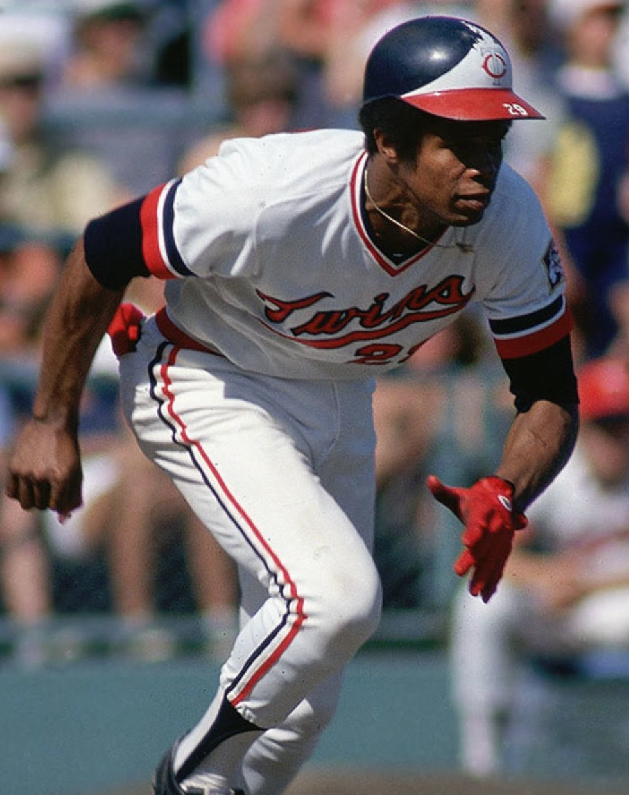
If Rivera was the silent guardian of the mound, Rod Carew was the virtuoso at the plate, a maestro whose bat sang in perfect pitch. Carew’s career with the Minnesota Twins and California Angels was a masterclass in hitting, a ballet of precision and timing. His .328 career batting average, seven batting titles, and 3,053 hits paint a portrait of a player who made contact look effortless. But Carew’s genius lay in his adaptability. Whether it was fouling off impossible sliders or spraying line drives to all fields, he was a chess player in a game of checkers. His 1967 Rookie of the Year and 1977 MVP awards were not just accolades; they were declarations that baseball’s beauty could be found in the subtleties of a swing, the flick of a wrist, the whisper of a line drive finding the gap. Carew’s legacy is one of elegance, a reminder that the game’s most enduring stars are often those who make it look easy.
The Panama Connection: A Bridge Between Eras
The Rivera-Carew legacy is more than a collection of individual achievements; it is a bridge connecting eras of baseball. Carew retired in 1985, Rivera debuted in 1995, and in the decade between, Panama’s baseball pipeline continued to flow. Players like Carlos Lee, Rubén Tejada, and Randall Delgado carried the torch, proving that the country’s talent pool was not a fluke but a sustainable force. This connection between generations is the true magic of the Panama Connection. It is a relay race where each runner passes the baton not just with skill, but with the weight of a nation’s hopes. The transition from Carew’s golden era to Rivera’s dominance was not a handoff of eras, but a seamless fusion—a testament to the enduring nature of Panama’s baseball culture.
Beyond the Numbers: The Soul of Panamanian Baseball
To understand the Panama Connection, one must look beyond the box scores and highlight reels. Baseball in Panama is woven into the national identity, a source of pride and resilience. The country’s love for the game is evident in its youth leagues, where children play with makeshift equipment under the scorching sun, their dreams as vast as the Caribbean horizon. It is evident in the stories of players who overcame economic hardship to reach the majors, their journeys a testament to the power of perseverance. The Panama Connection is not just about producing stars; it is about fostering a culture where baseball is a language spoken with passion and pride. It is a reminder that the game’s greatest stories are not always found in the box scores, but in the hearts of those who play it.
The Future: A River That Never Runs Dry
As the sun sets on the careers of Rivera and Carew, the Panama Connection shows no signs of drying up. The next generation of Panamanian talent is already making its mark, from the power-hitting outfielders to the flame-throwing pitchers who dominate minor league circuits. Players like Edmundo Sosa and Harold Arauz are not just athletes; they are ambassadors of a tradition that stretches back decades. The future of the Panama Connection is a river that never runs dry, a current of talent that continues to nourish the game. With each new star, the legacy grows, ensuring that Panama’s place in baseball history is not just a footnote, but a chapter written in gold.
The crack of the bat may echo across the globe, but the soul of the game finds its deepest resonance in the stories of those who play it. The Rivera-Carew legacy is a testament to the power of heritage, the magic of talent, and the unbreakable bond between a nation and its game. In the grand tapestry of baseball, the Panama Connection is a thread that shines brighter than most—a reminder that greatness is not just measured in wins and losses, but in the lives it touches and the dreams it inspires.