The crack of the bat is more than just a sound—it’s the audible signature of physics in motion, a fleeting symphony where milliseconds and millimeters conspire to dictate the fate of a baseball. In the modern era of Major League Baseball, where every swing is dissected with the precision of a surgeon’s scalpel, one metric has risen above the cacophony of statistics: exit velocity. But numbers alone don’t tell the story. To truly grasp the artistry and science behind a 115 mph line drive screaming into the gap, you must first understand the invisible forces at play—the launch angle, the spin axis, the sweet spot of contact. This is not just about how hard you hit the ball; it’s about how you shape its destiny.
The Genesis of Exit Velocity: Where Power Meets Precision
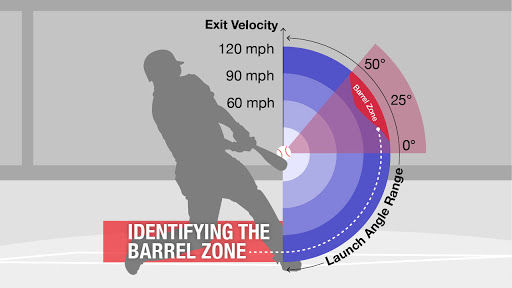
Exit velocity is the raw expression of kinetic energy transferred from bat to ball, a snapshot of the collision’s brutality. Yet, its power is only fully realized when paired with intent. A hitter can unleash a 100 mph swing, but if the ball is struck at a 5-degree upward angle, it’s a lazy fly ball. Conversely, a 90 mph swing with a 25-degree launch angle might clear the fence. The magic lies in the synergy between force and trajectory. Think of it as a painter’s brushstroke—velocity is the stroke’s intensity, but the angle is the direction of the art. The best hitters don’t just swing hard; they sculpt the ball’s flight path with surgical precision.
What’s often overlooked is the role of the batter’s lower half in this equation. The hips initiate the kinetic chain, rotating to transfer energy upward through the torso and into the arms. A hitter who fails to engage their legs sacrifices not just power but also the ability to manipulate launch angle. Studies have shown that elite hitters generate up to 50% of their bat speed from the ground up, meaning a weak lower half doesn’t just limit exit velocity—it cripples the hitter’s ability to dictate the ball’s arc. The science here is unforgiving: power without coordination is like a rocket without guidance—it may go far, but it won’t hit the target.
Launch Angle: The Invisible Hand That Shapes Destiny
Launch angle is the silent architect of every home run, every bloop single, every harmless pop-up. It’s the vertical component of the ball’s exit path, measured in degrees from the horizontal plane. The sweet spot? Between 15 and 30 degrees for most hitters. Below 10 degrees, and you’re looking at a ground ball—a gift to infielders. Above 35 degrees, and the ball ascends too steeply, surrendering distance in favor of loft. The optimal angle is a Goldilocks zone: not too hot, not too cold, but just right for maximizing carry.
But here’s where it gets fascinating: launch angle isn’t static. It’s a dynamic variable, influenced by pitch location, pitch type, and even the hitter’s swing mechanics. A low fastball might induce a negative launch angle (a grounder), while a high curveball could coax a 40-degree pop-up. The best hitters adjust in real-time, their muscle memory calibrated to the subtlest cues. Consider the case of a hitter facing a 95 mph fastball. A slight uppercut—just 2-3 degrees more than the hitter’s norm—can transform a liner into a tape-measure shot. This is the difference between a good hitter and a great one: the ability to recalibrate mid-swing, to turn a pitcher’s weapon into a hitter’s playground.
The Spin Axis Enigma: How Backspin and Sidespin Rewrite the Rules
Exit velocity and launch angle are only half the story. The other half is spin—the invisible threads that weave through the ball’s flight, dictating whether it carries, dips, or hangs in the air like a leaf on the wind. Backspin is the hitter’s ally, generating lift and extending the ball’s hang time. The Magnus effect, a principle of fluid dynamics, explains how a spinning ball curves in flight. A hitter who can impart 2,500+ RPM of backspin on a ball is essentially turning it into a mini helicopter, maximizing its carry.
But spin isn’t just about backspin. Sidespin—the tilt of the ball’s rotation—can turn a line drive into a screaming liner that hugs the foul line or a grounder that skitters through the infield. Elite hitters manipulate spin axis with remarkable consistency. A slight uppercut might add topspin, causing the ball to lose distance prematurely. A level swing, by contrast, minimizes spin deviation, ensuring the ball travels in a straighter, more predictable path. The science here is akin to a golfer shaping a shot: the spin axis is the curvature of the ball’s flight, and mastering it is the difference between a warning-track out and a walk-off home run.
Technology’s Role: From Rapsodo to TrackMan, the Data Revolution
The modern hitter’s toolkit extends far beyond the batting cage. High-speed cameras, radar guns, and Doppler radar systems like TrackMan and Rapsodo have democratized the science of exit velocity and launch angle. These technologies don’t just measure—they reveal. A hitter can now see, in real-time, how a slight adjustment in bat path alters spin rate or how a change in stance affects launch angle. It’s like giving a musician a tuner that shows them exactly how to hit the perfect note.
Consider the case of a hitter struggling with weak contact. A Rapsodo session might reveal that their bat is entering the zone too early, causing them to uppercut and lose power. Or perhaps their swing plane is too steep, resulting in high, lazy fly balls. The data doesn’t lie—it exposes inefficiencies with brutal honesty. But technology’s greatest gift is its ability to inspire experimentation. Hitters can now test different stances, grips, and swing paths in a controlled environment, refining their mechanics with the precision of a watchmaker. The result? A generation of hitters who understand the science as intimately as they understand the game itself.
The Psychological Edge: Confidence in the Box
Yet, for all its technical intricacy, baseball remains a game of inches—and inches are often decided by the mind. A hitter who understands the science of exit velocity and launch angle doesn’t just swing with power; they swing with purpose. There’s a psychological edge to knowing that a 110 mph swing with a 22-degree launch angle is a home run before the ball even leaves the bat. It’s the difference between a hitter who fears the pitcher and one who dictates the at-bat.
This mental fortitude is what separates the good from the great. A hitter who has internalized the physics of their swing approaches the plate with a plan. They’re not just reacting to the pitch; they’re anticipating it, visualizing the contact point, the launch angle, the spin. It’s a level of preparation that borders on clairvoyance. And when the moment comes—the 2-2 count, the 98 mph fastball, the game on the line—they don’t hesitate. They trust the science. They trust their mechanics. They swing with the confidence of a scientist who knows the equation will balance.
The Future of Hitting: Where Art Meets Algorithm
The next frontier in hitting isn’t just about raw power or even launch angle—it’s about integration. The best hitters of the future will be those who can blend the artistry of the game with the precision of data science. Imagine a hitter who, with the help of AI-driven swing analysis, can adjust their mechanics in real-time based on the pitcher’s tendencies. Or a system that predicts the optimal launch angle for a given pitch type before the hitter even steps into the box. This isn’t science fiction; it’s the inevitable evolution of the game.
But technology alone won’t make a hitter great. The heart of the matter remains the human element—the feel for the game, the instinct for the moment, the willingness to fail and try again. The science of exit velocity and launch angle provides the framework, but it’s the hitter’s creativity that fills in the details. It’s the difference between a home run and a warning-track shot, between a strikeout and a walk-off. In the end, baseball is still a game of human drama, and no amount of data can replace the thrill of a 450-foot blast that leaves the park in stunned silence.
So the next time you hear the crack of the bat, listen closely. Beyond the roar of the crowd, beyond the scoreboard, lies a hidden world of physics, strategy, and sheer human ingenuity. It’s a world where every swing is a hypothesis, every hit a proof of concept. And the best part? The science is still unfolding. The next great discovery in hitting might be just one swing away.