In the high-stakes theater of Major League Baseball, where every pitch is a chess move and every swing a gambit, the double play stands as the ultimate defensive coup—a ballet of precision, timing, and split-second decisions. Yet, within this orchestrated chaos, one maneuver rises above the rest in its audacity and efficiency: the “Turn and Burn” double play pivot. This isn’t just a play; it’s a psychological chess match, a testament to a team’s ability to outthink the opposition before the ball even leaves the pitcher’s hand. To understand it is to see baseball not as a game of brute force, but as a symphony of calculated risks and flawless execution.
The Genesis of a Double Play: More Than Just a Routine
The double play is baseball’s version of a quicksilver dagger—swift, silent, and devastating. At its core, it’s a defensive play designed to erase two outs in a single fluid motion, turning what might be a rally into a dead ball scenario. But the “Turn and Burn” variant? That’s where the artistry begins. Traditional double plays rely on the second baseman or shortstop fielding a grounder, stepping on second base, and firing to first. The “Turn and Burn,” however, introduces a twist: the pivot man doesn’t just relay the ball. He becomes a conductor, redirecting the play with a sudden, explosive pivot that catches runners and fielders alike off guard. It’s a play that demands not just athleticism, but an almost preternatural sense of spatial awareness.
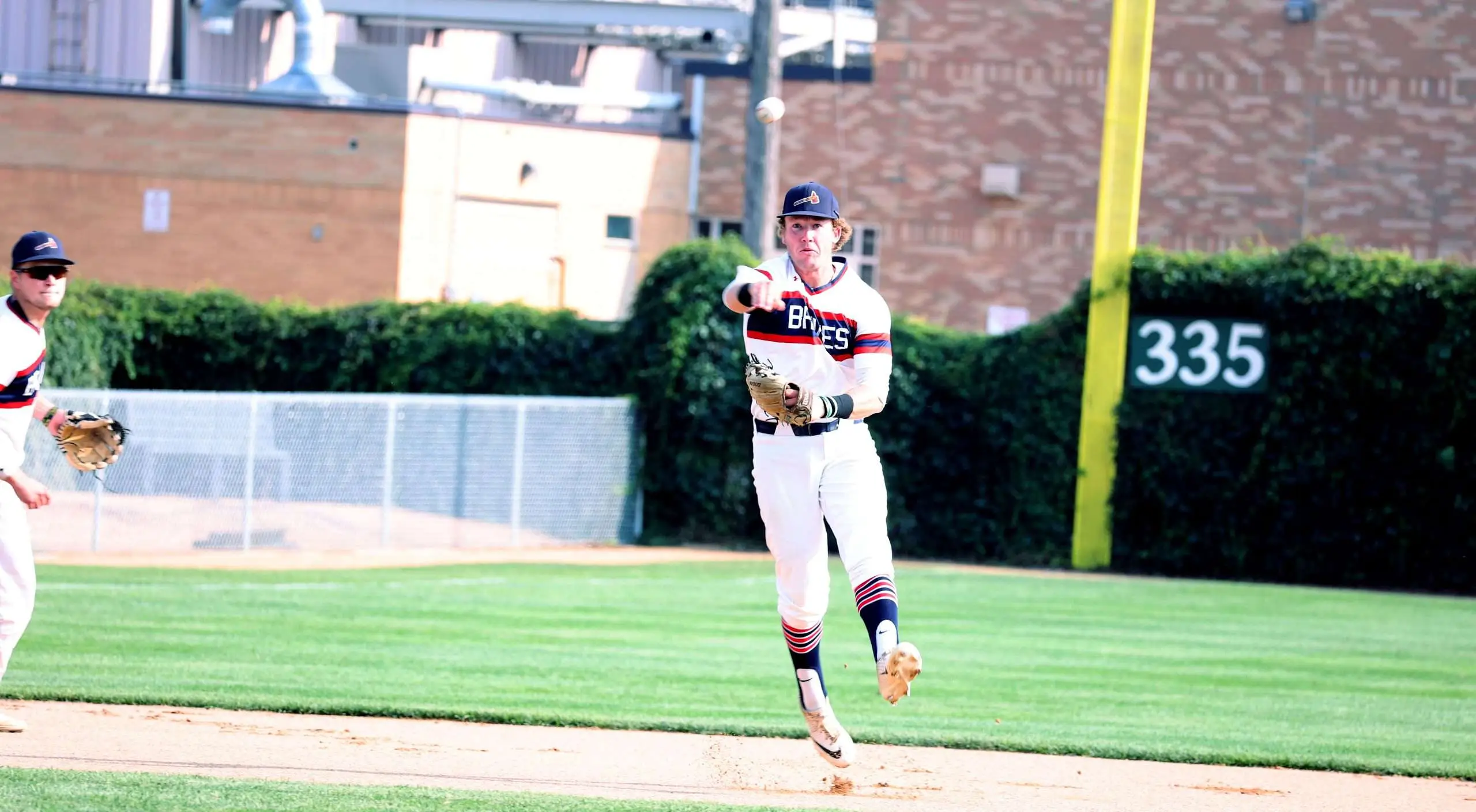
The mechanics are deceptively simple. The pivot man—usually the second baseman or shortstop—fields the grounder, plants his foot on the bag, and in one motion, whirls his body toward the intended target. The “burn” comes in the form of a laser-guided throw, often to first base, but sometimes to third if the situation demands it. What makes this play extraordinary isn’t just the speed, but the decision-making. A misread of the runner’s speed, a hesitation in the pivot, or a misaligned throw can turn a potential double play into a single and a runner on base. It’s a high-wire act where the margin for error is measured in inches and milliseconds.
The Mental Chessboard: Anticipation as the Ultimate Weapon
Baseball is often described as a game of inches, but the “Turn and Burn” double play pivot reveals it as a game of *moments*—moments that are won or lost long before the ball is hit. The pivot man’s true mastery lies not in his glove or his arm, but in his mind. He must read the hitter’s tendencies, the pitcher’s repertoire, and the runner’s instincts, all while processing the field’s geometry in real time. A batter who consistently pulls grounders to the left side? The pivot man adjusts his positioning. A runner with a history of slow starts? The pivot man holds his throw just a fraction longer, baiting the runner into a false sense of security before unleashing the “burn.”
This is where the “Turn and Burn” transcends technique and becomes a psychological weapon. By studying the opposition’s patterns—whether it’s a hitter’s tendency to tap the ball to the right side or a runner’s propensity to break early—the pivot man can manipulate the play before it even begins. It’s a battle of wits disguised as a defensive play, where the pivot man’s ability to anticipate often determines whether the double play is a thing of beauty or a missed opportunity. In this sense, the “Turn and Burn” is less about raw athleticism and more about the art of deception, a subtle mind game played out in the dirt of the infield.
The Physics of the Pivot: When Biomechanics Meet Baseball
To execute the “Turn and Burn” with surgical precision, the pivot man must harness the laws of physics as much as the rules of the game. The pivot itself is a marvel of kinetic energy, a rapid deceleration followed by an explosive reorientation. The second baseman, for instance, must field the grounder with his body already angled toward second base, minimizing the time spent transitioning from fielding to throwing. The “turn” is less a full rotation and more a controlled spin, a 180-degree shift that preserves momentum while redirecting it toward the target.
The “burn” phase is where velocity meets accuracy. The throw must be delivered with enough force to beat the runner to the bag, but not so hard that it sails past the first baseman. This requires a delicate balance of arm strength, wrist snap, and body mechanics. A poorly timed pivot can leave the pivot man off-balance, forcing a hurried throw that lacks the necessary zip. Conversely, a pivot that’s too deliberate gives the runner precious extra steps. The best pivot men—think of a Ozzie Smith or a Roberto Alomar—make it look effortless, their bodies moving in perfect harmony with the play’s rhythm. It’s a reminder that baseball, at its highest level, is as much about physics as it is about passion.
The Ripple Effect: How the “Turn and Burn” Reshapes the Game
The impact of the “Turn and Burn” extends far beyond the immediate out it produces. It’s a play that sends shockwaves through the opposing team’s psyche, a subtle but unmistakable message: *We are in control.* When executed flawlessly, it can demoralize a batting order, forcing hitters to second-guess their approach. A runner who’s been gunned down at second base is less likely to take aggressive leads in future innings. The pivot man, by extension, becomes a defensive general, his reputation for turning the tide of a game growing with each successful execution.
Teams that master the “Turn and Burn” often find themselves with a defensive identity. The New York Yankees of the late 1990s and early 2000s, with their infield of Derek Jeter, Mariano Duncan, and Tony Fernández, were masters of the pivot, using it to stifle rallies and shift momentum. Even today, teams like the Tampa Bay Rays and the Los Angeles Dodgers prioritize infielders who can execute the “Turn and Burn” with consistency, knowing that a single play can swing the balance of a game. It’s a testament to how a single, well-executed defensive maneuver can ripple through an entire season, turning what might be a close game into a blowout—or a lost opportunity into a victory.
The Evolution of the Pivot: From Tradition to Innovation
The “Turn and Burn” isn’t a static play; it’s a living, breathing entity that evolves with the game itself. In the dead-ball era, double plays were rare and often messy, a product of the era’s emphasis on small ball and contact hitting. As the game shifted toward power and speed in the late 20th century, the pivot became more refined, with infielders like Ryne Sandberg and Roberto Alomar turning it into an art form. Today, with advanced analytics and high-speed cameras, teams dissect every aspect of the pivot—from the angle of the pivot man’s body to the spin rate of his throw—seeking even the slightest edge.
Technology has also introduced new wrinkles. Some teams now use wearable sensors to track the pivot man’s biomechanics, fine-tuning his movements for maximum efficiency. Others employ video analysis to study opposing runners’ tendencies, allowing the pivot man to anticipate their moves before they happen. It’s a far cry from the days when double plays were executed on instinct alone. Yet, for all the innovation, the essence of the “Turn and Burn” remains unchanged: it’s a play that demands instinct, precision, and an almost clairvoyant understanding of the game’s ebb and flow.
The Legacy of the “Turn and Burn”: Why It Matters
In an era where baseball is increasingly dominated by analytics and launch angles, the “Turn and Burn” double play pivot stands as a reminder of the game’s soul. It’s a play that celebrates the human element—the split-second decisions, the physical prowess, the mental fortitude—all compressed into a single, breathtaking moment. It’s why fans still flock to ballparks, not just to see home runs or strikeouts, but to witness the quiet brilliance of a well-executed double play, where the pivot man’s “Turn and Burn” becomes a fleeting masterpiece.
For the pivot man, the play is a badge of honor. For the team, it’s a defensive weapon. For the game itself, it’s a testament to the beauty of baseball—a sport where the smallest details can have the biggest impact. So the next time you see a second baseman field a grounder, plant his foot on second, and unleash a throw that beats the runner by a hair, take a moment to appreciate what you’re witnessing. It’s not just a double play. It’s a masterclass in precision, a dance of deception, and a reminder that in baseball, as in life, the most extraordinary moments are often the ones that happen in the blink of an eye.