Imagine stepping into the batter’s box, heart pounding, eyes locked on the pitcher’s hand as it disappears behind a blur of motion. The count is full. The bases are loaded. The crowd holds its breath. Then—it arrives. Not a fastball. Not a curveball. But something else entirely. A pitch that doesn’t just deceive the eye—it dismantles it. This is the slider: baseball’s most insidious weapon, the filthy pitch hitters can’t track until it’s too late.
The Slider: Baseball’s Optical Illusion in Motion
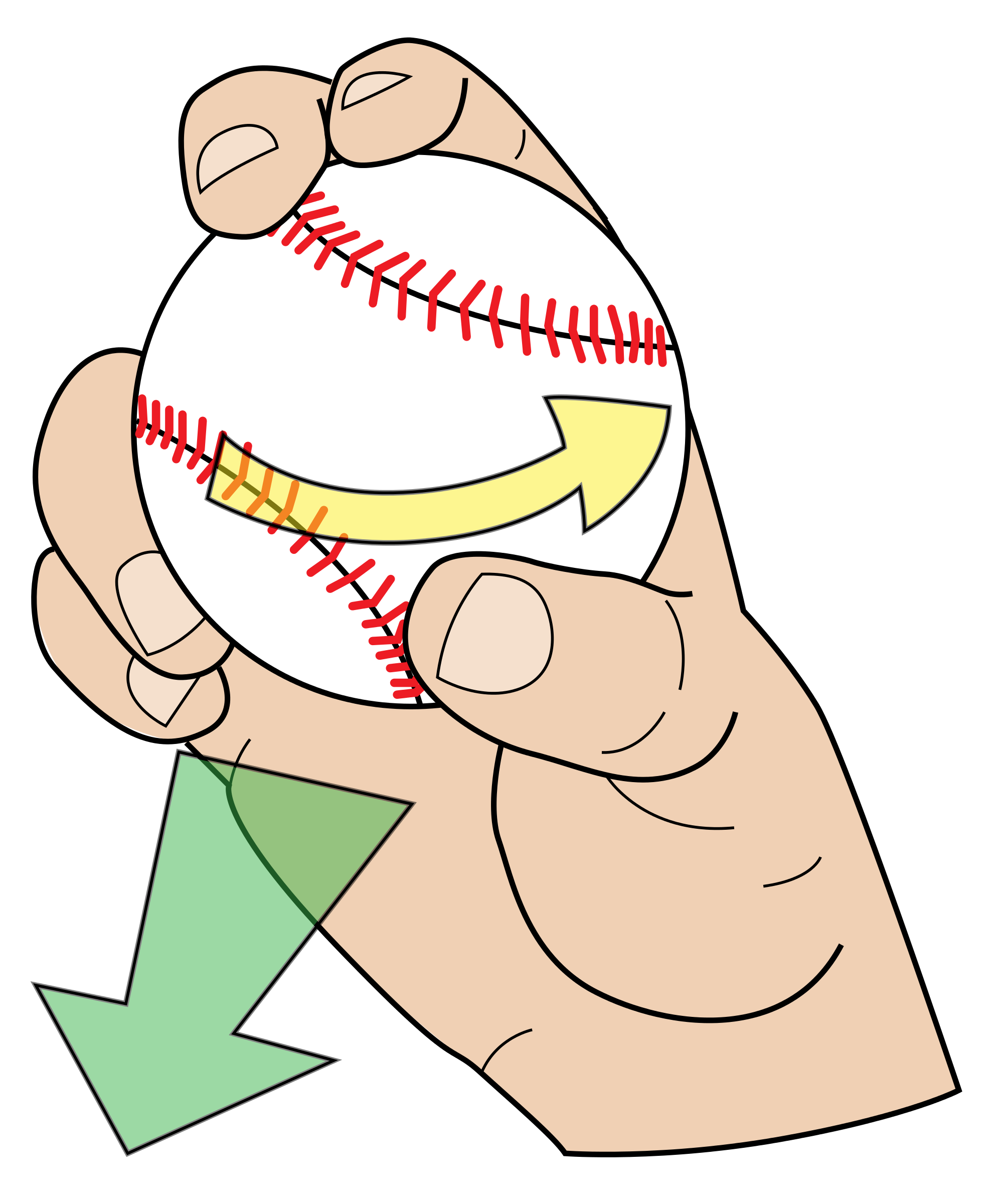
At its core, the slider is a hybrid pitch—a fastball’s velocity married to a curveball’s lateral bite. But calling it a hybrid is like calling the Grand Canyon a “big hole.” It undersells the artistry. A slider isn’t just thrown; it’s sculpted. The pitcher grips the ball with the seams tilted slightly off-center, applying torque that sends it spinning like a drunken top. The axis of rotation is tilted between 12 and 4 o’clock, creating a gyroscopic effect that stabilizes the pitch’s flight—until the very last moment, when gravity and spin conspire to send it diving away from the hitter’s bat path.
What makes the slider so devastating isn’t just its movement—it’s its timing. Hitters expect fastballs to arrive in 0.4 seconds. Curveballs take longer, giving the brain precious milliseconds to process. But a slider? It arrives in the same timeframe as a fastball, yet breaks sharply just as the batter’s swing begins. The brain, trained to track linear trajectories, is caught in a cognitive trap. By the time the hitter realizes the pitch isn’t where it should be, the bat has already whiffed.
The Physics of Deception: Why Hitters See Ghosts
To understand why hitters struggle to track sliders, we must peer into the biomechanics of vision. The human eye isn’t designed to track objects that change direction mid-flight. When a pitch breaks, the retina sends conflicting signals to the brain, which then tries to reconcile the discrepancy by predicting the ball’s path. But a slider’s break is so abrupt—often 6 to 12 inches of lateral movement in the final 10 feet—that the brain’s predictive algorithms fail. The result? A swing that’s either early or late, both equally futile.
Consider the Magnus effect, the aerodynamic force that causes spinning objects to curve. A slider’s spin rate typically ranges from 2,500 to 3,000 RPM, generating enough lift to counteract gravity while also inducing a sidespin that pulls the ball horizontally. The combination is lethal. Unlike a curveball, which drops dramatically, a slider’s break is more horizontal than vertical, making it appear to “cut” across the plate. Hitters who adjust to the drop of a curveball are often blindsided by the slider’s lateral bite.
The Evolution of a Weapon: From Obscurity to Dominance
The slider wasn’t always baseball’s most feared pitch. In the dead-ball era, pitchers relied on speed and location, not movement. But as the game evolved, so did the arsenal. The slider’s rise to prominence can be traced to the 1960s and 70s, when pitchers like Bob Gibson and Steve Carlton refined its mechanics. Gibson, with his overpowering fastball-slider combination, became the prototype for modern power pitchers. Carlton, meanwhile, perfected the pitch’s late break, turning it into a strikeout machine.
Today, the slider is ubiquitous. In 2023, nearly 30% of all pitches thrown in Major League Baseball were sliders—a staggering increase from just 15% a decade prior. Why? Because it works. Hitters are posting lower batting averages against sliders than any other pitch type, with a league-wide average of .220. Even the most disciplined hitters, those with elite pitch recognition, are fooled by its deception. The slider doesn’t just get swings and misses—it induces weak contact, ground balls, and pop-ups at rates that make it the most efficient pitch in baseball.
The Art of Throwing a Slider: Craftsmanship in the Mound
Throwing a slider isn’t just about grip and arm action—it’s about deception. The best sliders are indistinguishable from fastballs until the very last second. Pitchers achieve this through a combination of deception in their delivery and precision in their spin. A slight hitch in the arm path, a subtle change in release point, or even a slight delay in the follow-through can mask the pitch’s true nature. Hitters, trained to recognize fastball cues, are lulled into a false sense of security—until the ball breaks.
But the slider’s effectiveness isn’t just about movement. Location is paramount. A slider thrown down the middle is a home run waiting to happen. The ideal slider is located on the outer third of the plate, where it can break back over the corner. Pitchers who can command the slider in this zone—what’s known as the “chase area”—force hitters to expand their zone, leading to more swings and misses. The best sliders aren’t just filthy; they’re surgical.
The Psychological Toll: Breaking Hitters Before the Game Even Starts
There’s a psychological warfare to the slider. A pitcher who consistently throws it with precision doesn’t just get outs—he erodes a hitter’s confidence. Every swing and miss chips away at the batter’s belief in their ability to make contact. Over time, hitters begin to anticipate the slider, overcompensating by lunging or bailing out. This self-doubt is the slider’s most insidious weapon. It doesn’t just beat hitters; it breaks them.
Consider the case of a hitter facing a pitcher with a dominant slider. The first pitch might be a fastball for a strike. The second, a slider that looks like a fastball but breaks away at the last second for a called strike three. The hitter leaves the box questioning everything. Did they misread the pitch? Was the pitch even a slider? The uncertainty lingers, poisoning future at-bats. This is the slider’s true power—not just as a pitch, but as a psychological disruptor.
The Future of the Slider: Innovation and Adaptation
As hitters become more advanced, pitchers must innovate. The slider of tomorrow may not look like the slider of today. Some pitchers are experimenting with higher spin rates, creating even sharper breaks. Others are blending slider mechanics with splitter grips, producing a pitch that drops and cuts simultaneously—a nightmare for hitters. The rise of pitch-tracking technology, like TrackMan and Rapsodo, has also allowed pitchers to refine their sliders with data-driven precision, tailoring each pitch to the hitter’s weaknesses.
Yet, for all its evolution, the slider’s core principle remains unchanged: deception. Whether thrown by a 95-mph flamethrower or a finesse artist with a 78-mph heater, the slider’s ability to manipulate perception ensures its dominance. It’s the pitch that doesn’t just challenge hitters—it humiliates them. And in a game where fractions of an inch and milliseconds of reaction time decide outcomes, the slider isn’t just a weapon. It’s a revolution.