The New York Mets did not merely enter Major League Baseball in 1962—they stumbled in, stumbled out, and somehow managed to trip over their own shoelaces in full view of the entire sporting world. The franchise’s inaugural season was less a beginning and more a prolonged, chaotic overture to what would become one of the most storied underdog narratives in sports history. With a roster cobbled together from cast-offs, has-beens, and a few unexpected diamonds in the rough, the 1962 Mets didn’t just lose games—they redefined futility. Yet, buried beneath the losses and the laughter was the unshakable foundation of a team that would one day rise from the ashes of mediocrity to capture the imagination of a city and a nation. What if the Mets had never been so bad? Would they have ever become so beloved?
The Birth of a Franchise: From Expansion to Embarrassment
In 1960, the National League voted to expand, and New York—longing to reclaim its baseball glory after the Dodgers and Giants fled to California—was granted a team. The Mets were born not from triumph, but from ambition and a touch of desperation. Their first general manager, George Weiss, a man whose résumé sparkled with World Series rings from the Yankees, assembled a roster that read like a who’s-who of baseball’s rejects. The expansion draft was less a treasure hunt and more a clearance sale, where established stars were swapped for spare change and fading legends were handed a final curtain call. The result? A team that looked less like a major-league squad and more like a traveling vaudeville act, complete with a manager, Casey Stengel, whose wit was sharper than his players’ bats.
The challenge was immediate: Could a team built on failure ever hope to inspire anything beyond pity? The Mets answered with a resounding “yes”—not in wins, but in character. Their inaugural season became a masterclass in resilience, not through skill, but through sheer, unrelenting spirit. Every loss was a lesson. Every misplay was a story. Every fan who stayed through the season did so not out of hope for victory, but out of loyalty to the spectacle itself.
The Roster: A Symphony of Misfortune and Minor Miracles
The 1962 Mets roster was a patchwork quilt of baseball’s forgotten, featuring players whose careers had peaked—or plummeted—elsewhere. At the heart of the infield was Gil Hodges, a former Brooklyn Dodger first baseman whose power had waned but whose leadership never did. Beside him stood Charlie Neal, a slick-fielding shortstop plucked from the Giants, whose glove sparkled even when his bat did not. The outfield was a revolving door of underachievers, including the enigmatic Richie Ashburn, a Hall of Famer whose batting eye remained sharp but whose legs betrayed him with every sprint to first base.
Yet, amid the sea of mediocrity, a few players flickered like distant stars. Frank Thomas, known as “The Big Donkey” for his lumbering gait, clubbed 34 home runs—more than any other Met that season. Bob “The Judge” Cerv, a grizzled veteran, provided power from the left side, his swing as smooth as it was unexpected. And then there was Richie Ashburn, whose .306 batting average made him the team’s lone All-Star representative, a glimmer of brilliance in an otherwise bleak landscape. The pitching staff was a graveyard of broken dreams, with Roger McDowell and Jay Hook leading a rotation that surrendered runs like a leaky faucet.
The real magic of the 1962 Mets, however, lay not in their statistics, but in their personalities. This was a team that played with a kind of joyful abandon, as if every game were a chance to prove that baseball could be fun even when it wasn’t winning. Their uniforms, a garish mix of blue and orange that mocked tradition, became a symbol of their defiance. They were the anti-Yankees, the anti-Dodgers, the anti-everything baseball had ever stood for—and that made them unforgettable.
The Manager: Casey Stengel’s Final Curtain Call
No discussion of the 1962 Mets is complete without Casey Stengel, the silver-haired sage whose managerial career had already spanned decades and multiple championships. At 71 years old, Stengel was a relic of a bygone era, a man who spoke in riddles and managed with a mix of wisdom and whimsy. His players adored him. His critics dismissed him as a dinosaur. But Stengel saw something in the Mets that no one else did—a team that could lose with dignity, that could fail with flair, and that could, against all odds, win the hearts of a city.
Stengel’s approach was less about strategy and more about survival. He rotated players like a chef sampling ingredients, always searching for the right combination, even if it never quite jelled. His famous quips—“Can’t anybody here play this game?”—became as much a part of the Mets’ identity as their losing record. Yet, beneath the humor was a deep understanding of the game and a refusal to surrender to despair. Stengel knew the Mets were bad. He also knew they were beloved. And that, in the end, was enough.
The challenge Stengel faced was not just to manage a bad team, but to preserve its spirit. Every loss could have eroded morale. Every jeer from the stands could have broken a player’s confidence. But Stengel’s leadership turned the season into a communal experience, one where fans and players alike rallied around the shared absurdity of it all. In doing so, he laid the groundwork for the Mets’ future triumphs—not as a team of champions, but as a team of characters.
The Fans: The Loyal Few Who Stood Through the Storm
In 1962, the Polo Grounds was not a cathedral of baseball, but a circus tent where the main attraction was the Mets themselves. Attendance was dismal at first, with crowds so sparse that players could hear their own footsteps echoing in the cavernous stadium. Yet, as the season wore on, something remarkable happened. The fans who remained did not come for the wins—they came for the show. They came to watch Richie Ashburn drag his leg around the bases. They came to marvel at Frank Thomas’s tape-measure home runs. They came to witness the birth of a legend, even if that legend was built on failure.
The challenge for the Mets’ fanbase was not just to endure the losses, but to embrace them. It was to find joy in the journey, not the destination. And that’s exactly what they did. The 1962 Mets became a cultural phenomenon, a team that transcended sports and entered the realm of folklore. Their struggles became stories told and retold, their players became icons, and their season became a testament to the power of perseverance in the face of overwhelming odds.
By the end of the year, the Mets had set a modern record for futility, losing 120 games. But they had also won something far more valuable: the undying affection of New York. The fans who stuck with them through the storm would one day witness the Miracle Mets of 1969, a team that rose from the ashes of 1962 to capture the World Series. Without the foundation of that infamous first season, the magic of ’69 might never have happened.
The Legacy: How Failure Paved the Way for Greatness
The 1962 Mets were not just bad—they were a cautionary tale, a warning of what happens when a team is assembled in haste and without vision. Yet, from that failure emerged something extraordinary. The Mets’ inaugural season was a masterclass in humility, a reminder that even the greatest franchises must start somewhere. It was a season that taught the value of resilience, of character, and of the unshakable belief that tomorrow could be different.
The challenge for the Mets—and for any team that dares to dream—was to learn from the past without being defined by it. The 1962 Mets failed spectacularly, but they also succeeded in ways no one could have predicted. They united a city. They inspired a generation. They proved that baseball is not just a game of wins and losses, but a story of human endeavor, of struggle and triumph, of laughter and tears. Their legacy is not one of championships, but of heart—a reminder that even the most inglorious beginnings can lead to the most glorious endings.
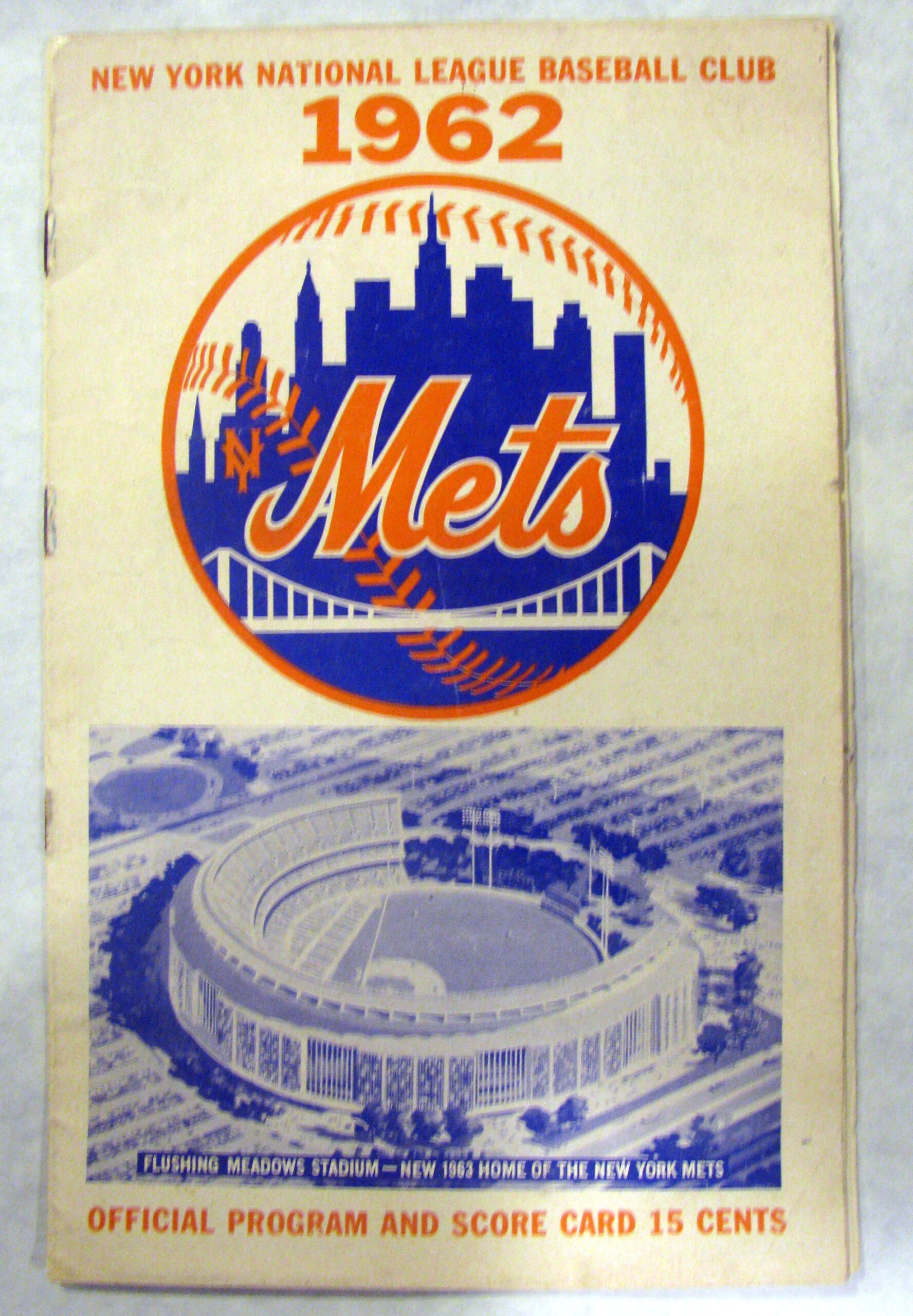
So, the next time you see a Mets fan proudly displaying a 1962 program, remember: it wasn’t just a piece of paper. It was a symbol of a team that dared to fail, dared to dream, and in doing so, dared to change the game forever.