The 2016–2017 Boston Red Sox rosters marked a pivotal era for the franchise, a transitional phase where a blend of seasoned veterans and burgeoning young talent coalesced into a formidable unit. This period wasn’t merely about roster construction; it was a narrative of adaptation, resilience, and the emergence of a new core that would redefine the team’s identity. For fans, analysts, and casual observers alike, the rosters of these seasons offered a masterclass in baseball’s evolving dynamics—where analytics, player development, and strategic foresight converged to shape a championship-caliber squad.
The 40-Man Roster: A Strategic Tapestry of Talent
The 40-man roster served as the foundation of the Red Sox’s ambitions during these seasons, a carefully curated ensemble where depth and versatility were paramount. This expanded list wasn’t just a bureaucratic requirement; it was a lifeline, ensuring the team could navigate the grueling 162-game marathon without succumbing to injuries or slumps. Pitchers, both starters and relievers, formed the backbone, with a mix of grizzled aces and unproven arms poised to make their mark. Position players, meanwhile, brought a mosaic of skills—defensive prowess, offensive firepower, and positional flexibility—that allowed manager John Farrell to deploy matchups with surgical precision.
The Starting Rotation: A Symphony of Power and Precision
At the heart of the Red Sox’s resurgence was their starting rotation, a quintet that blended raw velocity with surgical command. David Price, the prized free-agent acquisition, anchored the staff with his towering frame and devastating fastball-slider combination. Beside him, Rick Porcello emerged as a revelation, his sinker-heavy approach confounding hitters en route to a Cy Young Award. Chris Sale, though only in his first season with the club, brought a left-handed powerhouse presence, his overpowering fastball and devastating slider striking fear into opposing lineups. Rounding out the rotation were Eduardo Rodríguez, whose left arm offered a counterbalance to the right-handed dominance, and Clay Buchholz, whose spot in the rotation was as much about experience as it was about performance.
The rotation’s synergy wasn’t just about individual brilliance; it was about the collective ability to stifle offenses night after night. The Red Sox’s pitching philosophy leaned heavily on ground-ball inducement and strikeout dominance, a formula that minimized the impact of defensive lapses and maximized the efficiency of their bullpen. This approach wasn’t revolutionary, but its execution was masterful, a testament to the organization’s commitment to blending analytics with traditional scouting.
The Bullpen: The Unsung Engine of Dominance
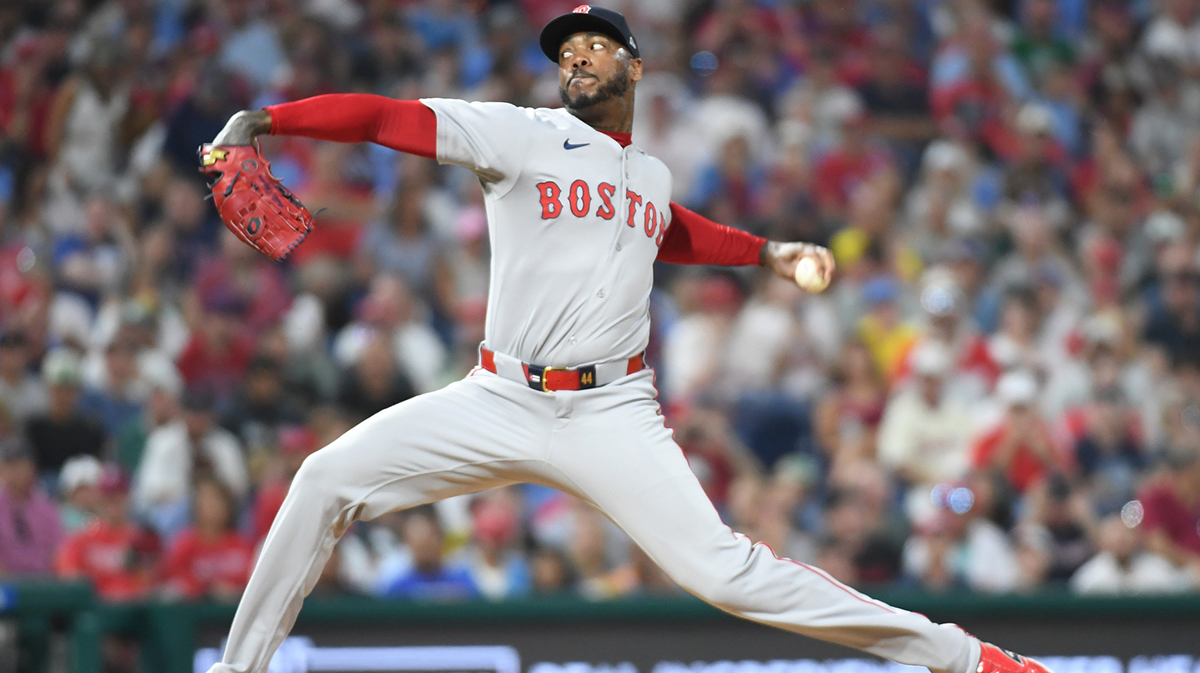
While the starting rotation garnered headlines, the bullpen was the silent assassin that often decided games in the late innings. Craig Kimbrel, acquired in a blockbuster trade, brought a fastball that could reach triple digits and a slider that left hitters flailing. His presence alone altered the calculus for opposing managers, who dared not extend their lineups in close games. Joining him was Joe Kelly, whose mid-90s fastball and unorthodox delivery made him a nightmare for right-handed hitters, and Addison Reed, a steady hand in high-leverage situations whose cutter induced weak contact with alarming regularity.
The bullpen’s depth extended beyond the closer and set-up men. Relievers like Brad Ziegler, whose submarine delivery baffled hitters, and Matt Barnes, a rising star with a power repertoire, provided the Red Sox with options that transcended conventional roles. This bullpen wasn’t just deep; it was versatile, capable of adapting to any scenario, whether it meant preserving a lead or manufacturing an inning in a tight spot. The Red Sox’s bullpen wasn’t just a strength—it was a weapon.
The Position Players: A Mosaic of Talent and Versatility
The infield was a study in contrasts, where ageless veterans and youthful exuberance collided to form a cohesive unit. Dustin Pedroia, the diminutive second baseman, was the heartbeat of the team, his relentless hustle and clutch hitting embodying the franchise’s ethos. Xander Bogaerts, with his effortless swing and defensive prowess at shortstop, represented the future, while Pablo Sandoval’s presence at third base—though marred by inconsistency—added a layer of unpredictability. Mitch Moreland, the low-key free-agent signing, provided stability at first base, his bat and glove proving to be a bargain.
The outfield was a different beast entirely, a blend of power, speed, and defensive acumen. Mookie Betts, the team’s dynamic right fielder, was a five-tool marvel whose defensive exploits alone could swing games. Jackie Bradley Jr., with his Gold Glove-caliber center field play and timely hitting, became the unsung hero of the postseason. Andrew Benintendi, the rookie sensation, brought a fresh energy to left field, his smooth left-handed stroke and advanced plate discipline hinting at a bright future. Rounding out the outfield was Brock Holt, the utility man whose versatility and clutch performances made him a fan favorite.
The Development Pipeline: The Future in the Making
Beneath the surface of the 40-man roster, the Red Sox’s farm system was a wellspring of talent, a pipeline that promised to replenish the major-league squad for years to come. Players like Andrew Benintendi, Yoan Moncada, and Rafael Devers were the crown jewels, their rapid ascents through the minors a testament to the organization’s player development prowess. Moncada, in particular, was hailed as a generational talent, his combination of power, speed, and defensive skill drawing comparisons to the game’s elite.
The minor leagues weren’t just about the top prospects; they were also about the role players who would eventually carve out niches in the majors. Players like Sam Travis and Rafael Devers demonstrated the Red Sox’s ability to cultivate talent that could step into high-pressure situations without missing a beat. This pipeline wasn’t just about filling gaps; it was about building a sustainable model of success, one where the next wave of stars was always on the horizon.
The Managerial Chessboard: Farrell’s Tactical Mastery
John Farrell’s tenure as manager was defined by his ability to navigate the complexities of a 25-man roster while keeping the team’s collective focus razor-sharp. His bullpen management was a masterclass in restraint and aggression, where he balanced the need for matchups with the preservation of his arms. Farrell’s willingness to deploy platoons—such as the platoon of Sandy León and Christian Vázquez behind the plate—demonstrated his adaptability, a trait that became increasingly valuable as the season wore on.
Farrell’s approach wasn’t without its controversies, particularly in the postseason, where his bullpen usage became a lightning rod for debate. Yet, his ability to steer the team through the regular season’s turbulence, and his knack for extracting peak performances from his roster, underscored his value to the organization. Under his guidance, the Red Sox’s roster wasn’t just a collection of talent; it was a finely tuned machine, each component playing its part in the pursuit of a championship.
The Postseason: A Glimpse of What Could Have Been
The 2016–2017 postseason was a rollercoaster of emotions for Red Sox fans, a journey that showcased the team’s potential while highlighting the fine margins that separate greatness from glory. The 2016 American League Division Series against the Cleveland Indians was a microcosm of the season itself—a team that dominated the regular season but faltered when it mattered most. The bullpen’s struggles in Game 3, where Andrew Miller and Cody Allen combined to stifle the Red Sox’s offense, were a stark reminder of the volatility of October baseball.
The 2017 season brought renewed hope, with the Red Sox securing the top seed in the American League and setting their sights on a World Series berth. Yet, the path was fraught with challenges, from the Astros’ resurgence to the Red Sox’s own inconsistencies. The postseason served as a crucible, testing the mettle of a roster that had shown flashes of brilliance but still lacked the championship pedigree. For the players, it was an opportunity to cement their legacies; for the fans, it was a reminder that talent alone isn’t enough—it’s the will to win that ultimately defines a team’s destiny.