In the grand tapestry of baseball history, few names resonate with the same thunderous crack of a bat as Jay Hanna “Dizzy” Dean. A pitcher whose fastball once split the seams of time itself, Dean’s legacy isn’t confined to the diamond—it’s etched into the very fabric of collectibles. Baseball cards bearing his likeness aren’t mere slips of cardboard; they’re portals to an era when the game was raw, unfiltered, and brimming with personality. But here’s the twist: not all Dizzy Dean cards are created equal. Some are as common as a pop fly to shallow right field. Others? They’re the kind of treasures that make collectors’ hearts race like a ninth-inning fastball. If you’ve ever wondered which of these relics are worth the kind of money that could buy a vintage convertible—or at least a really nice dinner—then buckle up. We’re about to take a deep dive into the dizzying world of Dizzy Dean baseball card values, where rarity meets romance, and where a single card can tell a story as rich as the man himself.
The Legend of Dizzy Dean: More Than Just a Pitcher
Before we talk cards, we must talk about the man. Jay Hanna Dean, better known as Dizzy, wasn’t just a pitcher—he was a phenomenon. With a fastball that could shatter windows and a personality that could fill a stadium, Dean was the kind of player who made baseball feel alive. His 1934 season alone saw him win 30 games, a feat that hasn’t been matched in the modern era. But Dean’s appeal transcends statistics. He was a showman, a raconteur, and a man who seemed to embody the spirit of the game itself. Collectors don’t just chase his cards for their rarity; they chase them for the aura of greatness they carry. A Dizzy Dean card isn’t just a piece of memorabilia—it’s a piece of history, a tangible connection to a time when baseball was as much about character as it was about skill.
This context is crucial because it explains why certain cards command premium prices. A Dizzy Dean card isn’t just a collectible; it’s a shrine to a bygone era. The more a card captures the essence of Dean—his swagger, his dominance, his larger-than-life persona—the more valuable it becomes. It’s not just about the player’s stats; it’s about the story he left behind. And in the world of baseball cards, stories are currency.
The Holy Grail: The 1934 Goudey #52
If you’re hunting for Dizzy Dean baseball cards that are worth big money, start with the 1934 Goudey #52. This isn’t just any card—it’s the crown jewel of Dean’s collectible legacy. Released during the Goudey Gum Company’s iconic 1934 set, this card is a masterclass in vintage charm. Dean is captured mid-windup, his expression a mix of intensity and mischief, as if he’s about to unleash one of his legendary fastballs. The card’s design is simple, yet it exudes a timeless quality that makes it instantly recognizable.
The 1934 Goudey #52 is rare for several reasons. First, Goudey sets from this era are notoriously scarce in high-grade condition. Second, Dean’s popularity ensured that this card was snapped up quickly by collectors, leaving fewer in circulation over time. Today, a PSA 8 or 9 copy of this card can fetch anywhere from $10,000 to $50,000, depending on the market. But here’s the kicker: in top-tier grades, like a PSA 10, the price can skyrocket to six figures. It’s the kind of card that doesn’t just sit in a collection—it becomes the centerpiece of it.
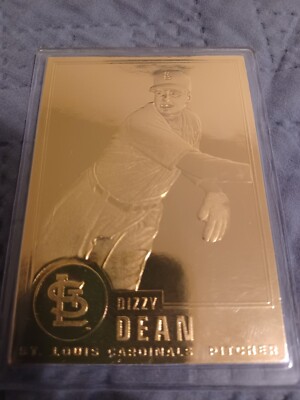
The allure of the 1934 Goudey #52 isn’t just in its rarity or its price tag. It’s in the way it transports you back to a time when baseball was played under the open sky, when players were as much a part of the culture as the game itself. Owning this card isn’t just about having a valuable piece of cardboard—it’s about holding a piece of baseball’s soul.
Modern Marvels: The 1980 Cramer Baseball Legends Series
While vintage cards are the stuff of dreams, modern cards have their own allure—especially when they capture the essence of a legend like Dizzy Dean. Enter the 1980 Cramer Baseball Legends Series, a set that’s often overlooked but packed with potential. The #12 card in this series features a striking portrait of Dean, his face etched with the same determination that made him a legend. What makes this card intriguing is its relative obscurity. Unlike the Goudey set, which is a staple in vintage collections, the Cramer series is a niche treasure. That obscurity translates to lower print runs and, consequently, higher long-term value for certain cards.
For collectors who missed out on the Goudey goldmine, the Cramer series offers a chance to own a piece of Dean’s legacy at a fraction of the cost. A high-grade copy of this card can still command $500 to $2,000, depending on the market. But here’s where it gets interesting: the Cramer series is ripe for rediscovery. As more collectors turn their attention to overlooked modern sets, the value of these cards could surge. It’s the kind of investment that rewards patience and a keen eye for potential.
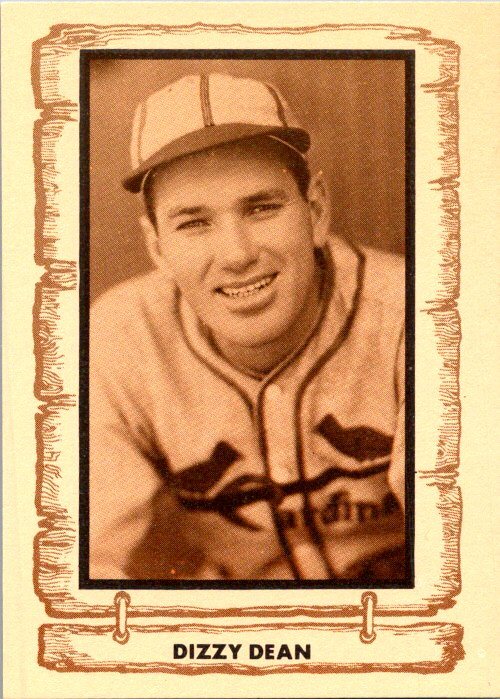
The Cramer series also appeals to collectors who appreciate the artistry of baseball cards. The design is clean, the photography is sharp, and the attention to detail is evident. It’s a card that doesn’t just celebrate Dizzy Dean—it elevates him, turning him into a timeless icon. For those who see collecting as an art form, the Cramer series is a hidden gem worth exploring.
The Wildcard: TCMA’s Greatest Pitchers Set
If you’re looking for something truly unique, the 1982 TCMA Greatest Pitchers set is a wildcard that could pay off big. TCMA, known for its high-quality reprints and original sets, captured Dizzy Dean in a way that feels both nostalgic and fresh. The card in question, #36 in the set, features a sepia-toned portrait of Dean, evoking the feel of an old-time baseball card. It’s a design choice that sets it apart from the more traditional cards in Dean’s portfolio.
What makes the TCMA set intriguing is its limited production and the quality of the cards themselves. TCMA was never a mass-market brand, which means their sets were produced in smaller quantities. That scarcity, combined with the card’s striking design, makes it a standout in any collection. A high-grade copy of this card can fetch anywhere from $300 to $1,500, depending on the market. But the real value here is in the storytelling. The TCMA set doesn’t just feature Dizzy Dean—it celebrates the art of pitching, turning each card into a tribute to the game’s greatest arms.
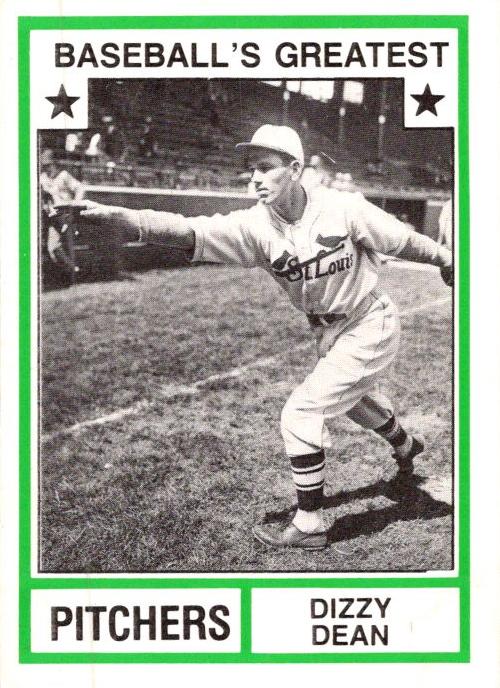
For collectors who appreciate the intersection of art and athletics, the TCMA set is a must-have. It’s a card that doesn’t just represent Dizzy Dean—it reimagines him, blending the old with the new in a way that feels fresh and exciting. In a hobby often dominated by vintage relics, the TCMA set offers a modern twist that’s as valuable as it is visually stunning.
The Market Dynamics: What Drives Dizzy Dean Card Values
Understanding the value of Dizzy Dean baseball cards isn’t just about knowing which cards exist—it’s about understanding the forces that drive their prices. The market for Dean’s cards is shaped by several key factors, starting with rarity. Cards from his playing days, like the 1934 Goudey, are scarce because they were produced in limited quantities and have been heavily collected over the decades. Modern cards, like the Cramer and TCMA sets, are rare because they were produced in smaller runs or have flown under the radar.
Condition is another critical factor. A card’s grade can make or break its value. A PSA 10 1934 Goudey #52 is a unicorn; a PSA 3 copy is still desirable but won’t command the same premium. The market also responds to trends. As nostalgia for the golden era of baseball grows, so does the demand for vintage cards. Conversely, modern cards gain value when they’re tied to a resurging interest in a player or a set. It’s a delicate balance, one that requires collectors to stay informed and adaptable.
Finally, there’s the intangible factor: the story. Dizzy Dean’s cards aren’t just collectibles; they’re narratives. They tell the story of a man who dominated the game, who became a cultural icon, and who left an indelible mark on baseball history. Collectors don’t just buy these cards—they invest in the legacy they represent. And in a hobby where sentiment often trumps logic, that’s a powerful force.
Investing in the Future: Which Cards Are Poised to Rise?
If you’re looking to make a savvy investment in Dizzy Dean baseball cards, it’s worth considering which cards are poised to rise in value. The 1934 Goudey #52 is a safe bet, but its high price tag makes it inaccessible for many collectors. For those with a smaller budget, the 1980 Cramer Baseball Legends Series offers a more affordable entry point with significant upside. As more collectors discover this overlooked set, its value could climb steadily.
The TCMA Greatest Pitchers set is another wildcard. Its limited production and unique design make it a standout, and as the market for modern vintage continues to grow, so too could the value of these cards. Keep an eye on graded copies, as condition is everything in this hobby. And don’t overlook autographed cards. A signed Dizzy Dean card, especially one from his playing days, can fetch a premium that rivals even the rarest ungraded copies.
Ultimately, the key to investing in Dizzy Dean cards is to focus on quality over quantity. A single high-grade card from a desirable set is worth more than a dozen lower-grade copies. And remember: the best investments aren’t just about money—they’re about passion. If you love the story behind the card, the value will follow.
Baseball cards are more than just pieces of cardboard. They’re time capsules, snapshots of history, and tributes to the legends who made the game great. Dizzy Dean’s cards are no exception. Whether you’re a seasoned collector or a newcomer to the hobby, there’s never been a better time to explore the dizzying world of his collectibles. The cards are out there, waiting to be discovered. All you have to do is reach for them.