There’s something almost mythic about a Nolan Ryan autograph—an indelible mark left by a pitcher whose fastball once shattered the very fabric of baseball’s perception of velocity. To hold a baseball bearing his signature is to cradle a piece of history, a tangible fragment of an era when fireballers weren’t just players but legends forged in the crucible of sheer dominance. Yet, for all their cultural resonance, Nolan Ryan autographs remain a subject of fascination that transcends mere collectibility. They are artifacts of a bygone intensity, relics of a time when a single pitch could alter the trajectory of a career, a franchise, or even the game itself. The fascination isn’t just about ownership; it’s about proximity to greatness, to the raw, unfiltered power that defined a man who pitched seven no-hitters and struck out more batters than anyone in history.
What makes a Nolan Ryan autograph so compelling isn’t merely the signature’s aesthetic—though it’s undeniably one of the most recognizable in sports—but the stories it carries. Each signed ball, bat, or jersey is a vessel of memory, a vessel that whispers of fastballs that hummed like freight trains, of split-fingered deliveries that left hitters flailing at thin air, and of a competitive fire that burned brighter than the Texas sun. Collectors don’t just seek his autograph; they seek the echo of a legend, the ghost of a pitcher who pitched not just with his arm, but with his soul. And yet, beneath the surface of this fascination lies a deeper truth: the value of a Nolan Ryan autograph isn’t just monetary. It’s emotional. It’s historical. It’s the quiet thrill of holding a piece of a man who redefined what it meant to be a pitcher.
The Signature That Defined a Generation
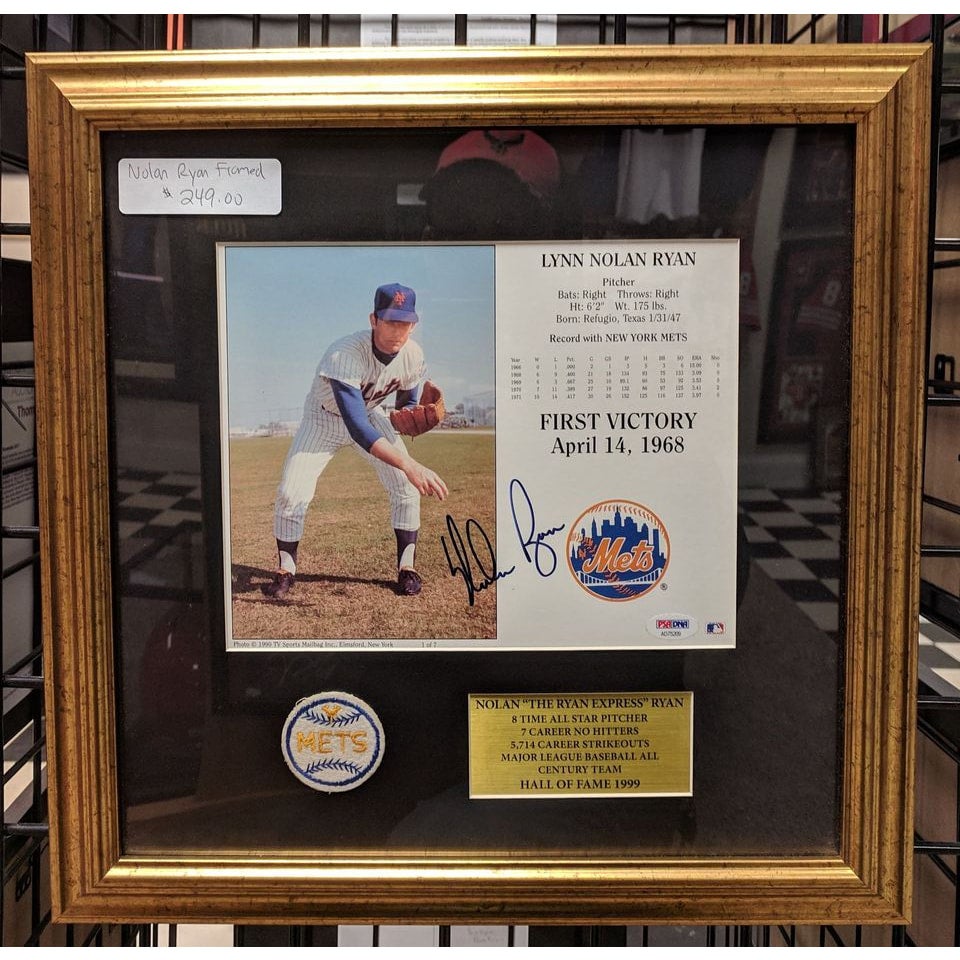
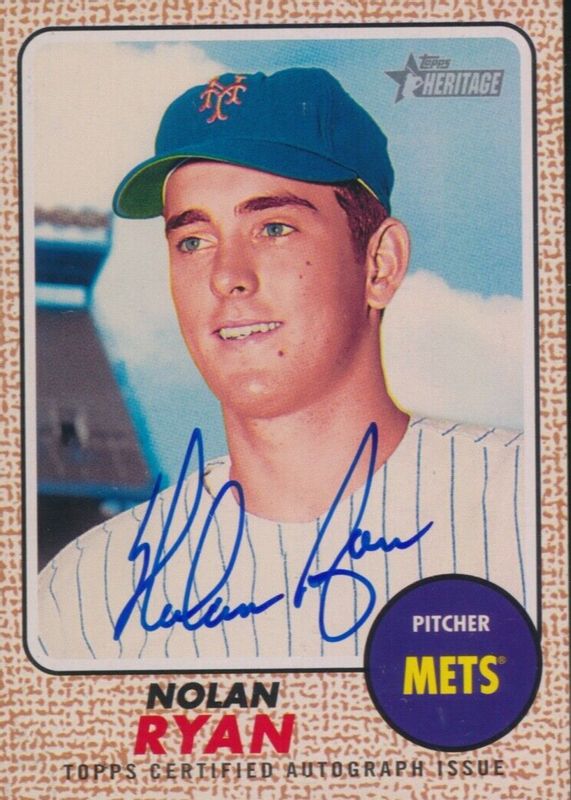
The Nolan Ryan autograph is more than ink on a ball—it’s a signature that carries the weight of baseball’s most unassailable records. His name, scrawled in that distinctive, looping script, is instantly recognizable, a visual shorthand for dominance. Unlike the neat, controlled autographs of modern stars, Ryan’s signature often appears hurried, almost impatient, as if the act of signing was an interruption to something far more important: pitching. This imperfection only adds to its authenticity. It’s the signature of a man who never had time for pretense, who cared little for the trappings of celebrity, and who signed autographs with the same intensity he brought to the mound.
What collectors often overlook, however, is the psychological pull of that signature. In an era where athletes are meticulously groomed for media consumption, Ryan’s autograph feels raw, unfiltered, and unapologetically authentic. It’s the signature of a pitcher who didn’t just play the game—he conquered it. The way the “N” loops back on itself, the way the “R” extends like a fastball tailing away from a right-handed hitter—these aren’t just stylistic choices. They’re the physical manifestation of a man who pitched with reckless abandon, who threw harder than anyone else, and who never once looked back. For collectors, owning that signature is like owning a piece of the man’s competitive spirit.
The Market’s Obsession with Rarity and Condition
If there’s one thing the collectibles market loves more than a legendary name, it’s scarcity. Nolan Ryan autographs, particularly those from his early years with the California Angels or his dominant stretch with the Houston Astros, command premium prices not just because of his Hall of Fame résumé, but because of their relative rarity. Unlike modern players who churn out autographs at every team event, Ryan’s signing schedule was sporadic, often limited to private appearances or memorabilia companies he trusted. This scarcity has turned his autographs into blue-chip assets, with prices fluctuating based on era, medium, and provenance.
Yet, the market’s obsession with condition reveals a fascinating paradox. A Nolan Ryan autograph on a pristine baseball, signed in the prime of his career, can fetch tens of thousands of dollars. But here’s the twist: Ryan’s autographs from his later years—when his hand tremors from Parkinson’s disease became apparent—are often more sought after by certain collectors. Why? Because they represent the final chapter of a titan’s career, a poignant reminder of mortality. This duality—where imperfection can enhance value—challenges the conventional wisdom of collectibles grading. It suggests that the true value of a Nolan Ryan autograph isn’t just in its crispness, but in its ability to tell a story, to evoke the passage of time and the inevitable fade of greatness.
The Nostalgia Factor: Why Fans Still Chase His Autographs
For many collectors, the allure of a Nolan Ryan autograph is deeply tied to nostalgia—a longing for an era when baseball was simpler, when pitchers ruled with fear and hitters marveled at the impossible. Ryan’s career spanned four decades, from the free-swinging 1970s to the analytics-driven 2000s, yet he remained a constant, a figure of unyielding consistency in a sport that often prioritizes change. His autographs, therefore, aren’t just collectibles; they’re time capsules. A signed ball from 1973, when he first unleashed his fastball on the majors, feels like a direct line to the past, a way to touch the raw, unfiltered beginnings of a legend.
This nostalgia is amplified by the fact that Ryan’s autographs are often associated with other icons of the game. Many of his signed items were distributed during joint appearances with teammates like Reggie Jackson, Tom Seaver, or Mike Schmidt—players whose own legacies are etched into baseball’s collective memory. The result is a layered collectible: a Nolan Ryan autograph that also bears the signature of another immortal. It’s like owning a piece of a dynasty, a fragment of a golden age when baseball’s stars weren’t just athletes but cultural touchstones.
There’s also the intangible thrill of the chase. Ryan’s autographs are notoriously difficult to authenticate, given the high volume of forgeries that flood the market. Collectors who secure a genuine piece often describe it as a badge of honor, a testament to their dedication. The hunt itself becomes part of the story, a subplot to the main narrative of owning a piece of history.
The Investment Paradox: When Emotion Meets Economics
From an investment standpoint, Nolan Ryan autographs are a study in contradiction. On one hand, they’re a safe bet—his name carries weight, his records are untouchable, and his cultural cachet is ironclad. On the other, their value is as volatile as a Ryan fastball, subject to market whims, grading trends, and the ebb and flow of nostalgia. A 1970s-signed Ryan baseball might appreciate steadily over decades, while a modern autographed bat could languish if the market shifts toward other stars. The key to navigating this paradox lies in understanding that the true ROI of a Nolan Ryan autograph isn’t just financial—it’s experiential.
Consider the collector who purchases a Ryan-signed ball not for resale, but for the joy of displaying it in a study lined with vintage baseball memorabilia. The value here isn’t in the price tag; it’s in the daily reminder of greatness, the quiet pride of owning a piece of a man who defied time. This emotional ROI is what separates Nolan Ryan autographs from mere commodities. They’re not just assets; they’re companions, silent witnesses to the evolution of the game and the unchanging nature of fandom.
There’s also the generational aspect. A Nolan Ryan autograph passed down from a father to a son carries with it the weight of shared history, a baton of appreciation for the game’s golden eras. In an age where collectibles are increasingly digital and ephemeral, a signed baseball remains a tangible, enduring link to the past. It’s a physical anchor in a world that often feels untethered from its roots.
The fascination with Nolan Ryan autographs is, at its core, a fascination with the idea of greatness itself. It’s the desire to possess a fragment of a man who pitched not just to win games, but to redefine what was possible. His autographs are more than ink on a ball—they’re the distillation of a career that spanned eras, a testament to a fastball that could still make a catcher’s mitt sting decades after it was thrown. They’re a reminder that baseball’s magic isn’t just in the statistics or the highlights, but in the stories that linger long after the final pitch.
To own a Nolan Ryan autograph is to hold a piece of baseball’s soul—a soul that was forged in fire, tempered by time, and immortalized in the collective memory of the game. And perhaps that’s why, even in an era of autograph authentication apps and graded slabs, the most valuable Nolan Ryan autographs aren’t the ones with the highest grades, but the ones that carry the deepest personal meaning. Because in the end, the true value of his signature isn’t measured in dollars. It’s measured in the quiet thrill of connection, the unspoken bond between a fan and a legend who once made the impossible feel routine.