In the grand bazaar of baseball card collecting, where the shimmering halls of Cooperstown’s legends often overshadow the hidden gems, there exists a card that whispers rather than shouts—a card that belongs to a player whose legacy, though rich, is often whispered in the shadows of more celebrated contemporaries. This is the story of Moises Alou’s rookie card, a piece of cardboard that carries within it the echoes of a career defined by clutch hits, unshakable grit, and a quiet defiance of the odds. To the uninitiated, it may seem like just another relic from the early 1990s, but to those who know, it is a collector’s treasure waiting to be unearthed.
Imagine, if you will, a baseball card not as a mere collectible, but as a time capsule—a frozen moment where the raw potential of youth collides with the promise of greatness. Moises Alou’s rookie card, particularly his 1991 Topps Stadium Club issue, is one such capsule. Released during the dawn of the modern collecting era, it captures a player on the precipice of stardom, his bat poised like a conductor’s baton ready to orchestrate a symphony of base knocks and game-winning drives. The card itself is a study in contrast: the vibrant hues of the Stadium Club design, with its glossy finish and meticulous photography, serve as a stark counterpoint to the understated legacy of the player it depicts. It is, in many ways, the visual embodiment of Alou’s career—a blend of flair and fortitude, of brilliance that often went unnoticed in the glare of flashier stars.

What makes Alou’s rookie card particularly intriguing is its place in the pantheon of baseball cards. While the 1991 Topps Stadium Club set is celebrated for its innovative design and high-quality photography, Alou’s card is often relegated to the sidelines in favor of more iconic names like Chipper Jones or Ivan Rodriguez. Yet, this is precisely what makes it a hidden gem. In a hobby where scarcity and demand dictate value, Alou’s card offers something rare: a blend of accessibility and untapped potential. Unlike the ultra-rare inserts or limited-edition parallels that dominate the high-end market, Alou’s rookie card is attainable for the average collector, yet it carries the weight of a player who delivered in the most critical moments of his career. It is the baseball equivalent of a vintage wine that hasn’t yet reached its peak—still affordable today, but poised to appreciate as new generations of collectors rediscover Alou’s contributions to the game.
The Allure of the Underdog: Why Alou Stands Out
To understand the unique appeal of Moises Alou’s rookie card, one must first understand the man behind the cardboard. Moises Alou was never the flashiest player in the league, nor did he boast the gaudy statistics that often dominate Hall of Fame discussions. Instead, he was the kind of player who thrived in the crucible of pressure, delivering when it mattered most. His rookie season in 1990 was a prelude to a career that would see him amass over 2,100 hits, 332 home runs, and a .303 batting average. But it was his postseason heroics that truly cemented his legacy. Alou was a postseason virtuoso, batting .305 in the playoffs and delivering clutch hits in some of the most iconic moments of the 1990s and early 2000s. His performance in the 1997 World Series, where he hit .321 with a home run and five RBIs, is a testament to his ability to rise to the occasion when the spotlight was brightest.
This underdog narrative is what makes Alou’s rookie card so compelling. In a hobby that often lionizes the superstars, Alou’s card represents the quiet triumphs of a player who let his bat do the talking. The 1991 Topps Stadium Club design, with its dynamic action shots and vibrant colors, captures Alou mid-swing, his body coiled with the potential energy of a player about to unleash a line drive into the gap. It is a snapshot of a moment before the glory, before the World Series heroics, before the accolades. For collectors, this card is not just a piece of memorabilia; it is a tangible connection to the early days of a career that would go on to defy expectations.
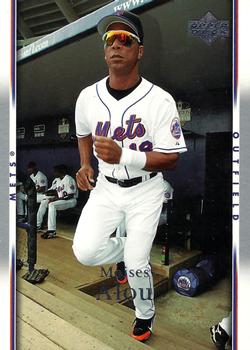
The allure of Alou’s rookie card is further enhanced by its relative scarcity. While the 1991 Topps Stadium Club set is not as rare as some of the vintage sets from the 1950s or 1960s, finding Alou’s card in high-grade condition is no easy feat. The set’s popularity and the passage of time have conspired to make high-grade copies a challenge to locate. For collectors, this scarcity adds a layer of intrigue. It transforms the pursuit of Alou’s card from a simple transaction into a treasure hunt, where the thrill of the chase is as rewarding as the acquisition itself. In an era where graded cards often command premium prices, a well-preserved Alou rookie card in Near Mint or Mint condition can be a crown jewel in any collection.
The Market’s Whisper: Why Alou’s Card is a Sleeper Investment
The baseball card market is a fickle beast, driven by trends, nostalgia, and the ever-shifting tides of collector demand. Yet, within this chaotic landscape, there are undervalued gems waiting to be discovered—and Moises Alou’s rookie card is one of them. While the market for vintage cards has seen explosive growth in recent years, with iconic names like Ken Griffey Jr. and Derek Jeter commanding astronomical prices, Alou’s card has remained a relative bargain. This is not to say that it lacks potential; rather, it is a testament to the card’s underrated status in a market that often overlooks the quiet achievers.
Consider the trajectory of other players from the same era. Players like Larry Walker, Fred McGriff, and Dave Justice have seen their rookie cards appreciate significantly in recent years, as collectors rediscover their contributions to the game. Alou, with his postseason heroics and consistent production, is poised to follow a similar path. The key difference, however, is that Alou’s card is still accessible. While the prices for Walker’s and McGriff’s rookie cards have skyrocketed, Alou’s remains within reach for the average collector. This makes it an ideal entry point for those looking to invest in a card with strong long-term potential.
Another factor that bodes well for Alou’s card is the resurgence of interest in players from the 1990s. The 1990s were a golden era for baseball, marked by the steroid era’s excesses and the emergence of iconic players who defined a generation. As collectors look beyond the usual suspects—Griffey, Jeter, and Piazza—they are increasingly turning their attention to the unsung heroes of the decade. Alou, with his clutch performances and understated brilliance, fits perfectly into this narrative. His rookie card is not just a piece of cardboard; it is a portal to an era of baseball that is ripe for rediscovery.
The market’s whisper about Alou’s card is also fueled by the growing appreciation for Stadium Club as a set. Originally released as a premium product, Stadium Club was ahead of its time, offering collectors high-quality photography and innovative designs. Today, the set is celebrated for its aesthetic appeal and the stories it tells about the players of the era. Alou’s card, with its dynamic action shot and vibrant colors, is a standout in a set that is increasingly sought after by collectors. As the market continues to evolve, it is not unreasonable to expect that Alou’s card will be reappraised, its value rising in tandem with the growing appreciation for the Stadium Club set.
The Collector’s Dilemma: Grading, Condition, and the Hunt for Perfection
For collectors, the pursuit of a Moises Alou rookie card is not merely a financial transaction; it is a labor of love, a test of patience, and a lesson in the art of preservation. The condition of a card is paramount, and the difference between a Near Mint and a Mint copy can mean the difference between a modest investment and a true collector’s prize. Grading services like PSA and BGS have become the arbiters of value in the hobby, and a high-grade Alou rookie card can command a premium that reflects its scarcity and desirability.
But grading is only part of the equation. The hunt for a pristine Alou rookie card is a journey that requires diligence, persistence, and a keen eye for detail. The market is awash with raw copies, many of which have seen better days. Scratches, creases, and corner wear are the silent assassins of card value, and even the most minor flaw can significantly diminish a card’s worth. For collectors, this means poring over listings, scrutinizing photos, and often relying on the expertise of trusted dealers to ensure that their prized acquisition is as flawless as possible.

The challenge of finding a high-grade Alou rookie card is compounded by the card’s age. Released in 1991, the card has had over three decades to accumulate the battle scars of time. This makes the discovery of a truly pristine copy all the more satisfying—a moment of triumph for the collector who has navigated the treacherous waters of the market to secure a piece of history. For those willing to put in the effort, the reward is not just a card, but a tangible connection to the past, a piece of cardboard that encapsulates the essence of a player who defined an era.
For collectors who prefer to focus on the aesthetic rather than the financial, the 1991 Topps Stadium Club design offers a feast for the eyes. The set’s use of vibrant colors, dynamic action shots, and innovative photography makes it a standout in the crowded landscape of 1990s baseball cards. Alou’s card, in particular, captures him in mid-swing, his body a study in balance and power. The card’s design is a testament to the artistry of the era, a visual symphony that elevates it beyond mere collectible to a work of art.
The Legacy of a Quiet Legend: Why Alou’s Card Deserves a Spot in Your Collection
At its core, the appeal of Moises Alou’s rookie card lies in its ability to tell a story—a story of perseverance, of quiet triumph, and of a career that, while not always in the spotlight, left an indelible mark on the game. Alou’s legacy is one of consistency and clutch performance, a career that thrived in the shadows of more flamboyant stars but shone brightly when it mattered most. His rookie card is a tangible reminder of that legacy, a piece of cardboard that encapsulates the essence of a player who let his bat do the talking.
For collectors, the decision to add Alou’s rookie card to their collection is more than a financial calculation; it is an act of homage to a player who embodied the spirit of the game. It is a recognition of the underdog, the unsung hero, the player who delivered when the stakes were highest. In a hobby that often prioritizes the flashy and the iconic, Alou’s card offers something rare: a connection to the heart of the game, a reminder that greatness is not always measured in statistics or accolades, but in the moments that define a career.
The future of Alou’s rookie card is bright. As the market continues to evolve and collectors rediscover the players of the 1990s, it is not unreasonable to expect that Alou’s card will be reappraised, its value rising in tandem with the growing appreciation for his contributions to the game. For those who invest in it now, the card represents not just a potential financial gain, but a piece of history—a tangible link to a player whose legacy, while often overlooked, is undeniably rich.
In the end, the value of Moises Alou’s rookie card is not merely a matter of dollars and cents. It is a measure of the card’s ability to evoke emotion, to tell a story, and to connect collectors to the essence of the game. It is a reminder that in the world of baseball card collecting, the most valuable cards are not always the rarest or the most expensive, but the ones that carry within them the spirit of the players they depict. For those who understand this, Alou’s rookie card is more than a collectible; it is a treasure.
As the sun sets on another day in the world of baseball card collecting, the halls of the hobby remain filled with the echoes of players past and the promise of those yet to come. Among them, Moises Alou’s rookie card stands as a quiet sentinel, a testament to the power of the underdog and the enduring allure of the game. It is a card that whispers rather than shouts, a card that rewards those who take the time to listen. And in a world where the loudest voices often drown out the rest, that is a rarity worth cherishing.