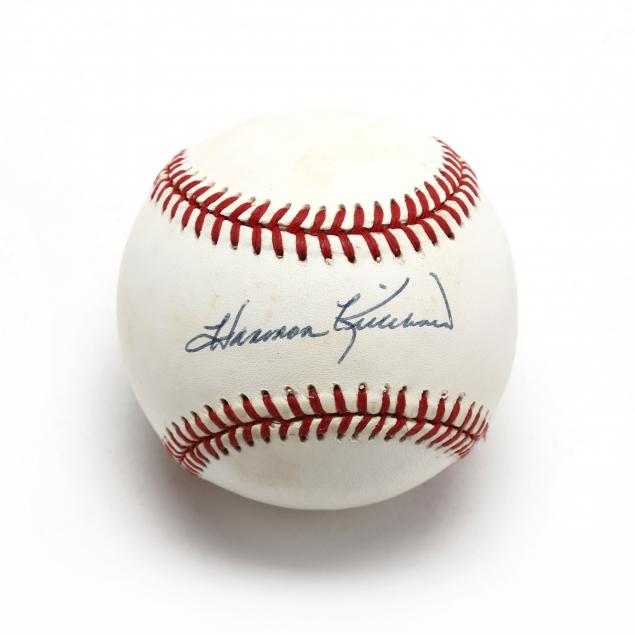
There’s something almost mythic about holding a piece of baseball history in your hands—a Harmon Killebrew autographed baseball, its leather surface worn smooth by time, the ink of his signature still vibrant decades later. To collectors, these artifacts aren’t just objects; they’re portals into the golden age of the game, when sluggers like Killebrew redefined power with a swing that seemed to defy physics. But how much is such a treasure worth? The answer isn’t as straightforward as checking a price guide. The value of a Harmon Killebrew autographed baseball is a tapestry woven from nostalgia, scarcity, and the intangible magic of a bygone era when baseball was America’s pastime in the truest sense.
The fascination with Killebrew’s memorabilia isn’t merely about his Hall of Fame career—though his 573 home runs and 1,584 RBIs certainly command respect. It’s about the man himself: a quiet, unassuming powerhouse who played with a relentless intensity, his bat a blur as it connected with the ball. Killebrew wasn’t just a player; he was a legend whose presence on the field could shift the momentum of a game with a single swing. For collectors, owning a piece of that legacy is like possessing a fragment of baseball’s soul. But the market for his autographed items is as nuanced as the player’s career, with values fluctuating based on provenance, condition, and the whims of demand.
The Allure of the “Killer”: Why Killebrew’s Autographs Command Attention
Harmon Killebrew’s autograph isn’t just a signature; it’s a signature of an era. In the 1960s and 70s, when baseball was transitioning from the raw, unfiltered competition of the Deadball Age to the more polished, commercialized spectacle it would become, Killebrew stood as a bridge between the two. His autographed baseballs, photos, and bats aren’t just collectibles—they’re historical documents, each one a testament to a time when the game was as much about grit as it was about glamour. The demand for his autographs reflects a deeper cultural yearning: the desire to hold onto something tangible from a period when baseball was still the undisputed king of American sports.
What makes Killebrew’s autographs particularly compelling is their relative scarcity compared to other Hall of Fame sluggers of his era. While players like Mickey Mantle and Willie Mays have had their autographs reproduced ad nauseam over the decades, Killebrew’s signature remains elusive. This scarcity isn’t just a result of lower production volumes; it’s also a reflection of his personality. Killebrew was famously private, shunning the autograph hounds that pursued more flamboyant stars. As a result, his autographs are often harder to come by, making them prized possessions for serious collectors. The thrill of the hunt—tracking down a rare Killebrew autograph—adds another layer to the fascination, turning the act of collecting into a treasure hunt where the prize is a piece of living history.
Decoding the Market: What Drives the Value of a Killebrew Autographed Baseball
The value of a Harmon Killebrew autographed baseball isn’t set in stone. Like a vintage wine, its worth can appreciate or depreciate based on a host of factors, from the condition of the ball to the story behind its acquisition. At the top of the hierarchy are balls signed in the presence of the player, ideally with a certificate of authenticity (COA) from a reputable third-party grading service like PSA or BGS. These pieces are the crown jewels of any collection, often fetching thousands of dollars at auction. But even within this elite tier, prices can vary wildly. A ball signed during Killebrew’s playing days, when his autograph was still fresh and his legend was still being written, will always command a premium over one signed decades later during a memorabilia show.
Condition is another critical factor. A baseball signed by Killebrew in pristine condition—with no fading, no cracks in the leather, and a signature that remains crisp—can be worth exponentially more than one that’s been mishandled over the years. The ink of an autograph is only as durable as the surface it’s on, and leather, while resilient, is not impervious to the ravages of time. Collectors must also consider the ball’s provenance. Was it signed during a game? At a charity event? In a private meeting? The more verifiable the backstory, the more valuable the item becomes. A ball with a direct link to Killebrew’s playing career, especially one tied to a significant moment—like a World Series appearance or a milestone home run—can soar in value, not just financially but emotionally.
Market trends also play a role. The collecting world is cyclical, with certain players’ memorabilia experiencing surges in demand during anniversaries, Hall of Fame inductions, or when a new generation of fans discovers their legacy. Killebrew’s market has seen fluctuations over the years, but his status as a beloved figure in baseball history ensures that his autographs remain in steady demand. Unlike some players whose memorabilia fades into obscurity, Killebrew’s appeal endures because he represents something timeless: the archetype of the power hitter who played with quiet dignity. In an era where baseball players are often more concerned with personal branding than with the game itself, Killebrew’s autographs serve as a reminder of a simpler time when the sport was the star.
The Psychology of Collecting: Why We’re Drawn to Killebrew’s Autographs
There’s a psychological undercurrent to collecting Harmon Killebrew autographed baseballs that goes beyond mere fandom. For many, these items are talismans—objects believed to carry a piece of the player’s essence. The signature isn’t just ink on leather; it’s a conduit to the past, a way to feel connected to a player who may have retired before they were born. This phenomenon, known as “nostalgic attachment,” is a powerful driver in the collectibles market. It explains why items from the 1950s and 60s, like Killebrew’s, hold such allure for modern collectors. There’s a sense that owning a piece of that era is a way to reclaim a lost innocence, a time when baseball was the unchallenged cultural heartbeat of America.
But the fascination with Killebrew’s autographs also taps into something deeper: the human desire for legacy. Baseball players, by the nature of their careers, are ephemeral figures. They rise, dominate for a time, and then fade into the background, their achievements preserved in stat sheets and highlight reels. An autographed baseball is one of the few ways a fan can hold onto a player’s legacy in a tangible form. It’s a way to say, “I was here when this legend was making history.” For collectors, this isn’t just about investment potential; it’s about preserving a piece of their own identity. A Killebrew autograph might sit in a display case, but it also sits in the collector’s memory, a constant reminder of the fleeting nature of greatness and the enduring power of the game.
There’s also an element of rebellion in collecting Killebrew’s memorabilia. While players like Mantle and Mays have become almost mythological in their status, Killebrew has remained a cult favorite—a player whose greatness is acknowledged but whose name doesn’t always carry the same immediate recognition. For collectors, this obscurity is part of the appeal. Owning a Killebrew autograph isn’t just about having a valuable item; it’s about being in on a secret, a connoisseur of the understated. It’s a way to stand apart from the mainstream, to celebrate a player who played with humility and grace in an era that often rewarded flash over substance.

Investing in History: Is a Killebrew Autographed Baseball a Smart Purchase?
For those considering adding a Harmon Killebrew autographed baseball to their collection, the question isn’t just about emotional satisfaction—it’s about financial prudence. Like any collectible, the value of a Killebrew autograph can be unpredictable. While top-tier pieces have sold for tens of thousands of dollars, more common examples can be found for a few hundred. The key to making a smart investment lies in understanding the market’s nuances. Buyers should prioritize items with impeccable provenance, as these are the pieces that will hold (or increase) their value over time. A ball signed in front of witnesses, with a COA from a reputable grading service, is far more likely to appreciate than one without such documentation.
Another consideration is the condition of the ball itself. A baseball signed by Killebrew is only as valuable as its preservation allows. Collectors should look for balls that have been stored properly, away from direct sunlight and humidity, which can degrade the leather and fade the ink. The signature should be clear and legible, with no signs of wear or fading. For those willing to spend the extra money, balls that have been professionally graded and encapsulated by PSA or BGS offer an added layer of security, as their condition and authenticity have been verified by experts.
It’s also worth noting that the market for Killebrew autographs is relatively stable but not without its risks. Unlike modern players whose memorabilia can skyrocket in value overnight, Killebrew’s market moves at a slower, more deliberate pace. This can be an advantage for long-term investors, as it reduces the likelihood of sudden crashes in value. However, it also means that patience is required. A Killebrew autograph isn’t a get-rich-quick scheme; it’s a long-term play, a way to invest in history rather than a fleeting trend. For those who are passionate about the game and the players who defined it, the financial rewards are almost secondary to the emotional ones.
The Future of Killebrew Collectibles: Will His Legacy Continue to Shine?
The market for Harmon Killebrew autographed baseballs is likely to remain robust, but its trajectory will depend on several factors. One of the biggest wildcards is the aging of Killebrew’s fanbase. As the generation that watched him play in person dwindles, the demand for his memorabilia could either stabilize or decline, depending on how well his legacy is preserved. Baseball historians, documentarians, and younger fans discovering his career through archives and retrospectives will play a crucial role in keeping his memory alive. If Killebrew’s story continues to be told—through books, films, or even video games—his autographs will likely retain their value, if not increase it.
Another factor to watch is the broader trends in sports memorabilia. The market for vintage baseball cards and autographs has seen explosive growth in recent years, driven by a combination of nostalgia, investment interest, and the rise of online auction platforms. Killebrew’s autographs stand to benefit from this trend, especially as more collectors seek out under-the-radar players whose legacies are ripe for rediscovery. The challenge will be ensuring that his autographs remain accessible to serious collectors rather than being hoarded by investors who see them purely as financial assets. The soul of collecting lies in the passion of the fans, and if Killebrew’s memorabilia is reduced to mere commodities, its value—both financial and emotional—could diminish.
Ultimately, the future of Killebrew’s autographed baseballs will be shaped by how we, as a culture, choose to remember the game’s history. Will we continue to celebrate the players who defined the sport’s golden age, or will we let their legacies fade into obscurity? For collectors, the answer is clear: a Harmon Killebrew autographed baseball isn’t just an investment—it’s a responsibility. It’s a way to ensure that the stories of players like Killebrew, who played with such quiet dignity and power, are never forgotten. In a world where baseball is increasingly dominated by analytics and social media, these artifacts serve as a reminder of what made the game truly great: the human element, the raw emotion, and the unshakable belief that one swing of the bat could change everything.
The Harmon Killebrew autographed baseball is more than just a collectible; it’s a piece of baseball’s soul. Whether it’s a ball signed in the heat of a pennant race or one preserved from a private meeting decades ago, its value transcends mere currency. It’s a connection to a time when baseball was as much about heart as it was about skill, when a player’s legacy was measured not in likes or followers but in the echoes of his bat cracking against a ball. For those who own one, it’s a treasure. For those who seek one, it’s a pilgrimage. And for the game itself, it’s a reminder that some legends never truly fade—they just wait, patiently, for the right collector to come along and bring them back to life.