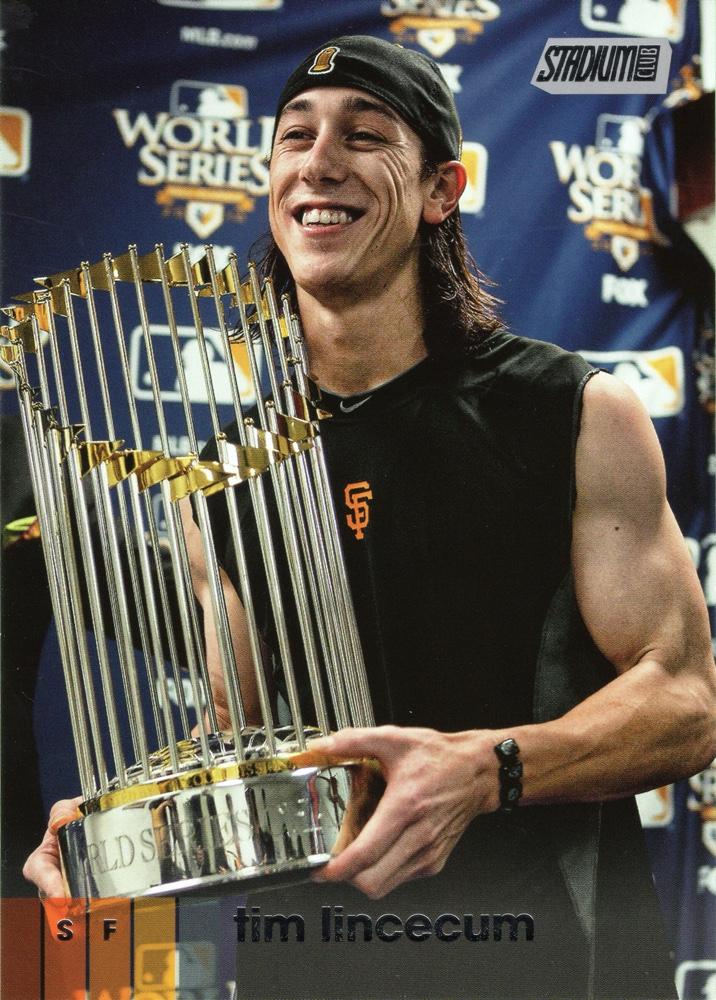
In the grand theater of baseball cards, where legends are immortalized in cardboard and ink, few names resonate with the same electrifying energy as Tim Lincecum. The man they called “The Freak” wasn’t just a pitcher—he was a kinetic marvel, a human whirlwind whose fastballs defied physics and whose strikeouts felt like magic tricks pulled from a top hat. When he burst onto the scene in 2007, winning back-to-back Cy Young Awards by age 24, he didn’t just dominate—he dazzled. And with that dazzle came rookie cards that weren’t just collectibles; they were artifacts of a fleeting, electric moment in sports history. But in a market where nostalgia often eclipses reality, the question lingers like a curveball in the dirt: Are Tim Lincecum rookie cards still a hot investment, or have they become the financial equivalent of a stolen base attempt in the ninth inning?
To answer that, we need to step into the batter’s box and examine the card itself—not just as a piece of cardboard, but as a time capsule of baseball’s golden age of pitching dominance. The rookie card isn’t merely a collectible; it’s a relic of an era when a 5’10”, 170-pound fireballer could baffle hitters with a fastball that screamed past them at 98 mph while his changeup vanished into the ether like a ghost. That duality—raw power and uncanny deception—is what makes Lincecum’s rookie cards so compelling. They’re not just investments; they’re talismans of a bygone era when baseball still felt unpredictable, when a pitcher could be both an underdog and a superstar.
The Rookie Card Pantheon: Which Lincecum Gems Are Worth Your Wallet?
Not all rookie cards are created equal, and with Lincecum, the variations are as nuanced as his pitching repertoire. The most coveted of the bunch is the 2008 Topps Tim Lincecum #153, a card that captures him mid-windup, his mop of curly hair whipping in the San Francisco breeze. This isn’t just a card; it’s a freeze-frame of a pitcher who made the impossible look routine. Graded versions of this card—especially PSA 10s—can fetch anywhere from $500 to over $1,500, depending on the market’s whims. But why? Because Topps nailed his likeness, and the card’s ubiquity in the late 2000s means it’s a piece of the zeitgeist.
Then there’s the 2008 Bowman Chrome Tim Lincecum Refractor #B101, a shimmering, chrome-coated homage to his dominance. Refractors are always in demand, but Lincecum’s version is particularly alluring because of his cult following. These cards can range from $200 for a raw copy to over $1,000 for a gem-mint graded specimen. The chrome finish isn’t just aesthetic; it’s a metaphor for Lincecum’s own brilliance—glittering, reflective, impossible to ignore.
For the purists, the 2008 Upper Deck Tim Lincecum #130 offers a different flavor. Upper Deck’s photography was always a cut above, and this card’s portrait-style shot makes Lincecum look like a Renaissance painting of a pitcher. Lower-grade copies can be had for under $50, but high-grade examples (PSA 9 or better) have been known to crack $300. The key here is condition—Upper Deck’s cards were often handled more roughly in packs, making high-grade survivors rarer than a perfect game.
The Market’s Curveball: Why Lincecum’s Value Isn’t a Straight Line
Investing in sports cards is like predicting the weather in San Francisco—unpredictable, often foggy, and occasionally sunny with a sudden downpour. Lincecum’s rookie cards have seen their share of volatility. In the early 2010s, as his career waned due to injuries and the inevitable march of time, prices dipped. But here’s the twist: nostalgia is a powerful force. As the 2020s rolled in, a wave of millennial collectors—many of whom grew up watching Lincecum baffle hitters—began snapping up his cards, driving prices back up. It’s as if the market itself was throwing a 95-mph fastball, and collectors were swinging for the fences.
The key drivers of Lincecum’s current value are threefold: rarity, condition, and cultural cachet. Rarity is straightforward—high-grade copies are finite, and the more pristine the card, the more desirable it becomes. Condition is where things get interesting. A PSA 10 Topps rookie might be worth $1,200 today, but a PSA 9 in the same series could be half that. The difference? One is a museum piece; the other is a well-preserved artifact. Cultural cachet is the wildcard. Lincecum’s legacy isn’t just about stats; it’s about the way he played. He was the anti-steroid, anti-bulldozer pitcher in an era when baseball was increasingly dominated by power and analytics. He was the human highlight reel, the pitcher who made you believe in the impossible.
Yet, the market isn’t without its skeptics. Some argue that Lincecum’s cards are overvalued because his career, while brilliant, was tragically short. He retired at 34 with a resume that included two Cy Youngs but also a litany of injuries. Is he a Hall of Famer? Probably not. Does that matter to collectors? Not always. For many, Lincecum’s rookie cards represent something deeper—a connection to a time when baseball was still a game of artistry, not just algorithms. In that sense, his cards are less about investment and more about emotion.
The Grading Gauntlet: Why a PSA 10 Could Be Your Golden Ticket
If you’re considering diving into Lincecum’s rookie cards, the grading process is your Mount Everest. A PSA 10 isn’t just a grade; it’s a golden ticket to the upper echelons of the market. But grading is a gamble—a roll of the dice where the stakes are high. A raw card might cost $200, but send it to PSA and get a 9, and you’ve just turned it into a $400 asset. Get a 10, and suddenly you’re in the big leagues. The problem? Grading turnaround times can stretch into months, and the cost of grading (often $30–$50 per card) eats into your potential profits.
For those willing to take the plunge, the rewards can be substantial. A PSA 10 2008 Topps Lincecum recently sold for $1,600 at auction—a tidy sum for a card that once retailed for $3.99. But here’s the catch: not all PSA 10s are equal. Some graders are stricter than others, and a card that gets a 10 from one service might only earn a 9 from another. It’s a minefield, and collectors must tread carefully. The safest bet? Buy graded cards from reputable sellers, or be prepared to gamble on raw copies with the hope of a high-grade return.
.jpg)
Beyond the Box: The Intangibles That Make Lincecum’s Cards Special
What sets Lincecum’s rookie cards apart isn’t just their potential resale value—it’s the stories they tell. This is a man who pitched a no-hitter in 2013, who struck out 10 batters in a single World Series inning, who made grown men look foolish with a pitch that seemed to defy the laws of physics. His rookie cards aren’t just collectibles; they’re relics of rebellion. In an era where pitchers were increasingly built like linebackers, Lincecum was a wiry, eccentric genius who threw from a funky delivery and made it work. He was the anti-Randy Johnson, the anti-Roger Clemens—a pitcher who relied on guile, deception, and sheer audacity.
For collectors, that narrative is invaluable. A Mike Trout rookie card might be a safer bet, but it lacks the drama of Lincecum’s. His cards are for the fans who remember the first time they saw him strike out 10 batters in a single game, or the time he fanned David Ortiz with a backdoor slider that made the veteran look like he’d never seen a baseball before. They’re for the purists, the romantics, the ones who believe baseball should be as much about artistry as it is about analytics.
And then there’s the aesthetic. Lincecum’s rookie cards are beautiful in a way that transcends their monetary value. The Topps card’s action shot, the Bowman Chrome’s reflective sheen, the Upper Deck’s portrait—each one is a snapshot of a moment when baseball was still unpredictable, when a pitcher could be both an underdog and a superstar. They’re the kind of cards that make you pause and think, This is why I love this game.
The final pitch, then, is this: Tim Lincecum rookie cards are a gamble, but they’re a gamble with soul. They’re not the safest investment, and their value will always be tied to the whims of the market and the fickleness of nostalgia. But for those who believe in the power of storytelling, for those who see a card not just as a piece of cardboard but as a window into a bygone era of baseball magic, Lincecum’s rookie cards are worth every penny. They’re the financial equivalent of a 100-mph fastball—unpredictable, exhilarating, and impossible to ignore. So if you’re sitting on the fence, ask yourself: Do you want a card that’s just an investment, or one that’s a legacy? The Freak’s rookie cards offer both. And in the end, that might be the rarest commodity of all.