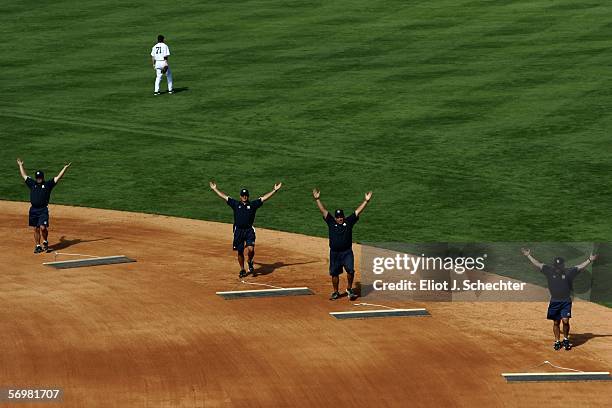
Have you ever wondered what happens on the baseball field when the players retreat momentarily? Beyond the crack of the bat and the roar of the crowd lies a different kind of spectacle—one that blends meticulous care with unexpected levity. Picture this: the grounds crew, typically concealed behind their diligent labor, breaking into the iconic dance of “YMCA” during the 7th inning stretch. This seemingly whimsical act poses a playful question—can the art of field maintenance transform into a moment of peak entertainment? And what challenges might arise when tradition meets theatricality?
The Role of the Grounds Crew: Unsung Custodians of Baseball
In the sprawling ecosystem of Major League Baseball (MLB), the grounds crew serves as silent guardians. Tasked with maintaining immaculate playing conditions, their work ensures every game can proceed without interruption. From dragging the infield to watering the grass, their precision is paramount. Yet, the 7th inning stretch—a revered interval—offers a rare respite, a fleeting space where these custodians momentarily step out of obscurity.
Traditionally, the 7th inning stretch allows players and fans alike to catch their breath, stretching limbs and spirits. But the grounds crew has ingeniously seized this moment, not just to rest, but to engage with the audience in a way that transcends their routine duties. Their rendition of “YMCA” transforms the mundane into a jubilant spectacle, elevating the entertainment beyond the usual boundaries of the game.
Breaking Stereotypes: Grounds Crew as Entertainers
Starkly contrasting the stoic, uniformed image that groundskeepers usually project, their choreographed dance challenges conventional perceptions. It prompts a playful interrogation: can those behind the scenes become the stars of the show? There is a profound juxtaposition in seeing these professionals trade rakes for dance moves, uniforms for synchronized letters. Such an act humanizes them, revealing facets often masked by laborious roles.
The animation during “YMCA” epitomizes this shift—it is an unexpected delight that dissolves spectator passivity. This performances’ appeal lies in its democratic artistry: simple, accessible, and universally recognizable. It invites crowds into a shared cultural moment, fostering communal joy that surpasses generational divides. By embracing their playful side, the grounds crew forges an ephemeral yet unforgettable connection with fans.
Cultural Significance and Fan Engagement in the 7th Inning Stretch
The 7th inning stretch itself is steeped in baseball lore. Originally a practical pause, it has morphed into a ritual of collective rejuvenation. Added elements, from the singing of national anthems to iconic songs, have made the interval a touchstone of fan participation. Introducing the grounds crew’s “YMCA” dance adds a novel layer to this tradition, enhancing fan engagement through humor and shared enthusiasm.
This contribution redefines entertainment standards in stadiums. It elevates the experience from passive observation to interactive festivity. Particularly in an era where live sport battles digital distractions, such moments recalibrate the balance, granting audiences tangible memories and a sense of community involvement. The grounds crew’s role thus transcends maintenance, imbibing the interval with cultural cachet.
Logistical and Performative Challenges
Yet, orchestrating such a spirited performance is not without its complexities. Consider the spatial constraints of the playing field—they must execute movements with precision, avoiding interference with equipment or freshly manicured turf. Timing is crucial; the dance must fit seamlessly within the brief inning stretch window, balancing entertainment with practicality. Preparations require discreet rehearsal and coordination to ensure fluidity without disrupting game flow.
Furthermore, the performance demands physical stamina from the crew, whose primary occupation is labor-intensive. Transitioning from strenuous maintenance to energetic dancing can pose unexpected physical demands. There is also an implicit challenge in maintaining professionalism while engaging in lighthearted theatrics, striking a delicate balance between playfulness and responsibility.
Implications for Team Morale and Stadium Atmosphere
The impact extends beyond fan perception. Internally, such communal activities can bolster team cohesion among grounds crew members. Shared creativity and performance often nurture a stronger esprit de corps, enhancing workplace satisfaction. This camaraderie echoes through the stadium atmosphere, contributing to a warmer, more vibrant environment conducive to sporting excellence.
Stadium operators may also recognize the value in cultivating such unique entertainment elements, seeing them as assets to brand identity. By embracing spontaneity and authenticity, ballparks become more than mere venues; they evolve into cultural hubs where sport, art, and human connection intersect. The grounds crew’s “YMCA” performance exemplifies this dynamic interplay.
The Broader Trend: Creativity in Sports Entertainment
The grounds crew’s foray into dance epitomizes a wider movement within sports entertainment: blending athletic competition with theatrical showmanship. Across baseball and other leagues, unconventional performances and fan interactions have gained traction, redefining the spectator experience. Mascots, music, interactive games, and dance routines create a multifaceted spectacle that appeals to diverse audiences.
This phenomenon addresses the modern challenge of retaining audience attention amidst myriad entertainment options. By injecting levity and creativity, stadiums become immersive spaces capable of surprising and delighting. The grounds crew’s intimate knowledge of the field combined with their surprising performance transcends scripted acts, lending authenticity and spontaneity that resonates deeply with fans.
Future Prospects: Can Grounds Crews Become Regular Entertainers?
Looking forward, one might ask—could this playful interlude become a permanent staple? Integrating entertainment with field maintenance raises intriguing possibilities. Perhaps specialized choreography or thematic performances could be developed, turning the grounds crew into dynamic entertainers in addition to their vital operational role.
However, ensuring sustainability would require careful management. Avoiding overexertion and preserving the integrity of the playing surface are paramount. Still, the potential to elevate in-stadium experiences through such inventive approaches is a tantalizing prospect, inviting other teams and venues to explore similar initiatives. The challenge lies in balancing spectacle with tradition, innovation with respect for the game.
Conclusion: Reimagining the Boundaries of Baseball Culture
The grounds crew performing “YMCA” during the 7th inning stretch encapsulates a unique fusion of diligence, creativity, and communal joy. It challenges established norms and invites audiences to reimagine the fabric of baseball culture—not merely as a sport, but as a vibrant, evolving experience. In this fleeting dance, the caretakers of the field reveal their own artistry, transforming routine moments into peak entertainment. Could this be the beginning of a new era where maintenance meets merriment, and the boundary between work and play dissolves amid the cheers of the crowd?