In the vast expanse of Major League Baseball’s diamond, defensive prowess often dictates the subtleties between victory and defeat. Among the pantheon of elite fielders, Ke’Bryan Hayes has emerged as a paragon of defensive gravity—an elusive magnetic pull that not only commands the infield but reshapes opponents’ strategies. This phenomenon surrounding Hayes transcends mere statistics, delving into the nuances of instinct, preparation, and the poetic rhythm of defensive baseball. To understand this gravitational force is to appreciate the intersection of athleticism, analytical mastery, and baseball’s enduring allure.
Defensive Gravity: The Magnetic Pull of Defensive Excellence
The term “defensive gravity” in baseball refers to the ability of a fielder to draw batted balls into their orbit, essentially altering the trajectory and options of baserunners and batters alike. Ke’Bryan Hayes exhibits this trait with a particularly compelling intensity. It’s not solely about the distance he covers or the agility he displays, but how his presence alone influences the opposing team’s tactical decisions. Hayes’s anticipation and positioning create an invisible barrier—a zone where hitters hesitate, base runners second-guess, and parties beyond the ball’s immediate path acknowledge an extraordinary likelihood of infield intervention.
Such defensive gravity is rare and harks back to legendary infielders who transformed their positions into strategic nexuses. Hayes embodies this tradition, but with a modern twist that harmonizes athletic grace with advance analytics and predictive insights.
The Anatomy of Ke’Bryan Hayes’ Defensive Prowess
At the heart of Hayes’s defensive gravity lies an intricate amalgam of physical and psychological traits. His range—remarkable for a third baseman—is characterized by fluid footwork and a seamless blend of speed and balance. Yet what distinguishes Hayes more than his athletic gifts is his cerebral approach. His pre-pitch routines involve meticulous study of hitters’ tendencies and pitcher-batter dynamics, enabling micro-adjustments in his stance and positioning before each pitch.
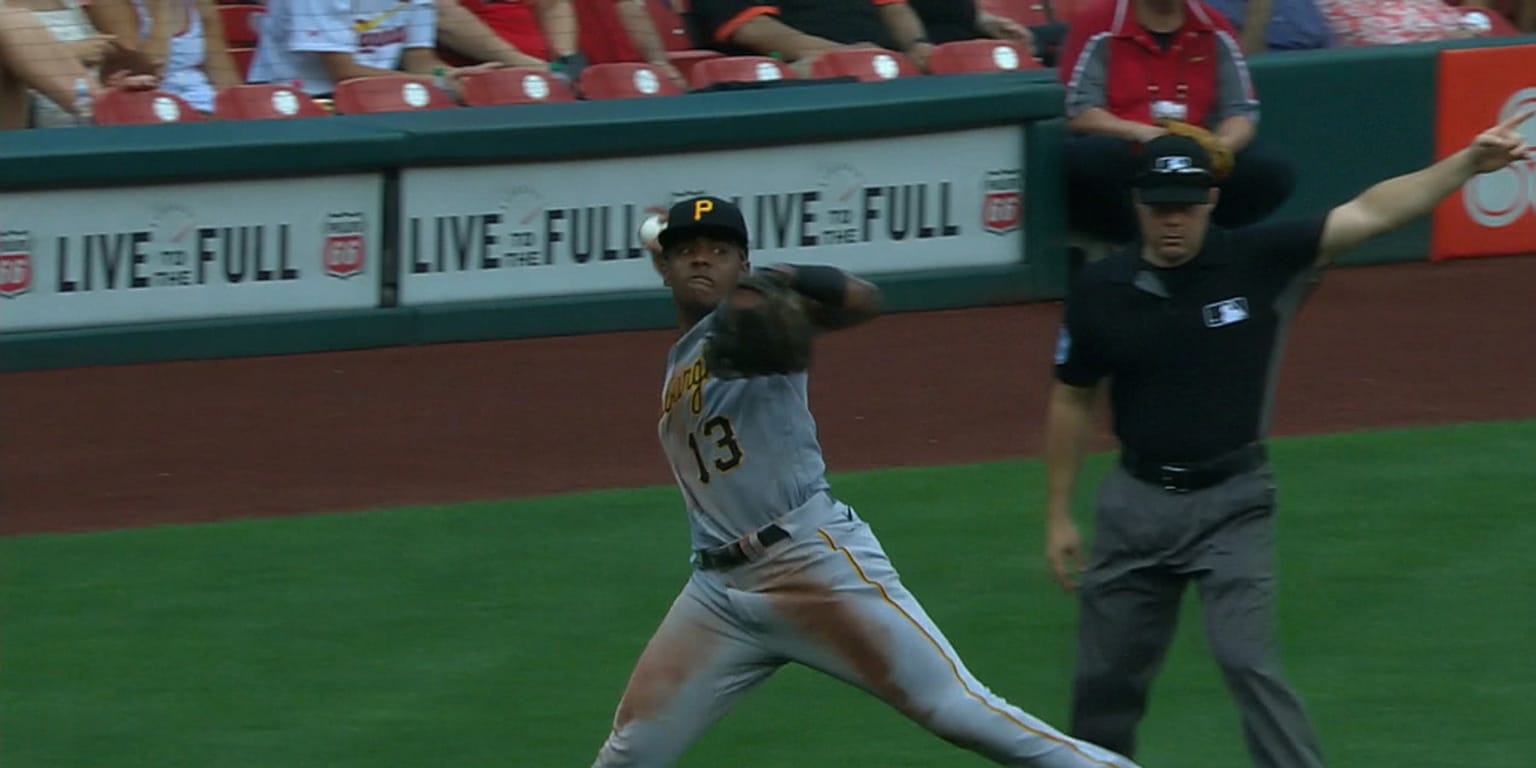
On the field, Hayes exhibits exceptional glove work that morphs seemingly routine grounders into spectacular plays. His soft hands and quick release optimize outfield throws, cutting down baserunners with surgical precision. Beyond glovework, Hayes’s acumen in reading spin, ball hops, and bat angles allows him to react to unexpected deflections. This anticipatory dimension contributes substantially to the “gravity” that his defense commands—shaping the ball’s path and the opponent’s strategic calculus.
Psychological Dimensions of Defensive Influence
Defense in baseball is often evaluated through metrics and highlight reels, yet the psychological impact of a player like Hayes cannot be quantified easily. Opponents internalize his presence; hitters subconsciously alter their swings or approach based on Hayes’s positioning, while base runners think twice before stretching singles into doubles or attempting daring steals.
This mental tug is part of what creates an aura around Hayes—one that induces hesitation and recalibration. In high-stakes moments, such psychological pressure can fracture timing and decision-making on the opposing team. Hayes’s defensive gravity thereby acts as a catalyst, breaking down offensive momentum in imperceptible but potent ways.
Analytics and the Evolution of Defensive Mastery
Modern baseball has embraced an analytical renaissance, and Hayes’s defensive impact is underscored by advanced metrics such as Defensive Runs Saved (DRS) and Ultimate Zone Rating (UZR). These numbers reveal not just his frequency of making plays but his capacity to generate outs that other fielders would not. His positioning optimized through radar data and rotational analysis exemplifies how scouting and technology converge to elevate fielding to an art form.
The synthesis of instinct and data-driven preparation enhances Hayes’s ability to impose defensive gravity. His continuous refinement, informed by film study and quantifiable insights, places him at the vanguard of baseball’s evolution—where athleticism converges with information to redefine what defense can accomplish.
Historical Context: Infield Defense Transcendence
Throughout MLB history, certain defensive luminaries have commanded their corners and middle infield with an impact that reshaped games and legacies alike. From Brooks Robinson’s glove wizardry to Ozzie Smith’s unparalleled range, the tradition of transcendent defense forms a lineage to which Ke’Bryan Hayes now belongs.
His defensive gravity echoes these legends but introduces a new paradigm—melding old-school feel with 21st-century precision. It’s a reminder of baseball’s enduring duality: the game is both timeless and constantly evolving. Hayes’s plays are not merely glimpses of brilliance but threads in the tapestry connecting baseball’s storied past with its dynamic present.
The Broader Implications for Team Dynamics and Strategy
Defensive gravity extends beyond individual accolades. For his team, Hayes’s presence reconfigures defensive alignments and pitch sequences. Pitchers trust his reliability, enabling them to attack hitters more aggressively with confidence that balls hit their way will often be extinguished. Coaches can shade defensive shifts differently, knowing Hayes’s range covers gaps others might not.
Additionally, his defense catalyzes double plays and minimizes extended innings, which preserves bullpen resources and contributes indirectly to run prevention. The cumulative effect alters game flow, ultimately supporting offensive pursuits by minimizing damage and augmenting team morale.
Aesthetic and Emotional Resonance in Defensive Plays
Beyond utility and statistics, Hayes’s defensive plays evoke an aesthetic thrill. Fans and analysts alike are drawn to the balletic precision of a perfectly timed scoop or the taut tension of a rapid-fire throw to first base. These moments encapsulate the poetry of baseball fielding—where split-second timing intersects with practiced mechanics to produce artful outcomes.
The magnetic spectacle of Hayes executing stellar defensive plays inspires admiration and fascination. It reminds audiences that while the bat often seizes the spotlight, defense represents the silent, indispensable foundation upon which championship aspirations are built.
Conclusion: The Enduring Magnetism of Defensive Excellence
Ke’Bryan Hayes exemplifies how defensive gravity can dominate baseball narratives and influence the game’s rhythm. His unique blend of athleticism, intellect, and preparation transmutes the ordinary into something magnetic—a force that commands respect, recalibrates opposition strategies, and elevates the infield’s strategic significance. Understanding this gravitational pull reveals why fans and players alike are captivated not just by the outcomes of his plays, but by the profound undercurrents of skill and anticipation that define them.