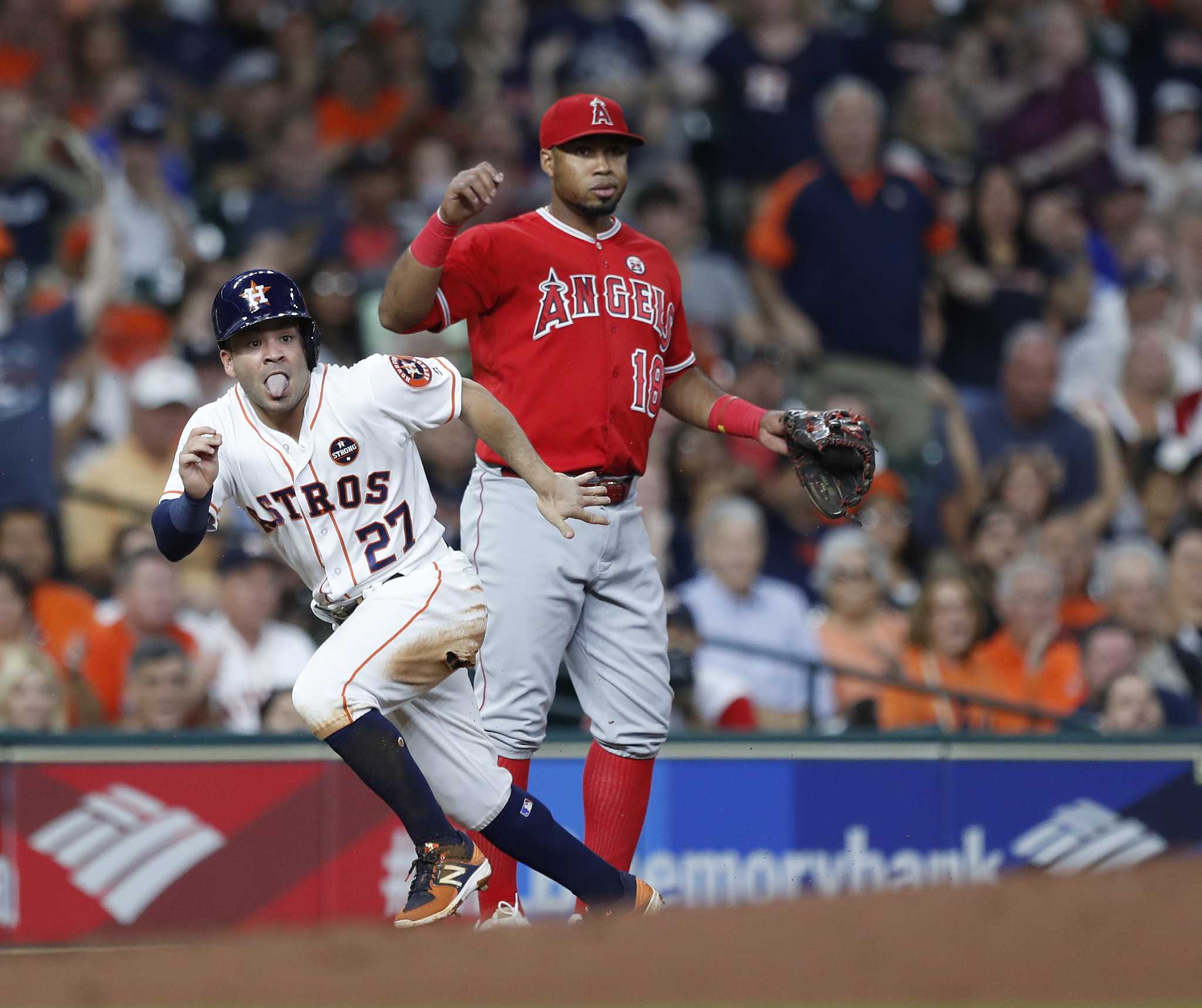
The Houston Astros’ Jose Altuve, once the crown jewel of baseball’s defensive second basemen, now finds himself at the precipice of a troubling decline. The numbers don’t just whisper caution—they scream it. Where once he was a whirlwind of infield dynamism, a blur of stolen bases and razor-sharp double-play turns, Altuve now resembles a shadow of his former self. The question isn’t whether his bat still hums with MVP-caliber thunder; it’s whether his glove can still justify his place in the lineup. Can a player who revolutionized the art of small-ball defense in the modern era reclaim his defensive prowess, or has the ravages of time and wear etched an irreversible path?
The Golden Era: When Altuve Was the Defensive Enigma of the Majors
Between 2014 and 2017, Jose Altuve wasn’t just good at second base—he was a defensive unicorn. His 15.3 defensive WAR (Fangraphs) during that stretch wasn’t just elite; it was otherworldly. Opponents dared not test his arm, knowing a throw from the 5’6” dynamo would arrive at first base with the precision of a sniper’s bullet. His range factor (5.35 in 2015) was the stuff of highlight reels, as he sprawled across the infield like a man possessed, turning would-be hits into outs with balletic grace.
Altuve’s defensive brilliance wasn’t merely statistical—it was psychological. His ability to read the game at lightning speed turned routine grounders into double plays and shallow flies into caught-stealing masterpieces. The Astros’ infield shifted like a well-oiled machine around him, and pitchers thrived in the knowledge that their right side was fortified by a human vacuum cleaner. For a brief, glorious epoch, Altuve wasn’t just a second baseman; he was the defensive backbone of a franchise on the rise.
The Creeping Erosion: When the Numbers Began to Betray
Fast forward to 2023, and the narrative has curdled. Altuve’s defensive metrics have plummeted like a stone dropped from the upper deck. His -5 defensive runs saved (DRS) in 2022 was a far cry from the +15 he posted in 2016. His range factor? A pedestrian 4.12 in 2023, a far cry from the 5.35 that once made him the gold standard. The once-reliable double-play pivot has become a liability, with errors creeping into his game like uninvited guests at a party.
What happened? Theories abound. Some point to the natural wear of a decade in the majors, where the relentless grind of 162 games a year grinds down even the most gifted athletes. Others whisper of lingering injuries—knee soreness, back stiffness—that sap the explosiveness from his once-fearsome first step. Then there’s the psychological toll: the pressure of being the face of a franchise, the weight of expectations, the relentless scrutiny of a fanbase that once revered him as a defensive deity. The erosion isn’t just physical; it’s existential.
The Arm That Once Terrified Now Wavers
Perhaps the most glaring symptom of Altuve’s defensive decline is his arm. Once the stuff of legend—a cannon disguised as a human being—his throws now lack the zip that turned routine plays into highlights. In 2017, Altuve’s average home-to-first time was a blistering 4.2 seconds. By 2023, that number had ballooned to 4.6 seconds, a lifetime in a game where milliseconds dictate the difference between out and safe.
The decline in his arm strength is even more pronounced. In 2015, Altuve threw out 32% of attempted base stealers. By 2023, that number had dwindled to a paltry 18%. The fear that once gripped opposing baserunners has evaporated, replaced by a newfound confidence that they can take an extra step without consequence. The arm that once made him a defensive terror now flickers like a dying ember.
The Shift in Perception: From Defensive Savior to Liability
The Astros’ infield shift, once a strategic marvel, now feels like a relic of a bygone era. Altuve’s diminished range has forced Houston to adjust its defensive alignments, leaving gaping holes where once there was impenetrable coverage. The Astros’ pitching staff, once buoyed by Altuve’s defensive prowess, now finds itself exposed to extra-base hits and unearned runs. The ripple effects are undeniable: more runners on base, more late-inning rallies, more games slipping through their fingers.
Fans, too, have taken notice. The once-unconditional love for Altuve has curdled into a mix of nostalgia and frustration. The highlight reels of his defensive gems are now interspersed with clips of misplays, errors, and moments of hesitation. The narrative has shifted from “Jose Altuve, defensive magician” to “Jose Altuve, the man who used to be.” The decline isn’t just statistical; it’s emotional.
Can Altuve Reverse the Tide?
The million-dollar question: Is there a path back for Jose Altuve? History offers glimpses of hope. Players like Robinson Canó and Chase Utley rebounded from defensive slumps by refining their footwork, adjusting their positioning, and embracing advanced metrics to optimize their range. But Altuve isn’t just any player—he’s a franchise icon, a man whose legacy is inextricably tied to his defensive brilliance.
For Altuve to reclaim his defensive form, he’ll need to confront the physical and mental hurdles head-on. A rigorous offseason regimen focused on agility, core strength, and explosive first steps could restore some of his lost quickness. Video analysis, perhaps with the help of modern tracking technology, could fine-tune his reads and reactions. And perhaps most importantly, he’ll need to silence the noise—the expectations, the scrutiny, the weight of the past—and rediscover the joy that once made him a defensive virtuoso.
The challenge is monumental, but not insurmountable. The question isn’t whether Altuve can turn back the clock; it’s whether he’ll have the time, the will, and the opportunity to do so. The Astros’ future may hinge on the answer.
The Broader Implications: What Altuve’s Decline Says About the Game
Altuve’s defensive decline isn’t just a personal tragedy—it’s a microcosm of the modern game. Baseball, once a sport where defensive brilliance was celebrated as highly as offensive firepower, now finds itself in an era where the latter often eclipses the former. The rise of the launch angle, the obsession with exit velocity, and the proliferation of defensive shifts have reshaped the landscape. Players like Altuve, who thrived in the interstitial spaces of the game, are becoming relics.
Yet, in Altuve’s struggle, there’s a cautionary tale. The game’s evolution has left little room for players who don’t fit the new mold—those who rely on instinct, guile, and defensive acumen rather than sheer power. The Astros’ infield, once a bastion of defensive innovation, now finds itself scrambling to adapt. The lesson? Even the game’s brightest stars are not immune to the tides of change.
For fans, the decline of Jose Altuve is a reminder of the fleeting nature of athletic greatness. The numbers don’t lie, but neither do the memories. The highlight reels of his defensive gems will endure, even as his range continues to wane. The game moves on, but the ghosts of its past linger—haunting, beautiful, and undeniably bittersweet.