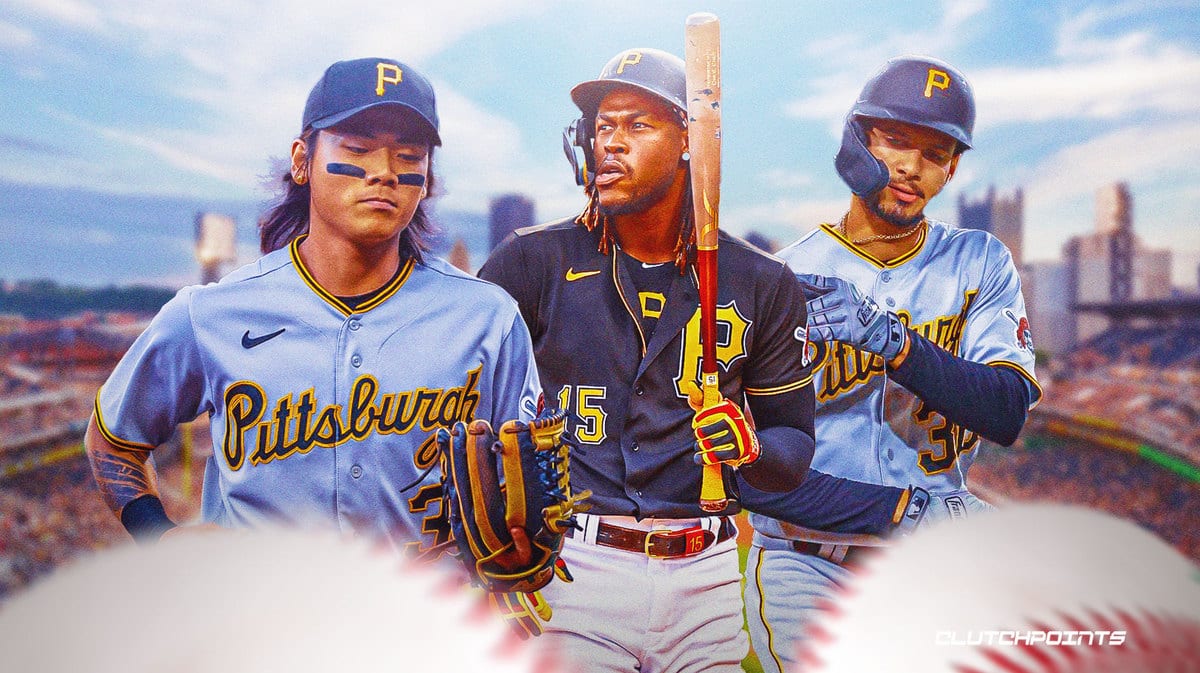
In the ever-evolving landscape of Major League Baseball, players who embody a rare blend of raw power and unorthodox mechanics often provoke spirited discussions among fans, analysts, and coaches alike. Oneil Cruz, with his remarkable stature and prodigious power potential, has ignited a fresh debate that teeters between awe and apprehension. Is Cruz the next archetype of a power hitter destined to reshape offensive expectations, or does his swing mechanics harbor an inherent risk that might lead to a surplus of pop-ups rather than towering home runs? This conundrum invites a meticulous exploration into the nuances of his approach at the plate and the broader implications for his development and impact in MLB.
The Raw Physicality Behind Oneil Cruz’s Power Potential
Standing at an imposing 6-foot-7, Oneil Cruz possesses one of the most extraordinary physical frames in professional baseball today. This towering presence alone conjures expectations of prodigious power—akin to legendary sluggers who utilized their lanky builds to generate immense torque and bat speed. Cruz’s physique allows him to leverage a greater radius of rotation, contributing to unparalleled swing velocity. The kinetic chain—beginning at his legs and flowing through his core and arms—emanates energy that, when harnessed effectively, can launch baseballs with jaw-dropping distances.
Yet, sheer size does not unequivocally guarantee consistent power output. Elite mechanics and timing remain paramount. Cruz’s physical gifts certainly provide a formidable foundation, but the translation of potential power into consistent production depends on refining his swing mechanics to mitigate inefficiencies and enhance contact quality.
Deciphering the Swing Mechanics: Strengths and Vulnerabilities
Oneil Cruz’s swing, with its sweeping, elongated arc, immediately captures attention. There is an undeniable elegance mingled with a wild unpredictability—a dichotomy reflective of his unconventional approach. This wide swing path allows maximum bat speed and plate coverage, but it also introduces variability that can precipitate numerous mishits.
The challenge is that this expansive motion tends to produce a higher launch angle on contact. While in theory, elevated launch angles can elevate a hitter’s power numbers, they also increase the likelihood of pop-ups—soft fly balls that offer pitchers easy outs and exacerbate batting average woes. Analysts have noted that Cruz experiences a disproportionate number of infield flies and shallow pop-ups, highlighting a tension between raw power and optimal contact quality.
Furthermore, his long swing may sometimes betray him during off-speed pitches or in situations that require rapid adjustments. This mechanical idiosyncrasy raises the pressing question: does the pursuit of raw power compromise his ability to shorten his swing in critical junctures?
Plate Discipline and Approach: Navigating the Fine Line
Equally potent as mechanics in determining a hitter’s success is his approach at the plate. Cruz exhibits the confidence of a natural slugger, often exhibiting a fearless demeanor toward pitches on the inner half. However, his aggressive style can occasionally manifest as impatience, leading to swings at borderline strikes or pitches outside the zone. This disposition, paired with his swing style, increases the frequency of weakly hit balls, including pop-ups.
Developing a more disciplined plate approach that balances aggression with selectivity could be pivotal in harnessing his formidable gifts. Adjustments such as recognizing pitch types earlier, enhancing situational awareness, and tailoring his launch angle could contribute to not only more homers but also improved contact consistency.
Statistical Patterns: Pop-ups or Power Surges? Examining the Numbers
A dive into Cruz’s statistical output reveals a paradoxical blend of immense slugging ability intertwined with a high rate of poorly struck balls. His strikeout rate, while not excessively alarming, mirrors the struggles of many power hitters who challenge conventional contact-hitting norms for moments of brilliance. Yet, the notable rate of pop-ups and infield flies suggests a pattern that could hamper his long-term offensive contributions without key adjustments.
Advanced metrics such as Barrel percentage and Hard-hit rates highlight his ability to square up the ball with authority, promising potential for massive impact. Conversely, metrics tracking quality of contact illustrate inconsistencies—moments of sublime power juxtaposed with pronounced vulnerability to weak contact and pop-ups. This duality encapsulates the classical dilemma faced by burgeoning power hitters in today’s analytically driven baseball world.
Comparative Profiles: Lessons from Historical and Contemporary Sluggers
Oneil Cruz’s profile invites comparisons to both historical and current MLB sluggers whose striking power was paired with similar mechanical quirks and contact dilemmas. Players like Giancarlo Stanton and Aaron Judge come to mind—titans who harness explosive power but have had to reconcile swing adjustments to curtail excessive fly-ball outs and extend their careers effectively.
On the flip side, legends with more compact swings and higher contact rates, such as Tony Gwynn or Wade Boggs, exemplify the counterpoint—players who sacrificed some power in favor of consistent line drives and higher batting averages. Cruz’s challenge lies in negotiating these extremes and forging a hybrid approach that capitalizes on his power without succumbing to alarming rates of pop-ups.
Coaching Interventions and Future Outlook
Teams investing in players of Cruz’s magnitude often deploy comprehensive coaching strategies to address the intricacies of their swings. Modern technology, including high-speed video, motion capture, and launch monitor data, facilitate nuanced adjustments that tailor each hitter’s mechanics to optimize outcomes. For Cruz, incremental tweaks aimed at slightly reducing his swing path length and enhancing pitch recognition could drastically reduce pop-ups.
Moreover, building mental acuity to distinguish pitch sequences and adapting during at-bats will be essential components in his evolution. The conundrum he presents is not merely one of physical mechanics but a broader developmental challenge blending physicality, analytics, and psychology.
Conclusion: Power Vs. Pop-Up—A Dual-Edged Sword
The Oneil Cruz conundrum epitomizes the contemporary baseball paradox: the tantalizing allure of raw power frequently coexists with the inherent risk of diminished contact quality. His extraordinary physical tools set the stage for potentially historic impact, but his swing mechanics and plate approach inject an element of unpredictability that demands careful refinement.
Whether Cruz will transcend this challenge and emerge as a dominant power-hitting force or whether he must moderate his style to limit costly pop-ups remains a riveting storyline. What is indisputable, however, is that his journey encapsulates the delicate balance between strength and precision, raw talent, and refined execution—a narrative that continues to captivate and inspire the baseball world.