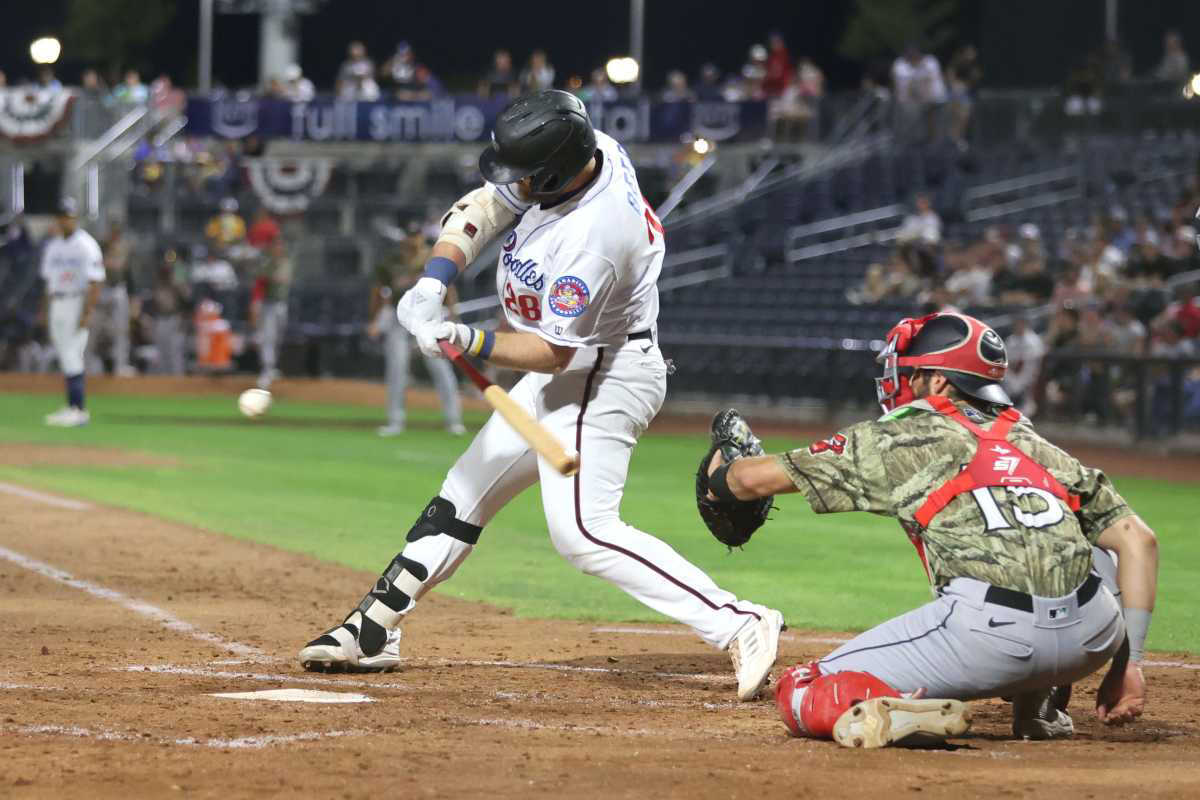
The signing of Seth Beer by the Philadelphia Phillies to a minor league deal may appear modest at first glance—just another addition to a vast roster of hopefuls vying for a spot in the major leagues. Yet, this transaction is imbued with significance that transcends the typical minor league signing. Beer’s journey, background, and potential trajectory intertwine to present a narrative laden with promise, untapped potential, and a shift in the conventional perspective on player development within the Phillies organization. Exploring this move offers not only insight into Beer’s career but also a reflection of evolving strategies in baseball talent cultivation and opportunity creation.
A Prodigy Reclaimed: Understanding Seth Beer’s Baseball Genesis
Seth Beer entered professional baseball under the spotlight of considerable expectation. A former top prospect and a standout at Clemson University, Beer was lauded for his potent bat and refined hitting mechanics. His collegiate tenure was marked by accolades and an offensive prowess that made him a coveted asset among scouts and teams. The transition into the professional ranks, however, has been a crucible testing his adaptability and resilience. The minor league deal with the Phillies signifies a rekindling of that early promise, an opportunity to convert collegiate brilliance into major league contributions. This phase is critical—not merely a foothold in professional baseball but a potential springboard back into the limelight.
The Minor League Contract: More Than Just a Number
In professional sports, particularly baseball, minor league agreements often carry an understated weight. They are the canvas upon which players paint their comeback stories, recalibrate their skills, and navigate organizational hierarchies. Beer’s minor league contract is emblematic of this dynamic. While it lacks the fanfare of a major league signing, it bestows upon him both a sanctuary and a proving ground—a platform to demonstrate evolution, consistency, and readiness. For the Phillies, it is a low-risk gambit invested in a player who may well surpass initial expectations and fill organizational gaps with his left-handed bat. The contract’s significance transcends the transactional; it is a statement of continued belief and strategic patience.
Organizational Fit: How Beer Aligns with Phillies Philosophy
The Phillies have exhibited a growing inclination toward cultivating versatile hitters who combine patience with power—a profile that aligns harmoniously with Beer’s skill set. Beer’s patient approach at the plate, coupled with his ability to drive the ball, dovetails with the current analytical and strategic ethos of the Phillies’ front office. His Clemson background suggests a strong baseball intellect and work ethic, attributes prized in Philadelphia’s developmental framework. The signing indicates a deliberate intention to harness Beer’s latent strengths, integrating them amidst an evolving roster that prioritizes adaptability and depth. This strategic fit imparts an additional layer of promise to Beer’s stint in the Phillies’ system.
Challenges and Opportunities: Navigating the Road Ahead
Every minor league journey is punctuated by hurdles—consistency, health, mental fortitude, and seizing playing time amid fierce competition. For Beer, these challenges are amplified by the expectations tethered to his past status as a top prospect. Nonetheless, these obstacles concurrently serve as the crucibles for growth. The Phillies’ multifaceted minor league system offers Beer diverse environments to hone his craft, face varied pitching arsenals, and cultivate his defensive versatility. With renowned coaching and access to cutting-edge sports science, Beer’s pathway to revitalization is more navigable than ever. The onus remains on him to translate these opportunities into tangible progression, but the architecture for success is firmly in place.
Potential Impact on Phillies’ Roster Construction
Beer’s presence within the organization could carry ripple effects beyond his individual development. As a left-handed hitter with proven offensive pedigree, he adds dimension to the Phillies’ bench and minor league depth. This might influence roster decisions, create competitive pressure on incumbent players, and spark internal recalibrations in positional assignments. Furthermore, should Beer demonstrate a resurgence, the Phillies gain a valuable midseason call-up option that blends youth and experience. His signing subtly enhances the strategic flexibility of the Phillies, reinforcing an organizational philosophy that prizes depth and readiness over headline-grabbing acquisitions alone.
Revitalizing a Career: Beyond Statistics and Expectations
For Seth Beer, this minor league deal embodies more than a professional opportunity; it symbolizes a narrative of perseverance and renewal. His journey underscores a broader theme prevalent in baseball—the fluidity of potential and the enduring quest for relevance amidst an unforgiving sport. Regardless of immediate statistical outputs, this period allows Beer to recalibrate his approach, refine his mental game, and solidify his identity as a professional hitter. It is in such crucibles that long-term careers are forged. The narrative of Seth Beer with the Phillies thus invites a contemplative appreciation of baseball’s unpredictable pathways and the human spirit’s capacity to adapt and strive.
The Broader Implications: A Modern Minor League Signing
This signing also serves as a microcosm for evolving trends in contemporary baseball, where the boundaries between major and minor league talent acquisition blur. Teams increasingly view minor league deals not as mere placeholders but as deliberate developmental investments with potential high returns. Beer’s contract exemplifies how organizations remain vigilant for undervalued assets and are willing to nurture them patiently. It heralds a shift in strategic thinking—powering rebuilds and contending via meticulous talent cultivation rather than ephemeral star signings alone. Thus, Beer’s journey may well exemplify the new paradigm of player renaissance in baseball’s intricate ecosystem.
In summation, Seth Beer’s minor league deal with the Philadelphia Phillies is a multifaceted development ripe with nuanced implications. It promises a recalibration of how careers can evolve after initial setbacks, challenges the conventional wisdom around minor league signings, and potentially enriches the Phillies’ organizational depth and flexibility. For Beer, it is an invitation to emerge renewed and assertive, poised to reclaim a promising future in professional baseball.