Imagine stepping into the batter’s box, your hands encased in gloves that feel like a second skin—snug where they should be, flexible where they need to be, and secure enough to grip the bat with unwavering confidence. The difference between a glove that fits like a dream and one that feels like a straitjacket can be the line between a solid hit and a frustrating strikeout. Yet, despite the critical role batting gloves play in performance, most players still rely on guesswork or outdated charts to find their size. What if there was a way to cut through the confusion, to transform the act of choosing gloves from a gamble into a precise science? This isn’t just about avoiding discomfort—it’s about unlocking a new level of precision, control, and comfort at the plate.
The Silent Game-Changer: Why Batting Glove Fit Matters More Than You Think
Batting gloves are often dismissed as mere accessories, but their impact on performance is anything but minor. A poorly fitted glove can introduce micro-slippages, reducing bat control and increasing the risk of blisters or calluses. Conversely, a glove that’s too tight restricts blood flow, numbing your fingers and dulling your sense of touch. The sweet spot lies in a fit that feels like an extension of your hand—tight enough to prevent shifting during the swing, but loose enough to allow natural movement. This delicate balance isn’t just about comfort; it’s about maintaining the tactile feedback that separates a good swing from a great one. The right fit can mean the difference between a ground ball that dribbles weakly and a line drive that pierces the gap.
Consider the mechanics of a swing: your hands are the final link in a kinetic chain that starts in your legs and ends with the crack of the bat. If your gloves interfere with this chain—whether by slipping, bunching, or restricting motion—you’re essentially sabotaging your own power. Studies in sports biomechanics have shown that even a millimeter of excess material in the palm can reduce grip strength by up to 12%. That’s not just a statistic; it’s a tangible loss of control. The right fit ensures that every ounce of force you generate transfers seamlessly from your hands to the bat, maximizing both power and precision.
Decoding the Myths: Why Standard Size Charts Fail Most Players
Walk into any sporting goods store, and you’ll find a size chart that reduces your hand to a single measurement—usually the circumference of your palm. But this one-dimensional approach ignores the nuances of hand shape, finger length, and wrist flexibility. A player with a narrow palm but long fingers might find a “medium” glove too short, while someone with a wide palm and short fingers could struggle with a “large” glove that’s overly bulky in the fingers. The result? A glove that either pinches or flaps, neither of which is ideal.
Worse still, many charts fail to account for the material of the glove. Leather gloves, for instance, stretch over time, while synthetic materials may not. A player who chooses a glove based on a static measurement could end up with a glove that fits perfectly on day one but becomes a vise after a few weeks of use. The solution lies in understanding not just your hand’s dimensions, but how those dimensions interact with the glove’s construction. A glove that’s designed with articulated finger sections, for example, can accommodate a wider range of hand shapes without sacrificing fit.
The Three Critical Measurements You’re Probably Ignoring
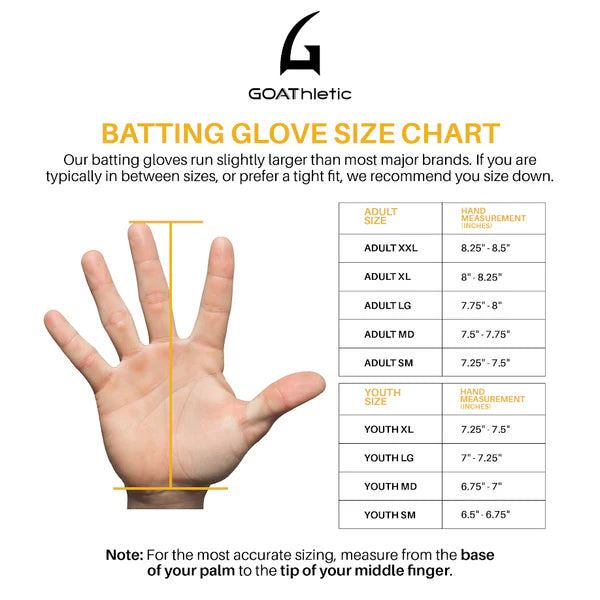
Forget the oversimplified palm circumference. To find a batting glove that truly fits, you need to measure three key dimensions: palm width, finger length, and wrist circumference. Start by using a flexible tape measure to record the widest part of your palm, just below the knuckles. Next, measure from the tip of your middle finger to the base of your palm—this will determine how much room you need in the finger sections. Finally, measure the circumference of your wrist, as this will dictate how snugly the cuff should fit. These measurements might seem tedious, but they’re the difference between a glove that feels like a glove and one that feels like a constraint.
Once you have these numbers, compare them to the manufacturer’s sizing guide—but don’t stop there. Look for gloves that offer adjustable cuffs or stretch panels, as these features can compensate for minor discrepancies in your measurements. For example, a glove with a hook-and-loop cuff can be tightened or loosened to fine-tune the fit, while gloves with pre-curved finger sections may accommodate longer fingers more comfortably. The goal isn’t just to find a glove that fits, but to find one that adapts to your hand’s unique contours.
Material Matters: How Fabric and Construction Dictate Fit
The material of your batting glove isn’t just about durability or breathability—it’s about how the glove conforms to your hand over time. Leather gloves, while luxurious, require a break-in period during which they mold to your hand’s shape. Synthetic gloves, on the other hand, offer consistent fit from day one but may lack the flexibility of their leather counterparts. Hybrid gloves, which combine leather palms with synthetic backs, strike a balance between the two, offering the best of both worlds.
Pay attention to the glove’s construction as well. Gloves with segmented finger sections allow for greater dexterity, while those with reinforced palms provide extra protection without adding bulk. The stitching pattern can also impact fit—overlock stitching, for example, creates a tighter seal that reduces slippage, while flatlock stitching offers a softer, more flexible feel. The right combination of material and construction can transform a glove from a functional accessory into a performance-enhancing tool.
The Cuff Conundrum: Why a Snug Wrist Seal Is Non-Negotiable
A glove’s cuff isn’t just a decorative flourish—it’s the first line of defense against shifting during the swing. A cuff that’s too loose will flap with every movement, creating distractions and potential irritation. A cuff that’s too tight can restrict blood flow, leading to numbness or cramping. The ideal cuff strikes a balance: snug enough to stay in place, but not so tight that it cuts off circulation. Look for gloves with adjustable cuffs or elasticized bands that can be customized to your wrist’s shape.
Consider the type of closure as well. Hook-and-loop closures offer quick adjustments, while elasticized cuffs provide a more seamless fit. Some gloves even feature thumb loops or wrist straps that can be tightened or loosened on the fly. The key is to find a cuff that stays put without sacrificing comfort, ensuring that your glove moves with you—not against you.
Pro Tips: How to Test a Batting Glove Before Committing
Don’t rely solely on measurements—test the glove in real-world conditions. Flex your fingers to ensure the palm doesn’t bunch up, and make a fist to check for restriction. Swing a bat (or a weighted training bat) to see if the glove shifts or slips. Pay attention to how the glove feels after extended use; if your fingers start to tingle or your palm feels constricted, it’s a sign that the fit isn’t right. Remember, a glove that feels perfect in the store might not hold up after hours of use.
If possible, try on gloves from multiple brands, as sizing can vary widely. Some manufacturers run small, while others cater to players with wider or narrower hands. Don’t be afraid to size up or down if the fit isn’t quite right—your comfort and performance depend on it.
The Long Game: How Fit Affects Glove Longevity
A glove that fits well will last longer than one that’s too tight or too loose. Over time, a poorly fitted glove will stretch unevenly, lose its shape, or develop gaps that compromise protection. Conversely, a glove that’s too tight will wear out faster as the material breaks down under constant tension. The right fit distributes pressure evenly, reducing wear and tear and extending the glove’s lifespan. Think of it as an investment—not just in your performance, but in the longevity of your gear.
To maximize durability, rotate between two pairs of gloves if you play frequently. This gives each glove time to air out and recover its shape, preventing premature stretching or cracking. Store your gloves in a cool, dry place away from direct sunlight, and avoid tossing them into your bag while still damp—moisture is the enemy of leather and can lead to mold or mildew.
Beyond the Basics: Custom and High-Tech Solutions
For players who demand the ultimate in fit and performance, custom gloves offer a tailored solution. Some manufacturers allow you to input your exact measurements and even choose specific materials or stitching patterns to create a glove that’s uniquely yours. High-tech options, such as gloves with moisture-wicking linings or antimicrobial treatments, can also enhance comfort and hygiene, especially during long games or tournaments.
While custom gloves come with a higher price tag, the benefits—unparalleled fit, durability, and performance—can make them a worthwhile investment for serious players. If you’re willing to go the extra mile, consider consulting with a sports equipment specialist who can analyze your hand’s biomechanics and recommend the best possible fit.
The Final Swing: Making the Right Choice
Finding the perfect batting glove isn’t just about avoiding discomfort—it’s about optimizing every aspect of your swing. From the way the glove conforms to your hand to how it moves with your fingers, every detail matters. By taking the time to measure your hand, understand materials, and test fit in real-world conditions, you can transform a simple accessory into a game-changing tool. The right glove won’t just protect your hands; it will elevate your performance, giving you the confidence to step into the box and swing with precision.