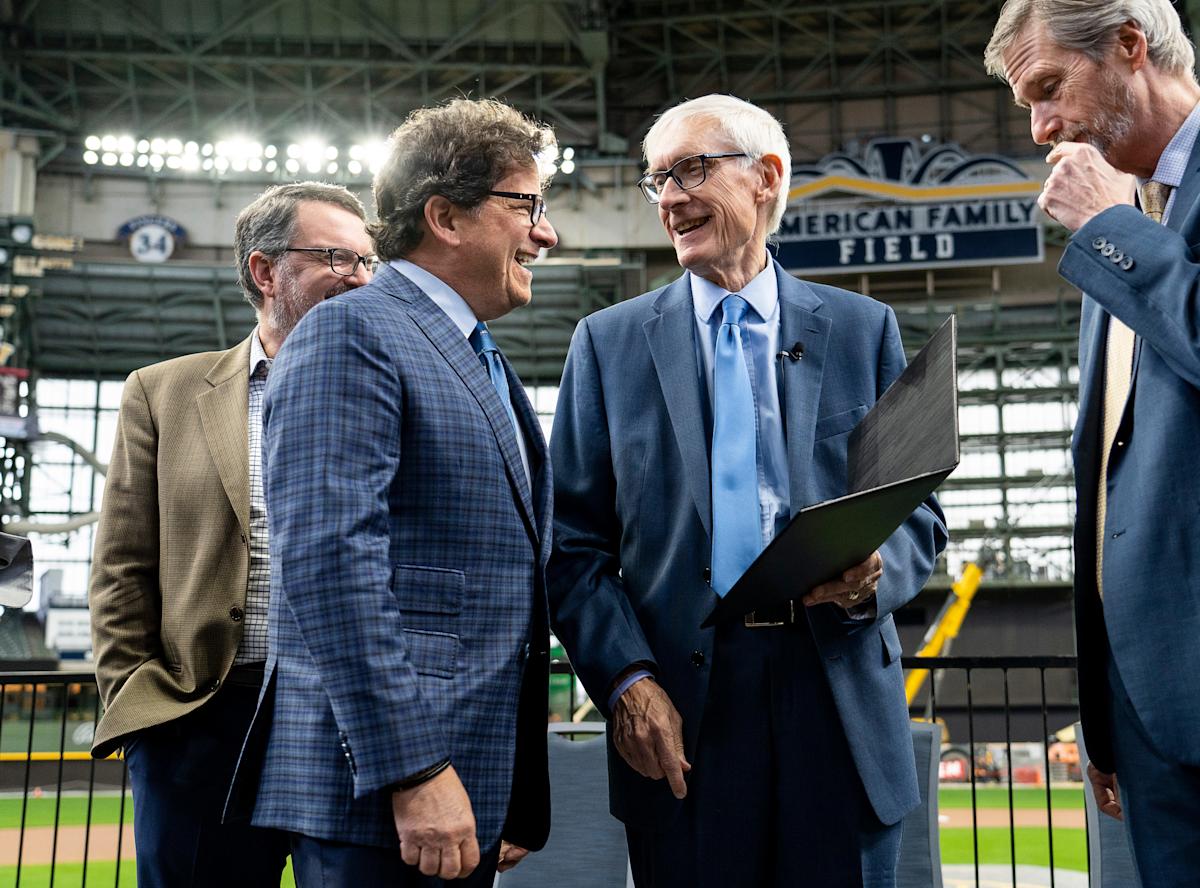
Milwaukee Brewers owner Mark Attanasio recently reignited a perennial debate in Major League Baseball, advocating for a salary cap to recalibrate the sport’s economic landscape. For a league where the financial disparities can often feel like a canyon rather than a mere creek, Attanasio’s call isn’t just a whisper in the wind; it’s a direct challenge to the very foundation of how competitive balance is currently (or isn’t) achieved. As a fan who’s witnessed the Yankees operate at the pinnacle of the financial hierarchy, the intricacies of this discussion are particularly resonant, forcing a critical look at what “leveling the playing field” truly entails in a sport brimming with historical giants and resilient underdogs.
1. The Echo from the Heart of the Midwest
Attanasio’s recent declaration isn’t just a passing comment; it’s a persistent, almost annual, plea echoing from a smaller market. Like a lone lighthouse keeper signaling through a thick fog, he illuminates the perceived inequities, making it clear that for teams operating with comparatively modest revenue streams, the current system feels less like a fair contest and more like an uphill battle against a prevailing economic current.
2. The Titan’s Shadow: A Game of Unequal Stature
The MLB economic model, without a hard cap, often casts a long, imposing shadow. It’s akin to a fleet of luxury yachts and nimble fishing boats all navigating the same stormy seas. While the yachts can weather the fiercest storms and charter the most direct courses, the fishing boats, despite their resilience and skilled crews, are constantly at the mercy of the prevailing winds and tides, struggling to keep pace with their larger counterparts.
3. The Allure of the Equilibrium: A Utopian Vision?
A salary cap, in theory, promises a baseball utopia where competitive balance is the guiding star. It’s envisioned as a great equalizer, much like a uniform starting line for all participants in a marathon, regardless of their pre-race training budget. This vision suggests a future where every club, from the Bronx Bombers to the Brewers, enters each season with a more equitable chance to contend, fostering sustained fan engagement across the league.
4. The Fiscal Gravity Well: Retaining Homegrown Talent
For small-market teams, the absence of a salary cap often creates a fiscal gravity well. They invest heavily in drafting and developing young stars, only to watch them, once established, orbit away towards richer constellations in free agency. It’s the constant heartbreak of cultivating a prized orchard, only for the ripest fruit to be harvested by those with deeper pockets, leaving the original growers to start anew.
5. The “Luxury Tax” Leash: A Paper Tiger?
The current luxury tax system, officially known as the Competitive Balance Tax (CBT), was intended to act as a deterrent to excessive spending. However, many small-market owners, and indeed some large-market critics, view it as little more than a speed bump for the wealthiest franchises. It’s like a toll booth on a superhighway: an inconvenience, perhaps, but certainly not a barrier for those with ample funds, allowing them to continue their high-speed pursuit of talent.
6. The High-Stakes Auction: Driving Up the Price Tag
Without a cap, the player market operates as a perpetual high-stakes auction, where the final bid often outstrips the value proposition for many teams. This dynamic can feel like being at a rare art auction where masterpieces are being sold, but only a select few possess the limitless bidding paddles, inevitably driving prices beyond the reach of most, irrespective of the art’s intrinsic value to their “collection.”
7. The Player’s Golden Cage: Freedom vs. Security
From the players’ perspective, a salary cap presents a complex trade-off. While it might promise greater competitive balance and potentially more contenders, it could also act as a ceiling on their earning potential, turning the open market into a “golden cage.” The freedom to maximize earnings in an unfettered market, a cornerstone of union negotiations, would be significantly altered, potentially leading to a reshuffling of their professional aspirations.
8. The Fan’s Empathy: Beyond the Pennant Race
For fans outside of the traditional powerhouses, Attanasio’s argument resonates deeply. They long for a baseball landscape where their team isn’t just a stepping stone for future stars heading to brighter lights, but a perennial contender capable of building dynasties. It’s the hope of seeing their local heroes clad in the home uniform for a career, rather than just a fleeting cameo, fostering a deeper, more enduring connection.
9. The Innovation Dividend: Big Market Contributions
A counterpoint, often voiced by larger market clubs, is that their significant investments not only field star-studded teams but also drive innovation, global expansion, and larger revenue streams for the entire league. They see themselves as the engine of the baseball economy, much like the lead locomotive pulling an entire train, whose substantial power generates momentum that benefits all the cars trailing behind.
10. The Perennial Rebuild Cycle: A Sisyphean Task
For small-market teams, the absence of a cap often necessitates a cyclical, almost Sisyphean task of rebuilding. Each time they manage to push their competitive boulder nearly to the top of the hill, their best players price themselves out or seek greener pastures, forcing them to watch the boulder roll back down, destined to start the arduous climb all over again.
11. The Draft as a Double-Edged Sword: A Temporary Advantage
While the amateur draft is designed to distribute talent evenly, providing smaller markets with high picks, its effectiveness is often blunted by free agency. It’s like being handed the best seeds for a garden, but without the means to build a sturdy fence around it; the best crops are eventually available for purchase by anyone with the right currency, regardless of who sowed them.
12. The Echoes from Other Arenas: Lessons from the NBA and NHL
Other major sports leagues, such as the NBA and NHL, operate under stringent salary cap systems. These leagues often present themselves as models of competitive balance, where a wider array of teams regularly contend for championships. It’s like observing different species in varying ecosystems; some thrive under regulated conditions, while others flourish in an untamed wilderness, each with its unique allure and challenges.
13. The Market’s Unseen Hand: Guiding Star or Merciless Judge?
In a cap-free environment, the “unseen hand” of the free market becomes a merciless judge for many. While it theoretically rewards talent and generates astronomical salaries for top players, it also inherently favors those with the deepest pockets. It’s a game of economic survival where the strongest swimmers can always reach the distant shore, leaving many to tread water in the shallows.
14. The Blueprint for Sustainability: A Long-Term Vision
Attanasio’s advocacy for a cap isn’t just about winning a single championship; it’s about establishing a blueprint for long-term sustainability and consistent competitiveness for all 30 franchises. He envisions a league where financial disparities don’t automatically predetermine the contenders, allowing every team, regardless of market size, to write their own enduring chapter in baseball history.