In the high-stakes theater of October baseball, every managerial decision can feel like a calculated roll of the dice, a strategic maneuver etched into the very fabric of a championship chase. The call for A.J. Burnett to take the mound for Game 5 of the World Series was precisely one such moment—a declaration from manager Joe Girardi that resonated with both conviction and a whisper of raw, volatile potential. It was a choice that wasn’t just about statistics or past performances; it was about the psychological landscape of a pivotal game, the trust in a pitcher’s often-unpredictable arm, and the unique brand of Bronx baseball that thrives on both power and grit.
1. The Manager’s Gambit: A Trust Placed
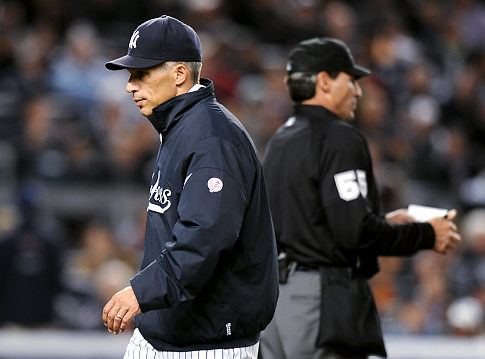
Joe Girardi’s decision to hand the ball to A.J. Burnett for the crucial Game 5 was a testament to a deep-seated trust, a managerial gambit played on the grandest stage. It wasn’t merely a rotation slot being filled; it was an act of faith in a pitcher known for both his dazzling brilliance and his moments of frustrating inconsistency. Girardi, a stoic architect of the Yankees’ destiny, saw beyond the surface-level numbers, choosing to bet on the pitcher’s capacity to rise to the occasion, especially after his masterful performance in Game 2.
2. Burnett’s Dual Nature: The Serpent and the Eagle
A.J. Burnett was a pitcher of fascinating dichotomy, a true Jekyll and Hyde on the mound. One night, he was a soaring eagle, dominating hitters with an unhittable curveball and a blistering fastball. The next, he could be a coiled serpent, striking out batters but also yielding walks and critical hits, unraveling under pressure. Girardi’s call was an acknowledgement of this dual nature, a calculated risk that the eagle would take flight when the stakes were highest, knowing the serpent’s shadow always loomed.
3. The Echo of Game 2: Blueprint for Brilliance
Burnett’s Game 2 start was a clinic, a masterful performance that saw him carve through the opposing lineup with an almost surgical precision. That outing served as a potent memory, a recent blueprint for what he was capable of delivering. The decision to start him in Game 5 wasn’t just about his potential; it was about recapturing that specific, dominant rhythm and channeling the confidence from his prior success, hoping to replicate the magic on a new canvas.
4. Crucible of October: The World Series Cauldron
The World Series is not just a series of baseball games; it’s a crucible, a relentless test of will, skill, and nerve. Every pitch, every swing, every decision is magnified under the blinding glare of history and expectation. For Burnett, pitching Game 5 meant stepping into this cauldron, feeling the immense pressure of a city’s hopes, and navigating the emotional tempest of a championship series where momentum can shift with a single swing of the bat.
5. A.J.’s Arsenal: A Symphony of Pitches
Burnett’s pitching repertoire was a symphony of pitches, a formidable arsenal that, when tuned correctly, was nearly unhittable. His devastating curveball, often called “Uncle Charlie,” dropped like a stone, while his four-seam fastball could touch the high 90s, complemented by a sharp cutter and changeup. The hope was that this Game 5 would see all the instruments of his craft playing in perfect harmony, a unique blend of velocity and break that could overwhelm the opposition.
6. The Phantoms in the Outfield: Silencing the Doubts
Even for a veteran like Burnett, the mental game in October is paramount. The “phantoms in the outfield” – the past struggles, the moments of erratic command, the whispers of inconsistency – are always present. Girardi’s trust was a direct challenge to these mental adversaries, an encouragement for Burnett to pitch with unshakeable confidence, to silence the internal doubts and focus solely on the task at hand, asserting his dominance.
7. Bronx Bombers’ Backing: Offensive Cushion
The Yankees offense, a veritable collection of Bronx Bombers, was a formidable force, capable of erupting at any moment. The knowledge that a powerful lineup stood behind him, ready to provide run support, offered a psychological cushion. This offensive might allowed Burnett to pitch with less pressure, knowing that an occasional hiccup could be absorbed, freeing him to attack hitters with his full, aggressive repertoire.
8. The Chessboard Strategy: Catcher’s Guiding Hand
The dynamic between pitcher and catcher in a high-stakes game is a chessboard strategy, a silent conversation played out with signs and signals. Jorge Posada, the veteran Yankee catcher, was Burnett’s trusted battery mate, a guiding hand in the complex dance of pitch selection and sequencing. Their synergy would be critical, Posada’s experience and deep understanding of Burnett’s tendencies serving as an anchor in the storm of Game 5.
9. A Stadium’s Roar: Home-Field Advantage
Playing Game 5 at home, in the iconic Yankee Stadium, provided an undeniable psychological edge. The roar of the Yankee faithful, a tidal wave of sound and expectation, served as both a motivating force for Burnett and a daunting obstacle for the opposing team. This unique appeal of the Bronx crowd, intimately familiar with Burnett’s highs and lows, would be a character unto itself, spurring him on with every strikeout.
10. Legacy on the Line: Forging a Championship Moment
For any player, pitching in the World Series is an opportunity to etch one’s name into the annals of baseball history. For Burnett, Game 5 was a chance to forge a lasting legacy, to deliver a performance that would be remembered as a crucial pillar in a championship season. It was about more than just a single game; it was about contributing a defining moment to the storied tapestry of the New York Yankees.
11. The High-Wire Walk: Every Pitch a Step
Pitching in Game 5 of the World Series is akin to a high-wire walk, where every pitch is a deliberate step across a chasm of consequence. There is no safety net, and a single misstep can send the entire endeavor tumbling. Burnett’s task was to maintain perfect balance, to execute each pitch with precision and focus, knowing that the smallest deviation could have monumental implications for the series’ outcome.
12. The Narrative Arc: A Season’s Culmination
The decision to start Burnett in Game 5 represented a culmination of his entire season’s narrative arc. From his initial struggles to his periods of dominant form, his journey had been one of perseverance and adaptation. This start was not just an isolated event, but the dramatic climax of his personal storyline within the larger epic of the Yankees’ season, a chance to define his legacy with a single, magnificent performance.
13. The Art of Intimidation: Burnett’s Mound Presence
When Burnett was on his game, his mound presence was an art of subtle intimidation. His intense gaze, his powerful delivery, and the sheer velocity of his pitches could unnerve even the most seasoned hitters. Girardi’s choice was partly a belief in this psychological warfare, hoping Burnett could establish an early, commanding presence that would rattle the opposition and set the tone for the entire pivotal contest.
14. The Managerial Mindset: An Extension of Trust
Girardi’s decision was an extension of his unique managerial mindset – one built on deep preparation, unwavering expectation, and a profound understanding of his players’ psychology. He wasn’t just managing statistics; he was managing personalities, trusting his gut, and empowering Burnett to be the ace he knew he could be, showcasing a leadership that resonates beyond the dugout.
15. The Bullpen’s Readiness: A Safety Valve
While Burnett was entrusted with the start, the formidable Yankees bullpen stood ready as a vital safety valve. This deep well of relief pitching, featuring shutdown arms, provided a crucial layer of reassurance. Girardi could unleash Burnett with confidence, knowing that if the “serpent” aspect of his pitching emerged, there were powerful arms waiting to bridge the gap and secure the game.
16. Stakes of the Series: A Pivotal Juncture
Game 5 stood as a pivotal juncture in the series, a moment where the balance of power could decisively shift. A win would put the Yankees on the precipice of a championship, while a loss would inject renewed hope into their opponents and bring the series to a nail-biting close. Burnett’s performance would directly influence this critical shift, acting as a fulcrum for the entire World Series momentum.
17. The Unpredictable Variable: Embracing the Unknown
Burnett himself was often an unpredictable variable, a pitcher who could be either brilliantly sharp or frustratingly wild. Girardi’s choice was an embrace of this unknown, a willingness to gamble on the upside of Burnett’s immense talent. It highlighted the inherent drama of baseball, where even the most meticulous planning often yields to the raw, visceral performance of a single individual, defying all logic.
18. Yankees’ October Pedigree: The Expectation of Triumph
The New York Yankees carry an October pedigree unlike any other franchise, an expectation of triumph that permeates every World Series appearance. The decision to start Burnett was not just a strategic choice, but also a reflection of this deep-seated belief in their ability to overcome. It embodied the Yankee philosophy: put your best foot forward, trust your players, and expect to win, regardless of the daunting stage.