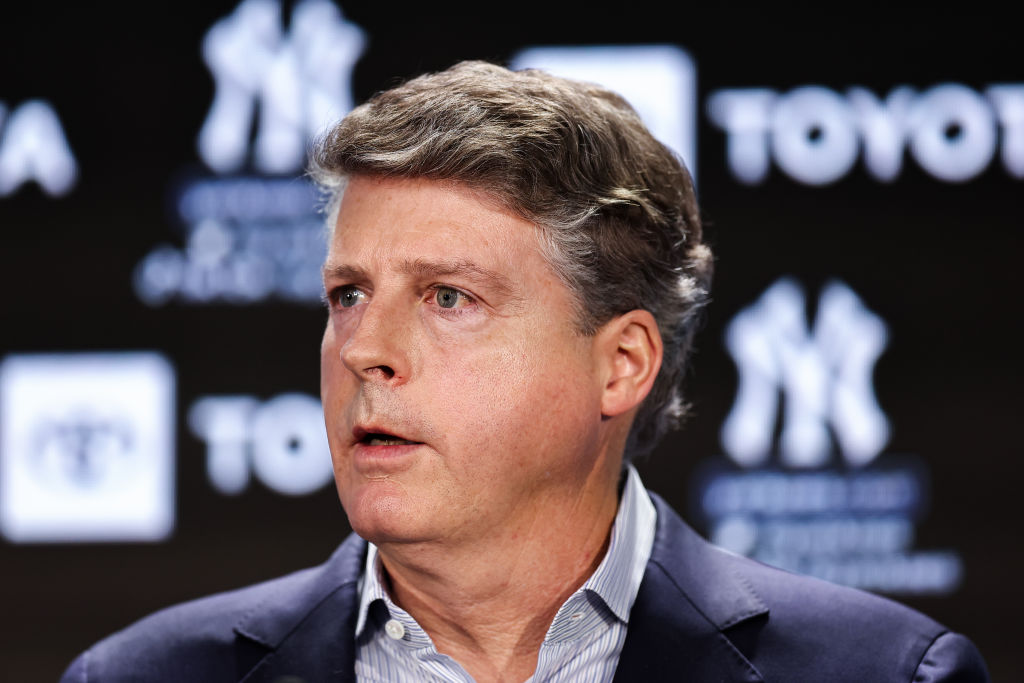
Hal Steinbrenner’s recent appearance on WFAN with Mike Francesa provided a rare glimpse into the ownership’s mindset following a challenging season for the New York Yankees. While direct answers are often tempered by the demands of public relations, astute listeners could discern subtle yet significant signals from the principal owner. His commentary, ranging from personnel decisions to philosophical approaches, wasn’t merely a recap of past struggles but often contained intriguing promises of a shifted perspective, designed to pique the curiosity of a fanbase hungry for a return to championship contention. Here are key takeaways that suggest a potential recalibration within the Yankees organization.
1. Acknowledgment of Unacceptable Performance and Heightened Accountability
Steinbrenner unequivocally stated that the 2023 season was unacceptable, a pronouncement that went beyond standard corporate regret. His tone conveyed a deeper sense of disappointment and, crucially, an implied promise of increased accountability for all levels of the organization. This wasn’t just about the record; it was about the culture and effort, suggesting that past benchmarks for success are being re-evaluated and a more stringent standard will be enforced going forward.
2. Reassessing the Balance of Analytics and Traditional Scouting
Perhaps one of the most significant shifts hinted at was Steinbrenner’s nuanced discussion surrounding the application of analytics. While not dismissing their importance, he subtly suggested a potential re-evaluation of their implementation, advocating for a more harmonious integration with traditional baseball instincts and scouting. This isn’t an abandonment of data but a potential recalibration to ensure the human element and on-field acumen receive their proper weight in decision-making.
3. An Implicit Mandate for Offensive Philosophy Adjustment
The Yankees’ anemic offense in 2023 was a recurring theme. Steinbrenner’s remarks, while not explicitly detailing new hitting strategies, carried an unmistakable message that the club needs a more consistent and adaptable offensive approach. His emphasis on making contact and avoiding prolonged slumps suggests a pivot from an over-reliance on the home run to a more balanced, fundamentally sound offensive philosophy aimed at sustained run production.
4. Renewed Emphasis on Player Development and Internal Growth
There was a distinct undercurrent in Steinbrenner’s comments about the importance of the Yankees’ farm system. While always valuing their prospects, his remarks signaled an increased expectation for internal talent to not just reach the majors, but to contribute meaningfully and quickly. This suggests a potential shift towards relying more heavily on developed talent to fill roster gaps, rather than solely acquiring through high-priced free agency.
5. Elevated Scrutiny on Injury Management Protocols
The Yankees have been plagued by significant injuries in recent seasons. Steinbrenner’s discussion around player health went beyond mere concern, implying a comprehensive review of the organization’s injury prevention and rehabilitation protocols. This isn’t just about bad luck; it’s a promise to meticulously examine and potentially overhaul the processes to ensure players are on the field and performing optimally.
6. A Commitment to Strategic, Not Just Large, Payroll Spending
While affirming the Yankees’ commitment to a top-tier payroll, Steinbrenner’s language hinted at a more judicious and strategic approach to allocating those resources. This suggests a move away from simply signing the biggest names to a more targeted acquisition strategy, focusing on specific roster needs and clubhouse fit, thereby maximizing the return on investment for every dollar spent.
7. Demand for Greater In-Game Adjustments and Adaptability
Steinbrenner’s observations on the team’s performance often touched upon a perceived lack of adaptability during games. This wasn’t a direct criticism of the coaching staff, but an implicit challenge to foster a more dynamic in-game strategy, capable of reacting to opponent adjustments and capitalizing on evolving situations. It suggests a desire for greater strategic flexibility on the bench and in the dugout.
8. Acknowledging Fan Frustration and Promising a More Responsive Organization
The principal owner clearly acknowledged the depth of frustration felt by the Yankees’ loyal fanbase. His comments weren’t just sympathetic; they carried a promise of a more responsive organization, one that not only hears the concerns but actively works to address them through tangible actions on the field. This commitment to ‘doing better’ felt more urgent and less perfunctory than in previous seasons.
9. Re-evaluating the Role and Performance of Veteran Acquisitions
The performance of several high-profile veteran acquisitions came under an unspoken microscope during Steinbrenner’s interview. While not calling out specific players, his discussion about production and contract value suggested that future veteran signings will face heightened scrutiny, both in terms of on-field impact and overall team fit. This implies a more critical lens on free agent investments.
10. A Push for Enhanced Communication Across Departments
Steinbrenner’s insights often alluded to the need for seamless communication between the various departments of the organization – from scouting and player development to the major league club and analytics. This signals a desire for a more cohesive, integrated approach to talent evaluation and roster construction, ensuring everyone is aligned with a singular vision for success.
11. Exploring New Approaches to Offensive Coaching and Player Preparation
The Yankees’ struggles at the plate have led to widespread questioning of their offensive coaching. Steinbrenner’s comments, while supportive of current personnel, opened the door to exploring new methodologies and strategies in player preparation and coaching. This could range from subtle instructional tweaks to a more fundamental shift in how hitters are developed and instructed.
12. Emphasizing the Importance of Team Chemistry and Intangibles
Beyond statistics and talent, Steinbrenner seemed to place a renewed emphasis on the less tangible aspects of team building, such as chemistry and clubhouse culture. His remarks suggested an understanding that a successful team is more than the sum of its parts, hinting at a more deliberate effort to foster a cohesive and resilient group dynamic.
13. A Challenge to the Scouting Department for Deeper Talent Identification
While praising the scouting department, Steinbrenner’s dialogue underscored a demand for deeper and more innovative talent identification. This implies a challenge to uncover diamonds in the rough, whether domestically or internationally, and to excel at finding players who fit the Yankees’ evolving strategic needs, not just traditional star power.
14. Willingness to be More Aggressive (and Smarter) at the Trade Deadline
The Yankees’ approach to the trade deadline has often been debated. Steinbrenner’s comments implied a willingness to be more assertive and strategic in mid-season acquisitions, but with an added layer of scrutiny on the potential impact and cost. This suggests a desire to avoid past missteps while not shying away from making necessary moves to bolster the roster.
15. The “Yankee Way” Reimagined for the Modern Era
While always revering the Yankees’ storied history, Steinbrenner’s remarks hinted at an understanding that the “Yankee Way” must evolve to remain competitive in modern baseball. This isn’t a rejection of tradition but a thoughtful adaptation, seeking to marry the organization’s core values of excellence and professionalism with contemporary strategies and player development models.
16. Setting a Higher Bar for Sustained Excellence, Not Just Sporadic Success
Steinbrenner’s overarching message was a demand for sustained excellence, moving beyond individual periods of good play or single successful seasons. This suggests a shift in organizational focus towards building a perennial contender, one that consistently competes deep into October, rather than merely making the playoffs. The expectation is not just to win, but to dominate.