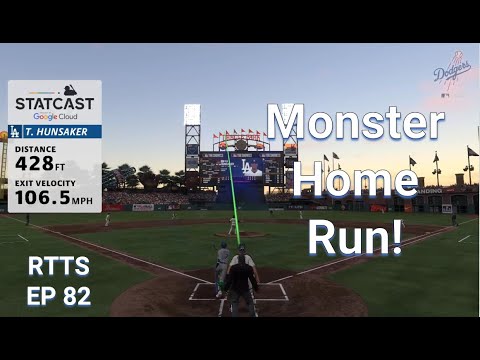
How high is 400 feet, really? It’s a question that seems deceptively simple at first glance—a mere number on a scoreboard, a distance marker in a baseball stadium. Yet, when you pause to actually visualize the height of a 400-foot blast, particularly that dazzling spectacle known as a “monster home run,” you begin to realize how extraordinary such a feat truly is. Let’s embark on a journey to grasp this towering feat of athleticism and physics, and playfully challenge your imagination to picture a baseball soaring with unimaginable power and grace.
Setting the Stage: Understanding the Scale of 400 Feet
Four hundred feet is a length measurement that dwarfs common everyday reference points. To paint a clearer picture, consider that an NBA basketball court is exactly 94 feet long. Thus, a 400-foot home run covers more than four full court lengths when laid out end to end. This comparison alone throws a curveball into ordinary mental calculations, transforming an abstract figure into a tangible spatial concept.
Moreover, 400 feet is approximately 121.92 meters—a measurement that confers an almost architectural scale on a baseball hit. Imagine a shiny globe at the end of a massive rod—reaching about as high as a 30-plus story building. For many, this brings a mental benchmark closer to reality than mere numbers and statistics ever could.
Visualizing the Flight Path: From Bat to Beyond
Picture a baseball launched high and far off the bat—how does it get there? Upon contact, the baseball embarks on a parabolic journey, bending elegantly and defying gravity’s relentless pull. To clear 400 feet of horizontal distance, the ball must travel not just far, but high. Its apex—the highest point in its arc—elevates the ball to often upwards of 120 feet in altitude, roughly the height of a 10 to 12-story building.
During flight, air resistance and spin come into complex interplay, adding a layer of natural art to the sheer force applied by the batter. The speed off the bat can exceed 110 miles per hour, translating kinetic energy into a kinetic spectacle. This is no casual swing but a carefully balanced strike of power and precision, honed through countless hours of practice.
Landmarks and Everyday References: What 400 Feet Looks Like on Earth
To put 400 feet into an accessible context, try imagining a professional baseball diamond. Most Major League Baseball parks have the distance from home plate to the center field wall ranging between approximately 390-420 feet. This means a home run to center field clearing 400 feet is akin to sending the ball almost the entire length of the outfield in one colossal arc.
Another evocative reference is a standard American football field, excluding end zones, which measures 100 yards or 300 feet. A monster home run eclipses this distance by a third, as if the ball has sailed beyond the entire football field plus an additional 100 feet. Visualizing the ball’s trajectory overtaking such iconic playing fields sparks a renewed appreciation for the raw power displayed.
The Physics Behind the Power: Why 400 Feet is a Monster Achievement
Hitting a baseball 400 feet or more is a convergence of physics in motion. The factors influencing this monumental distance include exit velocity (the speed at which the ball leaves the bat), launch angle, and environmental conditions such as wind and altitude. A perfect storm of these variables culminates in what fans relish as a monster home run.
Exit velocities approaching or surpassing 110 mph are not uncommon among professional hitters, but to command such speed with the right loft—that sweet spot of about 25 to 35 degrees—is where legend is born. Under ideal weather and stadium conditions, even a slight deviation in swing mechanics can determine if the ball falls short or sails past the fence well beyond 400 feet.
Why Do Monster Home Runs Captivate Us?
There is an almost primal thrill in witnessing a baseball vanish into the horizon. The quintessential “crack” of the bat followed by an upward gaze captivates players and fans alike. It’s a testament to human strength and finesse wrapped into a singular moment of athletic prowess. Home runs that cross the 400-foot threshold especially resonate as rare and exhilarating achievements.
Beyond mere metrics, they create iconic images—bases empty, the crowd’s collective intake of breath, and the slow-motion chase of the ball in flight. This momentary suspension between action and consequence imbues the game with drama and grandeur, elevating it from sport to spectacle.
Challenges in Measuring and Comparing Home Run Distances
While 400 feet is a useful benchmark, measuring a home run’s true distance is surprisingly complex. Stadium geometries vary, affecting how distances are calculated or announced. Some fences are angled; others have unique outfield contours, meaning a home run that is 400 feet in one park might differ slightly elsewhere in trajectory.
Modern technology, including radar tracking and high-speed cameras, has enhanced accuracy. Yet tradition and stadium quirks persist, making each home run’s distance a blend of science and lore. This inherent uncertainty adds an extra layer of intrigue to the act of hitting such a confirmed “monster” home run, confirming it as a moment worthy of long-standing admiration.
How High Can A Ball Really Go? The Ceiling Beyond 400 Feet
To stretch the imagination further: while 400 feet is a benchmark, some legendary blasts can soar even higher and farther. The highest recorded baseball home runs have cleared distances exceeding 500 feet, climbing to incredible altitudes that challenge ordinary perspective. These gargantuan hits dwarf typical city buildings and rival some architectural marvels in scale.
However, these exceptional shots serve to underscore the rarity and difficulty of achieving such power and precision. For the vast majority of players—even seasoned professionals—a 400-foot home run remains a pinnacle of hitting excellence.
Embracing the Spectacle: What Makes 400 Feet Magical
At its heart, a 400-foot home run is a celebration of human athletic capability, scientific precision, and the timeless joy of sport. It invites fans to momentarily transcend the stadium walls and imagine the ball’s fiery journey under azure skies as it arcs away, defying gravity and expectations.
Ultimately, the challenge posed by asking “How high is 400 feet?” is an invitation to appreciate not just the number but the magic it represents—to see beyond dimensions and numbers, into the spirit of competition and the triumph of will. A monster home run is more than a feat of distance; it’s a story etched in air and applause, forever immortalized in the collective memory of the game.